Cooking soup for a group
If you use a large pot to make soup for several people, check that its base and size are compatible with the cooking zone on the specific appliance.


A suitable single hob is all you need for a pot of soup. A second cooking zone is particularly useful if you want to prepare a side dish at the same time. Induction only works with compatible ferromagnetic cookware of the right size. Also check how easily you can turn down the heat once the soup has come to the boil, and make sure the appliance, connection and available space suit your cooking area.
If you use a large pot to make soup for several people, check that its base and size are compatible with the cooking zone on the specific appliance.
If you want to heat both pots at the same time, you’ll need two cooking zones. Compare the appliance’s dimensions, total power and connection details too.
If you want to keep using your existing soup pot, check that its base is ferromagnetic before choosing an induction hob. TÜV SÜD notes that induction requires ferromagnetic cookware.
A good fit if: you have an induction-compatible soup pot and only need one cooking zone.
Things to consider: the base and diameter of your pot must match the specifications for the model. The surface may also become warm from the hot pot.
A good fit if: you want to use pots you already own that aren’t suitable for induction.
Things to consider: the hotplate itself gets hot and takes longer to respond when you turn the heat down.
A good fit if: you want to heat soup and a side dish at the same time and have enough space for the appliance.
Things to consider: check both zones, the total power, plug type and connection details for the specific appliance.
| Buying priority | What to look for | Who this matters to most |
|---|---|---|
| Pot size and cooking zone | Check the pot base diameter, permitted pot size and available space against the model’s specifications. | If I’m using a large pot to cook for several people, its base needs to fit the cooking zone; around 25% of consumers prioritise pot size and cooking zone. |
| Bringing to the boil and simmering | Check the power settings and controls; a timer doesn’t replace keeping an eye on what’s in the pot. | When I turn the heat down from boiling to simmering, I want to be able to adjust it appropriately; around 25% of consumers prioritise heat control. |
| Using an existing pot | For induction, check that the pot base is compatible and compare its diameter with the model’s specifications. | If I want to keep using my existing pot, I’ll check what it’s made of before choosing a heating method; around 20% of consumers prioritise this compatibility. |
| Cooking soup and a side dish at the same time | Check the number and size of the zones, as well as the total power, plug and connection details. | If I want the soup and side dish to be ready at the same time, I’ll need room for two pots; around 15% of consumers prioritise cooking both at once. |
| Safe positioning and handling | Follow the instruction manual, use a stable surface and check the safety features specified for the model. | When using a portable appliance, I want to position it securely and know which safety features it has; around 15% of consumers pay particular attention to positioning and handling. |
Induction won’t work with your existing pot unless it has a compatible ferromagnetic base.
First, check the material and diameter of the pot base. If the pot isn’t compatible, compare it with a traditional electric hob.
The rated power alone doesn’t tell you how easily you can adjust the heat once the soup has come to the boil.
Compare the power settings and controls on the specific model, and keep an eye on the contents of the pot while cooking.
Zone power, total power and plug type are different specifications. A double hob also needs more space.
If you want to cook soup and a side dish at the same time, check both zones, the total power, plug type and dimensions.
Electric hobs that fall within the scope of the relevant EU regulations must carry the CE marking following a conformity assessment. The European Commission explains that the mark indicates the manufacturer’s responsibility for meeting the applicable requirements; it is not proof of independent testing.
Consider the marking separately from the appliance’s specific features, and check the product information and any required warnings.
The CT 2010/IN is a portable single induction hob for use with a compatible pot.
The DK 1031 is a double induction hob, while the DK 1014 is a traditional electric double hotplate.
The Touch 2000 is a portable single induction hob for one pot.
The PC-EKI 1062 is a single induction hob with several listed safety features.
The products below include portable single induction hobs, double hobs and a single infrared hotplate.
 No image available
Described as a portable single induction hob for a soup pot; the pot must be suitable for induction.
The product details list 2100 W, 28 cm, nine heat settings, an 8-hour timer and a cookware diameter of 12 to 26 cm.
 No image available
The two independently controlled induction zones are described as suitable for heating soup and a side dish at the same time; both pots must be induction-compatible.
The product description lists 1500 W and 1000 W zones, five temperature settings and non-slip feet.
 No image available
Described as a portable single induction hob for one pot; the pot base must be suitable for induction.
The product details list 1000 W, five heat settings and a rotary control.
 No image available
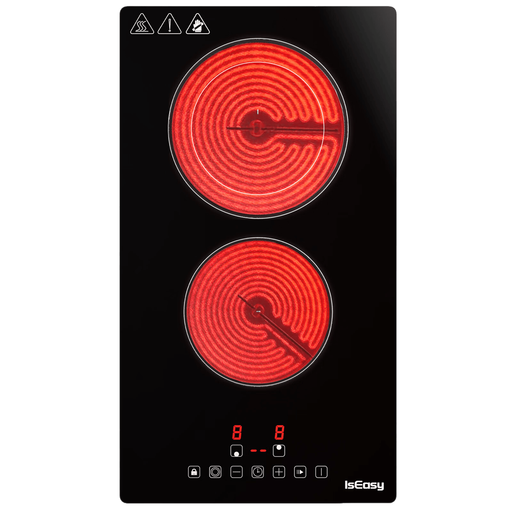
This electric glass-ceramic double hob has two zones and is described as suitable for heating soup and a side dish at the same time.
The product details list 3200 W, nine power settings, a timer, pause function, child lock and residual heat indicator. The connection specification is 220–240 V.
 No image available
This portable single hotplate is described as an infrared model for cooking soup. According to the product name, it is designed for heat-resistant cookware.
The product details list 3500 W, a temperature control, a timer and a soup mode.
No, not if you only want to heat the soup. Two cooking zones are useful if you want to prepare a side dish at the same time. If so, check the double hob’s dimensions and power specifications too.
Check whether the pot base is ferromagnetic, then compare its diameter with the permitted range for your chosen model. TÜV SÜD notes that induction requires ferromagnetic cookware.
Compare the power settings and controls on the specific model. A high rated power alone doesn’t tell you how easily you can adjust the heat once the soup has come to the boil. A timer also doesn’t replace keeping an eye on what’s in the pot.
No, hobs aren’t required to carry an EU energy label. The European Commission lists hobs as products that aren’t subject to this labelling requirement; an energy label for an oven doesn’t automatically apply to a hob.
Electric hotplates that fall within the scope of the relevant EU regulations must carry the CE marking following a conformity assessment. It indicates that the manufacturer is responsible for meeting the applicable EU requirements; it isn’t an independent quality mark.