
Lieferung heute & morgen

Qualitätsgarantie

Willkommens-Angebote freischalten: KOSTENLOSE Lieferung | Bis zu 80 % RABATT | Kostenlose 30-Tage-JoyPlus-Testphase
App herunterladen
Hohes C juice is a breakfast staple for many households, as well as a popular choice for the office kitchen or lunchbox. The range includes everything from Hohes C orange juice and Hohes C mild orange juice to multivitamin, apple and multi-fruit juices. However, differences in fruit content, acidity, vitamins and pack size determine whether a product suits your everyday needs.
A fruit juice with no added sugar contains no additional table sugar or sweetener. However, fruit naturally contains sugar. Many Hohes C varieties contain around 8.8 to 11 grams of sugar per 100 millilitres. If you want to keep an eye on your sugar intake, check both the nutrition table and the amount you actually drink.
A mild juice is often associated with less acidic fruit varieties. This can create a rounder, less sharp taste, but it does not necessarily change the calorie or sugar content. According to the product information, for example, Hohes C Mild Orange Juice contains 43 kcal and 8.8 grams of sugar per 100 millilitres.
A Hohes C juice 6 x 1 litre or a family pack containing 8 x 1.5 litres provides a supply for several people. Before buying, however, you should check whether you have enough storage space and how quickly your household will use the bottles after opening. Opened juices should be kept in the fridge and, depending on the packaging information, should generally be consumed within three to four days.
With classic orange juice, the flavour of the orange takes centre stage. Even so, the available varieties differ:
Fruit content is therefore an important comparison point. The term “fruit juice drink” should not be confused with a product made from 100 per cent fruit juice.
If you prefer less acidic juices, look for terms such as “mild” or “low-acidity”. According to the product information provided, several mild Hohes C varieties use fruit varieties with a lower acidity profile. This is a taste characteristic of the product and not a medical claim.
Consistency can also be important. Some varieties are pulp-free or finely filtered, while other products may contain fruit particles. For breakfast, households with children or use in the office, an even, clear texture is often easier to portion.
Vitamin C is a stated nutritional value in many Hohes C products. The mild orange varieties are listed as containing 32 milligrams of vitamin C per 100 millilitres, equivalent to 40 per cent of the reference intake. However, the actual serving size should always be compared with the information on the packaging.
Fortified juices may also contain vitamins such as vitamin D, vitamin E, B vitamins or niacin. According to the product information, for example, Hohes C Plus Sunshine Vitamin D contains vitamin D, vitamin C, vitamin B12 and pantothenic acid. Nutritional information can change, so the current label is always the authoritative source.
If you have specific dietary preferences, it is worth checking the ingredients list. Several of the Hohes C juices listed are described as vegan fruit juice and contain no allergens that require declaration. Here too, the labelling on the packaging supplied with your order is decisive.
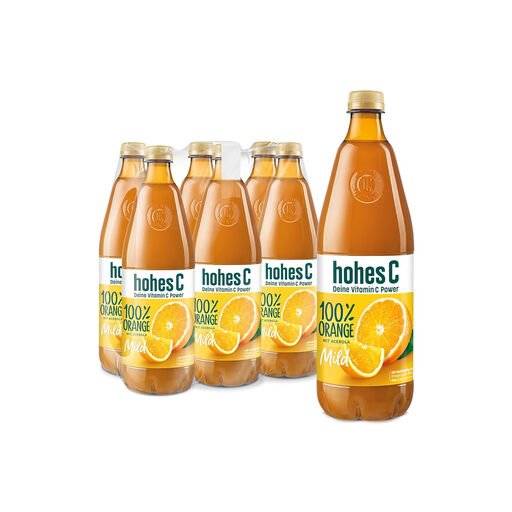
Why this product suits this profile: The 6 x 1-litre pack is ideal for households looking for an orange flavour in a larger multipack, while avoiding added sugar, sweeteners and artificial colourings.
The stated orange content of 50 per cent makes the product type clear and prevents confusion with 100 per cent orange juice.
6 litres in total; acerola juice as a source of natural vitamin C according to the product description.
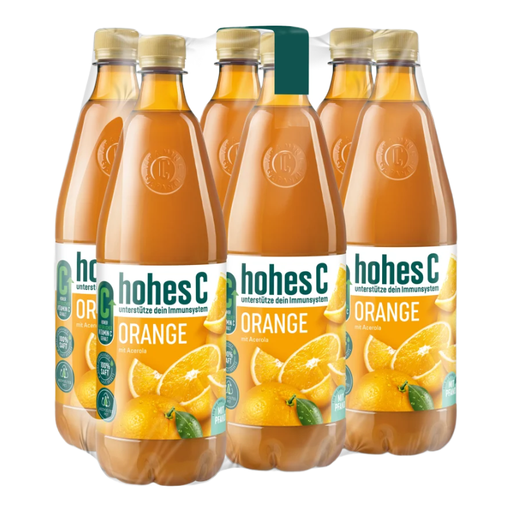
Why this product suits this profile: The recipe, made with 99.5 per cent orange juice and 0.5 per cent acerola juice, is aimed at shoppers who prefer a mild orange juice with a clear list of ingredients.
The nutritional information states 43 kcal and 8.8 grams of sugar per 100 millilitres, allowing the juice to be compared objectively with other varieties.
32 mg vitamin C per 100 ml; no allergens requiring declaration according to the product information.
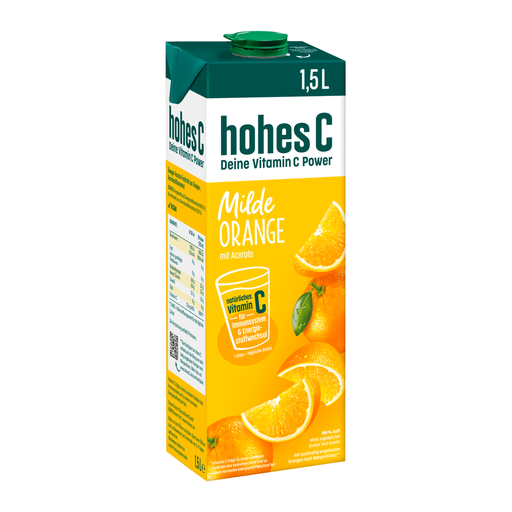
Why this product suits this profile: The total volume of 12 litres is suitable for large families, offices or events with regular juice consumption.
The pulp-free variety and individual 1.5-litre bottles make portioning easier than with one large container.
100 per cent fruit juice according to the description; 8 bottles containing 1.5 litres each.
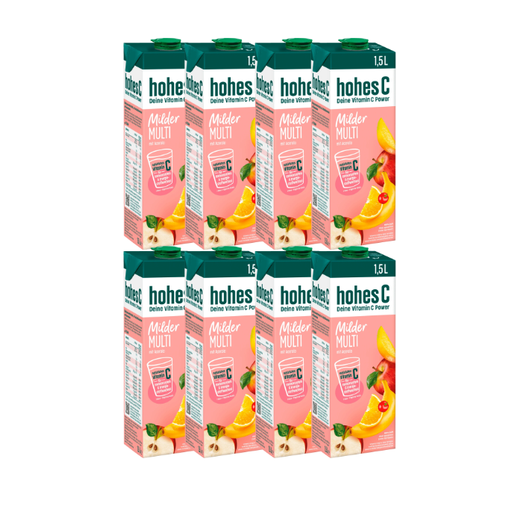
Why this product suits this profile: The combination of different fruits and added vitamins is ideal for people who prefer a varied juice blend at breakfast.
The ingredients and nutritional information show that, in addition to fruit concentrates, the juice contains banana purée and several vitamins.
47 kcal and 11 grams of carbohydrates per 100 ml; vegan and free from allergens requiring declaration according to the product information.
We have put together a complete, regularly updated list of products that fully meet these strict selection criteria and the safety regulations applicable in the EU.
Unopened bottles should be stored in a cool, dry place away from direct sunlight, in accordance with the packaging instructions. Refrigeration is required after opening. If natural ingredients have settled, shaking the bottle before pouring can be helpful.
Small portions such as Hohes C Mild Orange Juice 8x0.2L are practical when you are out and about. At home or in the office, 1-litre and 1.5-litre bottles are a better choice. To make the drink lighter, juice can be mixed with water; this also reduces the amount of juice per glass.
Several of the listed products are described as containing no added sugar. This does not mean that they contain no sugar. The natural fruit sugar remains part of the juice. For an accurate assessment, refer to the ingredients list and nutrition table on the current product label.
Many products should be refrigerated after opening and consumed within three to four days. Different guidance may apply to small drinks packs. The specific recommendation on the bottle, carton or closure takes precedence.
Mild varieties include Hohes C Mild Orange Juice, Hohes C Mild Apple Juice and mild multivitamin juices. The description refers to the flavour or acidity profile. If you want to avoid pulp, also look for the “pulp-free” label.