For snack breaks on the go
If you want to take exactly one portion with you on an outing or journey, check the weight per bar and whether each one is wrapped separately. A pack containing several bars is not automatically a single item for purchase.


For a holiday outing, a bar with a clearly defined individual portion is a good choice if you want to take it with you without splitting it up. A multipack may contain individual portions, but check the specific product to see whether each bar is wrapped separately. Then compare the ingredients and allergens, the net weight per bar and the best-before date. A bar that can be broken into portions is not a substitute for an individually wrapped portion.
If you want to take exactly one portion with you on an outing or journey, check the weight per bar and whether each one is wrapped separately. A pack containing several bars is not automatically a single item for purchase.
If you need to avoid certain ingredients or allergens, read the ingredients list, highlighted allergens and any ‘may contain’ warnings for the specific variety. The brand name alone won’t tell you enough.
If the filling and texture are what matter most, you could compare milk cream, wafer or nut varieties, for example. Check the ingredients and best-before date for your chosen variety too.
When choosing a chocolate bar for the holidays, first consider what portion format you need. Then take into account the ingredients in the specific variety and your preference for filling or texture.
| Criterion | What to check | Who it matters most to |
|---|---|---|
| Individual portion | Check the number of pieces, the net weight per bar and whether each one is individually wrapped. A multipack and a bar that can be broken into portions are different formats. | For an outing, I want to pop a bar in my bag without having to break up a larger bar first. Around 42% of consumers would make a clearly defined portion their most important buying criterion. |
| Ingredients and allergens | Read the ingredients list, highlighted allergens and any ‘may contain’ warnings on the specific pack. | If I need to avoid an ingredient, the labelling on the variety I choose matters more to me than its flavour name. Around 33% of consumers would put this check first. |
| Flavour and texture | Compare the stated filling and ingredients. If you’re planning to enjoy the snack later, check the best-before date too. | For my snack break, I’m looking for a creamy, crunchy or nutty variety. Around 25% of consumers would prioritise the treat they’re in the mood for. |
You can break it into pieces, but that doesn’t mean they’re wrapped separately. This matters when you want to decide on your portion before packing for an outing.
As well as checking terms such as ‘bar’ or ‘stick’, look at the number of pieces and the type of packaging. Schogetten describes its chocolate as portionable pieces; that alone doesn’t mean they’re individually wrapped.
A filling or coating may contain ingredients that aren’t fully clear from the short product name. ‘May contain’ warnings may also be relevant when choosing a product.
Read the ingredients list and allergen labelling on the specific pack. Your Europe, an information service provided by the European Union, notes that allergens are highlighted in the ingredients list.
Some speciality varieties may have a shorter shelf life. Lindt explicitly notes this for its Dubai Style bar.
If you’re planning to eat the bars on a later holiday outing, check the best-before date and storage instructions on the specific pack.
The brands mentioned here offer different chocolate formats. For an individual snack, it’s the specific product that matters: a large bar, a format made up of separate pieces and a chocolate bar aren’t packaged in the same way.
Kinder describes Kinder Riegel as milk cream covered in milk chocolate.
Lindt sells chocolate bars and sticks with a range of fillings. Its German range includes, among others, a 35 g wafer bar and a 40 g milk chocolate stick.
REWE lists Milka products in various chocolate formats, including Nussini multipacks and Alpenmilch large bars.
Ritter Sport lists a range of ingredients and flavours on its brand page, including biscuit, hazelnut and marzipan.
Schogetten describes its chocolate as portionable pieces rather than a traditional individual bar.
Here, REWE is a retailer that can help you explore formats from different brands, rather than a single chocolate bar brand.
This selection features chocolate bars in multipacks for snack breaks planned one portion at a time. If you want to take each bar separately wrapped, check the packaging for the individual product; the number of bars alone won’t tell you.
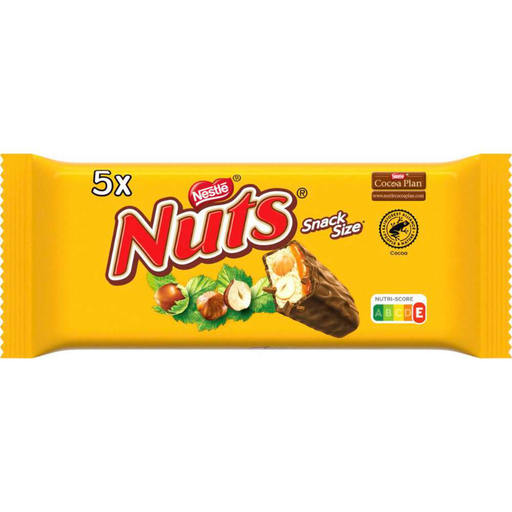 No image available
For snack breaks when you fancy a bar with caramel and hazelnut flavour.
The product description states that the pack contains five bars weighing 30 g each. Check whether they’re individually wrapped, as well as the ingredients and allergen information on the specific pack.
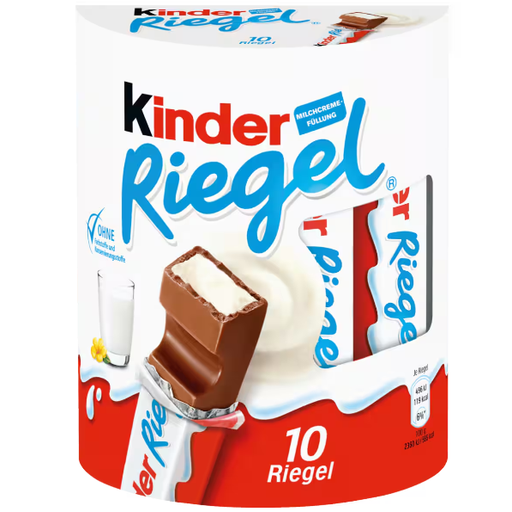 No image available
For several snack breaks with the milk cream bar in milk chocolate described by Kinder.
The product description states that the pack contains ten bars weighing 210 g in total. A product datasheet from Kelemidis lists milk and soya as allergens in Kinder Riegel; check the labelling on the specific pack and, if needed, whether the bars are individually wrapped.
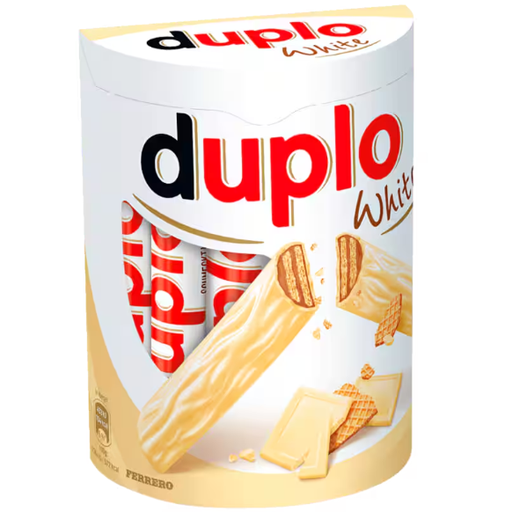 No image available
For snack breaks when you’re after a wafer bar covered in white chocolate.
The product description states that the pack contains ten bars weighing 18.2 g each. If you want to take individual bars separately, check their packaging. If you have questions about ingredients, read the labelling on the specific pack.
Check the product description, weight per bar, number of pieces and, above all, the type of packaging. Even if a large bar can be broken into pieces, they won’t necessarily be individually wrapped. If you’re buying a multipack, check how the individual bars are packaged too.
Yes. The information for the specific variety is what matters. Your Europe, an information service provided by the European Union, explains that allergens are highlighted in the ingredients list. Read the full ingredients list and any ‘may contain’ warnings as well.
Before setting bars aside for later snack breaks, check the best-before date and storage instructions on the pack. The Federal Office of Consumer Protection and Food Safety explains best-before dates for packaged foods; additional manufacturer guidance may be important for some speciality products.