Holidaymakers with an oven provided
You bake cheese scones occasionally and want to check first whether the oven, its heating functions and the available tray are suitable.


If the oven provided works and has a suitable baking tray, you don’t need an extra oven for the occasional batch of cheese scones. If there’s no usable oven, let the tray area, available worktop space and heating functions guide your choice. A compact model may be enough for small batches, while larger batches need more usable space — provided you can position the appliance safely in the holiday kitchen.
You bake cheese scones occasionally and want to check first whether the oven, its heating functions and the available tray are suitable.
You need a freestanding option for baking small batches, and need to consider both the available worktop space and the usable internal dimensions.
You want to bake more scones in each batch, so you’re comparing tray area, oven capacity and the space the appliance needs.
A good fit if: Your accommodation has a working oven and a suitable baking tray, and you only bake occasionally.
Things to consider: Check the heating functions, tray and controls on the oven before you start.
A good fit if: There’s no usable oven, you tend to bake small batches and you have limited worktop space.
Things to consider: Smaller internal dimensions and trays may mean you need to bake in more batches.
A good fit if: You want to bake more scones in each batch and have a suitable place for the oven.
Things to consider: A larger capacity takes up more space. A tray supplied with the oven doesn’t necessarily mean you can use multiple trays at once.
Good Food’s “Classic cheese scones” recipe uses a large, preheated baking tray and specifies 200 °C without a fan or 180 °C with a fan. These temperatures apply to that particular recipe. When choosing an oven, check that the tray and heating functions suit the batch size you have in mind.
| What matters | What to check when buying | Who is it important to? |
|---|---|---|
| Batch size and tray area | Compare the size and spacing of your scones with the actual tray and internal dimensions, and check what’s included. | If I want to bake several scones at once with space between them, I’ll check the usable tray area rather than just the capacity in litres; around 40% of consumers prioritise batch size. |
| A suitable place for the oven | Compare the model’s external dimensions and positioning instructions with the space available, and check whether using extra appliances is allowed in your accommodation. | If there’s little free worktop space in my holiday kitchen, the appliance needs to be suitable for use there according to its instructions; around 30% of consumers prioritise where it can be positioned. |
| Heating functions for your recipe | Check whether the oven offers the required conventional top and bottom heat or fan-assisted cooking; follow the recipe and appliance instructions when setting the temperature and cooking time. | If my recipe distinguishes between conventional heat and fan-assisted cooking, I want to be able to select the right setting; around 20% of consumers focus first on following the recipe. |
| Cleaning and accessories | Check what’s included, whether the crumb tray can be removed and whether model-specific replacement parts are available. | If cleaning and accessories matter to me, I’ll look for removable parts and replacement options; around 10% of consumers prioritise maintenance and ongoing costs. |
Scones need space between them on the tray. The oven capacity and internal dimensions alone don’t tell you how many will fit on the tray provided.
Compare the tray’s width and depth with the size and spacing of your scones, and check which tray comes with the specific model.
The external dimensions won’t tell you whether the appliance can be used in the intended location in line with its instructions.
Read the positioning instructions for the specific model and check which spaces in your accommodation are suitable before using it.
Good Food’s cheese scone recipe gives different settings for conventional heat and fan-assisted cooking; this doesn’t prove that one will always give better results. The Verbraucherzentrale recommends comparing actual energy consumption rather than relying solely on an appliance’s classification.
Choose the heating function that matches your recipe. Only compare energy figures when the batch size and measurement basis are the same.
The BGE 1580/E is a freestanding oven with a 30 l capacity, for households looking for more baking space and a choice of heating functions.
The KB M19 is a freestanding 19 l oven for smaller batches and kitchens with limited space.
The TO 26 SilverStyle is a freestanding 26 l option, between the smaller and larger capacity models.
The range includes countertop ovens in different sizes; the TO 2068 is a 20 l model you can use for comparison.
The Joybuy products below are countertop and mini ovens with baking functions. Focus on the dimensions of the supplied tray, the size of the appliance and whether its heating functions suit the batch size you have in mind.
 No image available
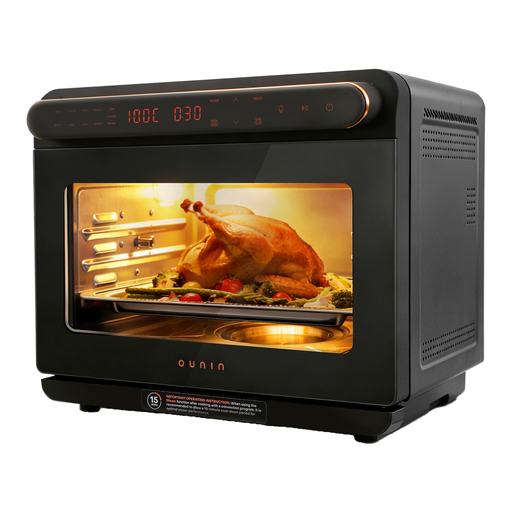
An option if you’re looking for a countertop oven with a baking function and a listed baking tray; measure the tray first to check it suits your batch of scones.
24 l capacity; product features include baking and steam baking. Accessories include a baking tray and air fryer basket, among other items. It also has a 1 l water tank and a 304 stainless steel interior.
 No image available
The stated baking temperature and included baking tray may suit cheese scones; check that the appliance and its positioning requirements are suitable for your holiday kitchen.
32 l; 1,600 W; temperature range 100 to 250 °C; timer and crumb tray. A baking tray and wire rack are listed as accessories; external dimensions are 52.3 × 36 × 32.2 cm.
 No image available
The compact capacity may suit small batches; check the dimensions of the supplied tray against the number of scones you want to bake.
10 l; 800 W; temperature range 100–230 °C; timer and pizza function. The product description lists top and bottom heat and a baking tray; external dimensions are 37 × 26.5 × 21 cm.
 No image available
An option if you want to compare different heating functions; check the tray area and the space you’ll need before buying.
28 l; three adjustable shelf positions; top heat, bottom heat and combined settings; temperature range 100–230 °C. A baking tray and crumb tray are listed as accessories; external dimensions are 325 × 410 × 320 mm.
 No image available
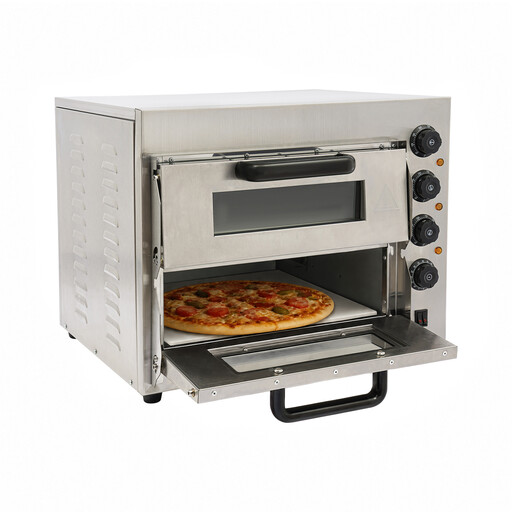
The product description also lists baking as a use; given its double-decker design and size, check the available space and tray dimensions particularly carefully.
20 l; two baking trays; separate temperature controls; temperature range 50–350 °C; timer from 1–60 minutes. External dimensions: 57 × 47.5 × 44 cm.
Its stated external dimensions mean you’ll need a suitably sized space for the appliance.
Good Food’s “Classic cheese scones” recipe specifies 200 °C without a fan or 180 °C with a fan, and a baking time of 15–20 minutes. Follow the instructions for any other recipe or appliance, and check the colour and whether the scones are cooked through.
Rommelsbacher says this is generally possible for the small ovens it lists, but notes that you may need to adjust the quantity to suit the oven cavity. This is the manufacturer’s guidance for those models, not a guarantee for every recipe and countertop oven.
If your model has a removable crumb tray, take it out to clean it. Let the appliance cool down and follow the cleaning instructions for your particular model.
In Germany, the seller is generally responsible for statutory rights relating to faults. The Verbraucherzentrale states that these rights last for two years from delivery and distinguishes them from a voluntary guarantee. For sales contracts made from 31 July 2026, it describes additional rules that apply if repair is chosen instead of a replacement when a fault occurs.
No. The European Union explains that the manufacturer uses the CE marking to declare that the product meets the relevant EU requirements; there is no general certificate issued for this by a central EU body. The marking doesn’t replace checking the specific product or following its positioning instructions.