When choosing a dishwasher for dishwasher-safe lunch boxes in a holiday home, start by considering the space available, water supply and drainage. A countertop model may suit a small number of items, while a freestanding model is worth considering if you regularly have other dishes to wash. Before buying, check that open lunch boxes and their separate parts will fit in the basket, and follow the care instructions for each item. Compare the Eco figures for the specific model; the German Environment Agency recommends running the Eco programme with a full load whenever possible.
Who would benefit from a dishwasher in a holiday home?
Families who use lunch boxes every day
If you regularly wash lunch boxes, lids and other holiday home dishes, take into account the care instructions for each item and how much usable space there is in the basket. The consumer advice centre distinguishes between suitability for food contact and being dishwasher-safe.
Guests without a permanent water connection
If there is no water supply, compact models with a water tank may be an option, depending on the model. You’ll still need to make sure the drainage and space are suitable; Midea Germany lists a 5-litre water tank for the MDWMT201DW.
Hosts with a small kitchen
If you’re setting up a more permanent solution, you can compare countertop models with slimline and full-size freestanding models, taking into account the space available, connections and the amount of washing-up you typically have. The German Environment Agency describes 45 cm models as an option where space is limited, and 60 cm models as suitable for larger, full loads.
What should you consider when choosing one?
First, check that the water supply, drainage and available space suit the type of dishwasher you’re considering. Then make sure open lunch boxes will fit in the basket.
Mini dishwasher with a water tank
A good fit if: there’s no permanent water supply and you mainly need to wash a few lunch boxes and small items. Midea Germany lists a 5-litre water tank for the MDWMT201DW.
Bear in mind: The tank doesn’t replace a drain. Also check that open lunch boxes will fit in the basket.
Countertop dishwasher with a water connection
A good fit if: there’s a suitable water connection but not enough space for a freestanding model. Medion lists five place settings for the DWT50 (MD 37775).
Bear in mind: Place settings don’t tell you whether wide lunch boxes and lids will fit in together. Check the internal dimensions and basket layout.
Slimline or full-size freestanding dishwasher
A good fit if: there’s a permanent space and suitable connections, and you regularly have other dishes to wash as well as lunch boxes. The German Environment Agency lists 45 cm models as an option where space is limited and 60 cm models for larger, full loads.
Bear in mind: A larger model needs more space. Compare the Eco figures for the load you expect to wash rather than assuming that a larger appliance will use more or less energy or water based on its size alone.
| Priority |
What to check before buying |
Who it matters to most |
| Cleaning lunch boxes and their separate parts properly |
Check the care instructions for each item, as well as how to load it and which programme to use. |
If I’m washing lunch boxes with their lids, I want to be able to care for each item according to its own instructions. Around 36% of consumers make suitable cleaning their main priority. |
| Water supply, drainage and space |
Check the type of water supply, how the drain is routed, and the dimensions of the appliance and its door. |
If there’s no permanent water supply in the holiday home, I still need a suitable solution for drainage and space. Around 29% of consumers prioritise installation and connections. |
| Usable capacity for lunch boxes and dishes |
Check that open lunch boxes fit with the basket layout and the size of a typical load. |
If there are other dishes to wash as well as lunch boxes, I want to know whether they’ll all fit in the basket together. Around 21% of consumers say usable load size is their main concern. |
| Water, energy, cycle time and noise |
Compare the Eco figures, programme duration, noise rating and capacity on a like-for-like basis. |
If the appliance will be running in a shared holiday home, I want to weigh up its consumption, cycle time and noise at the times I’m likely to use it. Around 14% of consumers put these performance factors first. |
The EU energy label lets you compare figures including energy use per 100 Eco cycles, water use per Eco cycle, programme duration, noise and rated capacity. The consumer advice centre recommends looking at these figures together. Place settings don’t guarantee that a particular lunch box will fit in the basket.
Which buying and usage mistakes should you avoid?
-
Confusing ‘food-safe’ with ‘dishwasher-safe’
The glass-and-fork symbol indicates that an item is suitable for contact with food; it doesn’t mean it’s approved for a dishwasher programme.
Check the care instructions for the lunch box, lid and inserts individually before choosing a programme.
Using an unsuitable cleaning method can damage individual parts of a lunch box.
-
Assuming ‘no permanent connection’ means ‘no tap or drain’
A water tank takes care of the water supply, but it doesn’t automatically solve the question of where the wastewater goes. Some countertop models need to be connected to a tap.
Check the water supply and drainage separately for the exact model, and make sure the chosen spot is suitable.
-
Comparing appliances only by water use per cycle
A low figure per Eco cycle alone doesn’t tell you how many cycles you’ll need to wash the same amount of dishes. The German Environment Agency’s comparison with washing by hand is based on a full dishwasher load using the Eco programme.
Compare the Eco figures alongside basket space, your usual load and the number of cycles you’re likely to need.
Several cycles may be needed to wash the same amount of dishes if you run small loads.
Which dishwasher brands are worth considering?
Midea
The German product pages show a mini model with a water tank and a countertop model for six place settings.
- Midea Germany lists a 5-litre water tank for the MDWMT201DW.
- For each model, check the exact model number, basket dimensions and details in the relevant product data sheet.
Medion
According to Medion Germany, the DWT50 (MD 37775) is a countertop dishwasher with a water connection and space for five place settings.
- The manufacturer’s website lists seven programmes and an appliance depth of 35,7 cm.
- A water connection is required. The rated capacity doesn’t guarantee that every lunch box shape will fit in the basket.
Beko
According to Beko, the freestanding DFS28021W is a 45 cm model for a permanent space with connections.
- For this specific model, Beko lists ten place settings, 8,7 litres per Eco cycle and 46 dB(A).
- These model specifications don’t guarantee that a particular lunch box will fit or that it will achieve a particular cleaning result.
Klarstein
Klarstein describes the Amazonia Nano as a compact countertop model that connects to a tap.
- Klarstein lists six programmes, five litres per cycle and a maximum noise level of 58 dB.
- The manufacturer’s figures are no substitute for an independent comparison. Here, ‘no permanent connection’ doesn’t mean you can do without a tap or drain.
Which dishwashers suit different holiday home needs?
This selection includes compact countertop models with alternative water supply options, as well as freestanding 45 cm and 60 cm models for different load sizes.
 No image available
Heinrich's HTG 8855 mini countertop dishwasher
For a few items and a space suitable for a countertop model; the rated capacity is listed as 3 place settings.
The product details list a 5-litre water tank or a tap connection, as well as 7 programmes.
The product name lists 56,3 dB and energy efficiency class C.
View at Joybuy
 No image available
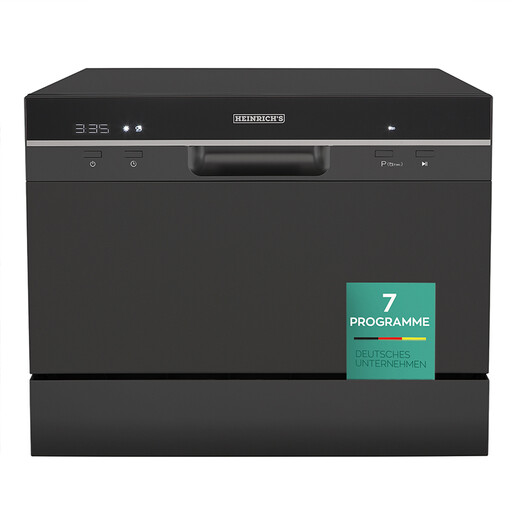
Heinrich's HTG 8840 countertop dishwasher, black
For a larger load than a mini model; the product details list 6 place settings.
According to the product description, the water supply can come from a 5-litre tank or a direct tap connection. It lists 7 programmes.
The product name lists 47 dB and energy efficiency class D.
View at Joybuy
 No image available
Gorenje GS520E15W freestanding dishwasher, 45 cm
For holiday home kitchens with space for a freestanding model and regular loads of other dishes; the product details list 9 place settings.
It has five programmes, including Eco and Intensive, as well as an adjustable-height basket.
It needs a suitable space, along with water and electricity connections.
View at Joybuy
 No image available
Beko BDFS26040XQ freestanding slimline dishwasher, 45 cm
For washing lunch boxes alongside other holiday home dishes; the product details list 10 place settings and 6 programmes.
The description mentions a function for washing one basket separately.
The water supply requires a tap with a 3/4-inch thread.
View at Joybuy
 No image available
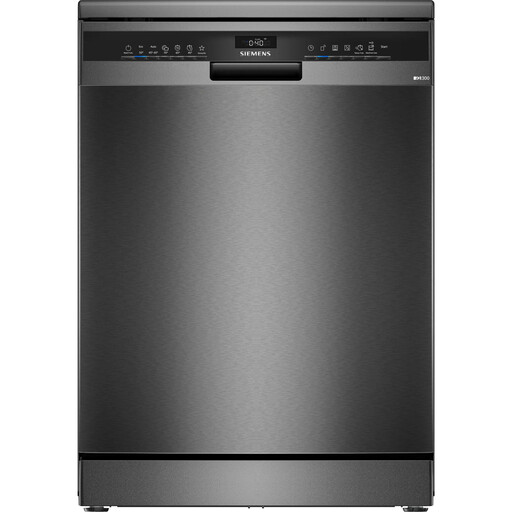
Siemens SN23EC03ME freestanding dishwasher, 60 cm
For larger loads of lunch boxes and other dishes; the product details list 14 place settings.
It has 6 programmes, including Eco, as well as an adjustable-height upper basket.
The figures list 65 kWh per 100 cycles and 9,0 litres per cycle. This 60 cm model needs enough space and suitable connections.
View at Joybuy
Frequently asked questions about dishwashers for lunch boxes
Is the glass-and-fork symbol on a lunch box proof that it’s dishwasher-safe?
No. According to the consumer advice centre, the symbol indicates that an item is suitable for contact with food. Check the separate care instructions for the lunch box, lid and inserts.
Does a mini dishwasher with a water tank not need a drain?
No. The presence of a water tank doesn’t mean a drain isn’t needed. The 5-litre tank on the Midea MDWMT201DW is for the water supply; check the instructions for your chosen model and your planned installation to find out how to route the drain.
How can I keep track of water and energy use?
Compare the Eco label figures on a like-for-like basis and take into account how often you expect to run the appliance. The German Environment Agency recommends using the Eco programme and running a full load whenever possible; its comparison with washing by hand is based on this condition.
Who should I contact if the appliance develops a fault after purchase?
If the appliance has a fault, you have statutory rights against the seller. A manufacturer’s guarantee is separate and is subject to its own terms; check any additional service options separately.
How should an old dishwasher be disposed of in Germany?
An electrical appliance must be handed in at an authorised collection point, such as a local authority collection site. Retailers have take-back obligations under the conditions set out by the German Federal Ministry for the Environment.


