Guests with a small holiday-home kitchen
If you mainly need to chill opened hummus and a few other food items, a compact appliance could be a good choice. What matters is whether it fits in the space and can maintain the required temperature.


Choose an appliance that can reach the temperature specified on the hummus packaging after opening, in the space where you plan to put it. Check the temperature while it is running with a fridge thermometer. Germany’s Federal Institute for Risk Assessment recommends 2 °C to a maximum of 7 °C for perishable foods; if the packaging specifies a lower temperature, follow that instead. A compact fridge may be enough if you only need to chill a few extra items. For food supplies for several people, a larger appliance may be a better fit. A portable compressor cool box is best suited to situations where you also want to use it on the go.
If you mainly need to chill opened hummus and a few other food items, a compact appliance could be a good choice. What matters is whether it fits in the space and can maintain the required temperature.
If you’re buying food for several meals shared with others, the fridge capacity should suit your shopping. Germany’s consumer advice centre recommends considering both the size you need and the appliance’s energy consumption.
If you want to take food that needs to be kept chilled with you while travelling, check that a portable option is compatible with the power outlets available. Germany’s Federal Institute for Risk Assessment recommends keeping perishable foods chilled while travelling, too.
First, check the temperature specified on the packaging and measure the available space. Then choose a model based on how much fridge space you need and whether you also want to use it on the journey.
A good choice if: you have a mains power connection and mainly want to chill hummus and a few other food items.
The trade-off: It takes up less space than a larger fridge, but has less room for your shopping. A compartment advertised as a chiller or freezer compartment is not automatically suitable for frozen food.
A good choice if: you regularly cook for several people at the holiday home and need space for more chilled food.
The trade-off: More fridge space means you’ll need more room to put it. Compare the stated annual energy consumption and the external dimensions of the models you’re considering.
A good choice if: you want to use the same appliance on the journey and at the holiday home, and have the right power connections available.
The trade-off: Connections and temperature controls vary by model. Check the actual internal temperature: a cooling capacity stated as a difference from the ambient temperature is not a fixed internal temperature.
| Priority | What to check when buying | Who should pay particular attention? |
|---|---|---|
| Chilling temperature | Check the packaging instructions and use a thermometer to check the internal temperature once the fridge has stabilised. | If I’m storing opened hummus, the appliance needs to maintain the required temperature in the space where it will be placed; around 33% of consumers put this chilling temperature first. |
| Space available | Check the external dimensions, door opening and required ventilation clearance against the space available. | In a small holiday-home kitchen, I’d first check whether the appliance will fit in the intended spot with enough room to open the door; around 27% of consumers prioritise finding a suitable space for it. |
| Storage space and energy use | Estimate how much fridge space you need and compare the stated kWh per year for suitable models. | If I’m shopping for several meals shared with others, I need enough fridge space without paying to run an unnecessarily large appliance; around 27% of consumers prioritise storage space and ongoing energy use. |
| Portability and power supply | Check which connections the appliance supports, and whether its temperature is stated as an absolute figure or as a difference from the ambient temperature. | If I want to take food that needs to be kept chilled with me on the journey, the appliance and power sources need to suit both the car and the accommodation; around 13% of consumers prioritise portability. |
The product page for the Bomann KB 7245 mentions a 4-litre freezer compartment, but the EU product fiche does not list a four-star compartment. For opened hummus, what matters is having a suitable fridge compartment, not a freezer.
If you want to store frozen food, check the compartment type and star rating on the product fiche for the exact model.
The Severin TKB 2925 is stated to cool to up to 20 °C below the ambient temperature. This doesn’t tell you what internal temperature it will reach in the conditions at your holiday home.
Measure the temperature inside the appliance. If it doesn’t reach the temperature specified on the hummus packaging, don’t store the hummus in it.
Usable capacity and kWh per year tell you different things. Germany’s consumer advice centre recommends considering both the size you need and energy consumption when buying a fridge.
First work out how much fridge space you need. Then compare the stated annual energy consumption of models that suit your space and cooling needs.
Compact, freestanding compressor fridges such as the KB 8884, designed for smaller spaces.
Table-top fridges for holiday homes where you need more fridge space; the KTR15NWEB has no freezer compartment.
Very compact appliances such as the KB 7245, if a small amount of fridge space is enough.
Small freestanding fridges and table-top appliances for a fixed position.
Portable compressor cool boxes such as the CFX2 37 for use on the go and with a mains power connection.
The products below include compact fridges, a portable compressor cool box and larger fridge options. For each model, check that the space available, power supply and temperature it can reach suit your needs.
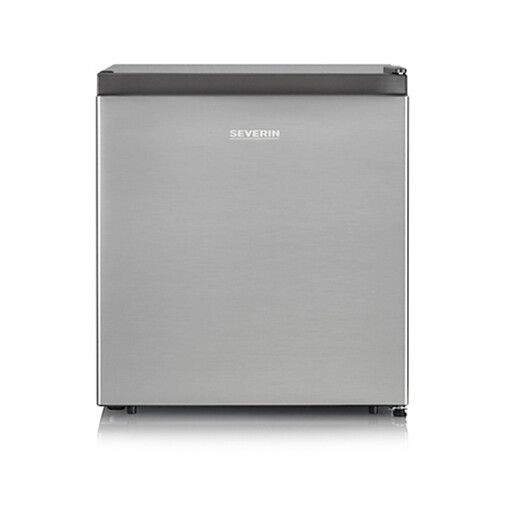 No image available
This compact compressor model could be a good fit for a small holiday-home kitchen with a fixed space for it. Check the internal temperature with a thermometer.
45 l total capacity, including 40 l of fridge space and a separate 5-litre compartment; annual energy consumption of 80 kWh; 39 dB(A); adjustable thermostat and reversible door.
Check the rating for the separate compartment before planning to use it for frozen food.
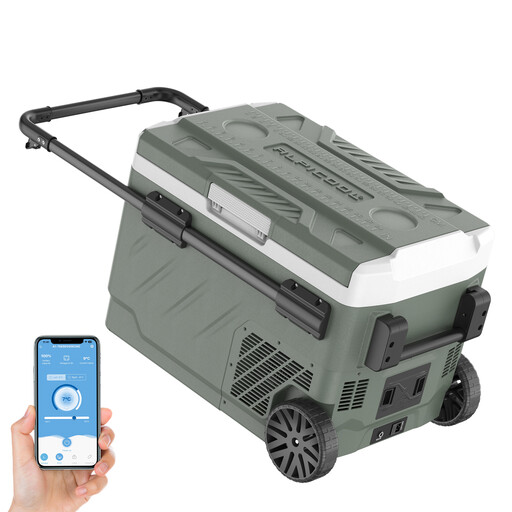 No image available
If you want to use the same appliance on the go and at your holiday home, its portable design could suit your needs. Check the internal temperature it actually reaches.
40 l capacity; two zones; adjustable temperature range from −20 °C to 20 °C; 12/24 V DC and 100–240 V AC connections.
 No image available
If you want to chill other food as well as opened hummus, the stated usable capacity can help you plan how much space you need. Compare it with the amount you usually buy.
82 l usable capacity; no freezer compartment; annual energy consumption of 84 kWh; 40 dB; adjustable glass shelves.
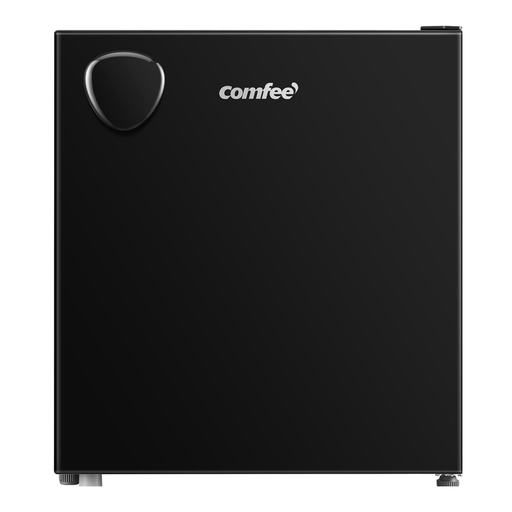 No image available
The stated width could help you plan for a narrow kitchen space. Remember to check the door opening and ventilation clearance, too.
43 l capacity; 44.5 cm wide; three temperature settings; reversible door; annual energy consumption of 80 kWh.
 No image available
If you want to chill other food as well as hummus, compare the stated storage space with your shopping needs. Before storing food, check whether the fridge reaches the required temperature.
90 l total capacity; three glass shelves; separate chiller compartment; stated fridge temperature range: 0 °C to 10 °C.
The stated range doesn’t prove that the temperature required for your hummus will be reached and maintained in the conditions where the fridge is placed.
There’s no set number of days that applies to every type of hummus. Follow the storage and use-by instructions on the packaging after opening, and keep it at the stated temperature. The best-before date for an unopened product doesn’t answer this question.
Only if the cool box can reach and maintain the temperature required for the hummus in the actual ambient and power conditions. The claim ‘up to 20 °C below ambient temperature’ doesn’t describe a fixed internal temperature; measure it before storing food.
Check the appliance dimensions, door opening, power connection and ventilation requirements in the instructions against the space available. Let the fridge reach the required temperature and check it with a thermometer before storing opened hummus.
Start by comparing the kWh per year on the EU energy label or product fiche for appliances that meet your needs. Actual energy use during a holiday stay depends on how the appliance is used and how long it runs; you can’t work out a specific cost in euros without knowing your electricity tariff.
No. Old electrical appliances must not go in household rubbish. Germany’s Federal Environment Agency lists free drop-off points at recycling centres and retailers; retailer take-back is subject to their individual terms. Before buying, check whether your old appliance can be taken away when your new one is delivered.