Keep cream reliably chilled
If you’re storing opened cream, check the temperature directly where you plan to keep it. The Federal Institute for Risk Assessment recommends 2 °C to a maximum of 7 °C for perishable foods.


For opened cream in a holiday home, choose an appliance that can actually reach 2 °C to a maximum of 7 °C where it will be placed; check the temperature while it is running. A compact fridge may be suitable for cream and a few other groceries, while a larger tabletop model offers space for extra supplies. If you want to use it both in the car and at your holiday home, consider a portable compressor cool box with the right connections. A cooling capacity specified only in relation to the ambient temperature does not, by itself, prove that cream will be kept sufficiently cold.
If you’re storing opened cream, check the temperature directly where you plan to keep it. The Federal Institute for Risk Assessment recommends 2 °C to a maximum of 7 °C for perishable foods.
If you only need to chill a few food items alongside your cream, consider usable capacity, appliance dimensions and door clearance together. The consumer advice centres point out that larger fridges can use more electricity.
If you want to keep food chilled both on the journey and at your holiday home, check the connections, portability and the actual temperature the specific model can reach. For example, Dometic describes the CFF 20 as a portable compressor cool box with a 21 l capacity.
First, check whether the appliance can reach the required temperature where you plan to place it. The Federal Institute for Risk Assessment recommends 2 °C to a maximum of 7 °C for perishable foods; an adjustable setting alone does not confirm the temperature during actual use.
| What to consider | What to check before buying | Who should pay particular attention? |
|---|---|---|
| Actual cooling temperature | Check whether the appliance can reach 2 °C to a maximum of 7 °C where you plan to place it and when loaded as usual. | If I’m storing opened cream in my holiday home, I want to be able to check the temperature where it’s actually kept. Around 42% of consumers put cooling performance first. |
| Size and placement | Compare usable capacity with the available floor space, door clearance and ventilation requirements; only choose a freezer compartment if you need one. | When space is limited, I want to fit in cream and a few other groceries without blocking the room or access. Around 25% of consumers prioritise size and placement. |
| Portability and connections | Check that the appliance has the right connections for your vehicle and holiday home, as well as the specific model’s weight, volume and achievable temperature. | If I’m using the same appliance on the road and at my holiday home, its connections and portability need to suit both. Around 17% of consumers prioritise taking it between the car and their accommodation. |
| Running costs | Compare the stated kWh figures for similar appliances, taking into account how long you plan to run them and your electricity tariff. | Once I’ve found an appliance that cools well, I want to estimate its electricity use for short or longer stays. Around 16% of consumers prioritise running costs. |
Dometic states that its DTE26 thermoelectric model cools to as much as 22 °C below the ambient temperature. This does not automatically mean that the cream will be stored at a maximum of 7 °C in the prevailing conditions.
Before storing food, check the temperature under the conditions in which you plan to use the appliance. The Federal Institute for Risk Assessment recommends 2 °C to a maximum of 7 °C for perishable foods.
Compact appliances vary in usable capacity and interior layout. A freezer compartment takes up space, and even an appliance with a suitable footprint may be difficult to access where you plan to place it.
Compare the floor space, door clearance, ventilation and genuinely usable fridge space.
Beko describes the TSE1424N as a freestanding appliance, while a different product listing calls the model an integrated appliance and says it has an internal freezer compartment.
Check the manufacturer’s documentation for the full model number, and clarify any conflicting information about the appliance type before buying.
The KB 7245 is a compact, freestanding fridge with 45 l of usable capacity.
Beko describes the TSE1424N as a freestanding fridge with 128 l of fridge space.
The KB05-V-040E is a compact, freestanding fridge with 40 l of usable capacity.
Dometic describes the CFF 20 as a portable compressor cool box with a 21 l capacity.
The models below include compact fridges for stationary use and a portable compressor cool box. For opened cream, the key consideration with every appliance is the actual temperature it reaches where you use it.
 No image available
Described as a fridge for holiday apartments, with a mechanical temperature control.
82 l usable capacity; no freezer compartment; glass shelves, a salad drawer and door shelves. Energy efficiency class E.
For cream, the actual storage temperature must be 2 °C to a maximum of 7 °C. Temperature control alone does not prove that this range can be reached where the fridge is placed.
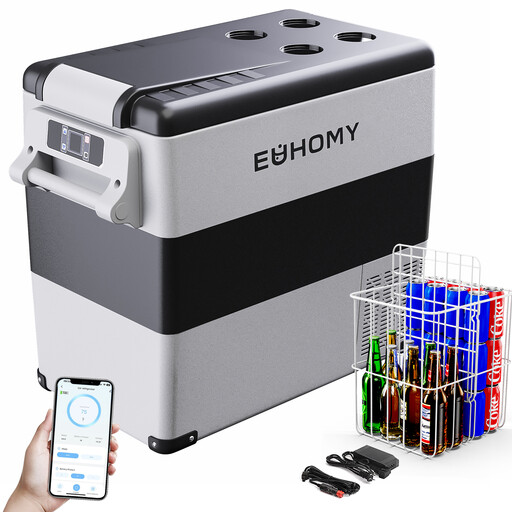 No image available
Designed for use on the road and at your holiday home, provided the required connections are available.
49,4 l capacity; 12/24 V DC and 240 V AC; with digital temperature control and a carry handle.
For cream, the actual storage temperature must be 2 °C to a maximum of 7 °C. The stated temperature setting does not confirm that this range can be reached where you use it.
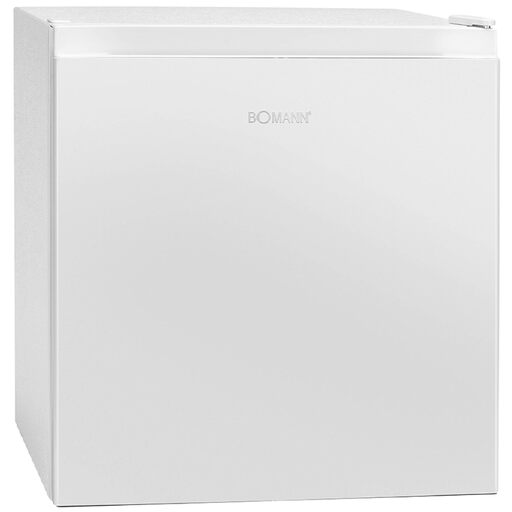 No image available
Its compact design is intended for cream and a few other groceries; the freezer compartment takes up some of the interior space.
45 l usable capacity; 4-l freezer compartment; stated temperature range 0 °C to +8 °C; reversible door hinges.
For cream, the actual storage temperature of 2 °C to a maximum of 7 °C is what matters. The stated temperature range does not prove that this will be maintained where the appliance is placed.
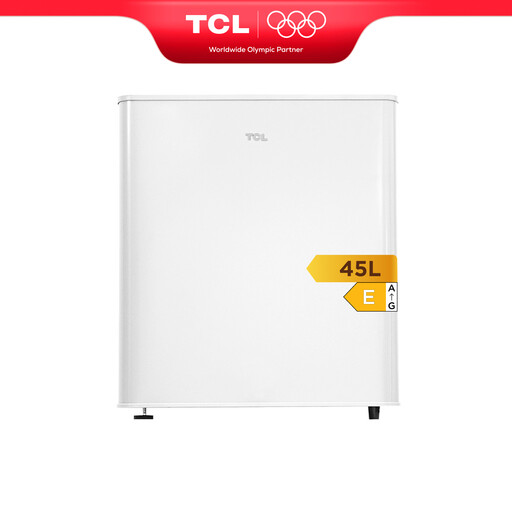 No image available
A compact tabletop fridge for food and drinks; check that its interior layout suits the space you have available.
45 l capacity; 3-l freezer compartment; stated temperature range 0–10 °C; mechanical temperature control and adjustable glass shelf.
The stated temperature range does not confirm that cream will actually be stored at 2 °C to a maximum of 7 °C where the appliance is placed.
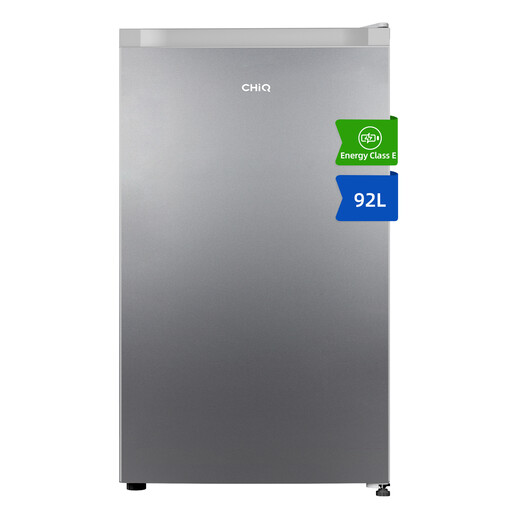 No image available
The extra fridge space could be useful for cream and other groceries; compare the appliance dimensions with the space available.
92 l capacity; 47 cm wide; chill drawer; seven temperature settings; adjustable glass shelves; energy efficiency class E.
The temperature settings do not prove that the appliance can actually reach 2 °C to a maximum of 7 °C where it is placed.
According to the Federal Centre for Nutrition, dairy products should be kept on the middle shelves. Also follow the instructions on the packaging and make sure the cream stays sufficiently cold there; the Federal Institute for Risk Assessment recommends 2 °C to a maximum of 7 °C for perishable foods.
You can’t determine a standard shelf life from the best-before date on an unopened pack alone. Follow the product-specific instructions and make sure it is properly chilled; the consumer advice centres point out that guidance on storage after opening is often unclear.
Check the available floor space, door clearance, manufacturer’s instructions and the specific model’s ventilation requirements. The German Environment Agency advises against placing fridges next to warm appliances or in direct sunlight.
Compare the stated kWh figures for similar appliances, taking into account how long you plan to run them and your electricity tariff. The consumer advice centres recommend considering energy consumption figures and the EU energy label when buying; however, the label does not tell you whether cream will be kept sufficiently cold where the fridge is placed.