Holidaymakers with leftover melon
You need an easy-to-reach fridge shelf that can hold a covered container, and you only want to keep leftover melon chilled for a short time.


Choose an appliance with enough fridge space for a covered container of melon, and make sure it fits in the allocated space with room to open the door. The German Federal Centre for Nutrition recommends storing pre-cut melon in the fridge in a covered container and eating it within a day. A larger freezer compartment or NoFrost is mainly relevant if you also store frozen food. For everyday running costs, consider the size you need and the stated annual energy consumption.
You need an easy-to-reach fridge shelf that can hold a covered container, and you only want to keep leftover melon chilled for a short time.
Choose a fridge freezer to suit the available space, door clearance and usual occupancy, rather than looking at total capacity alone.
If you need space for frozen food as well as fresh ingredients, compare freezer capacity, defrosting effort and energy consumption.
First, check that both the melon container and the appliance will fit in the kitchen and fridge compartment. Then consider how much fridge and freezer space you need, and which features suit the way you’ll use it.
| Priority | What to check | Who is this important to? |
|---|---|---|
| Keeping melon safely chilled | A usable fridge compartment with room for a sealed container; check the actual temperature where you plan to store it. | If I’m keeping cut melon in a holiday home, I need space for a covered container and suitable refrigeration. Around 36% of consumers put fresh food storage first. |
| Fitting the space and making the most of storage | Measure the external dimensions, door clearance and available shelf space; compare fridge and freezer capacity separately. | If the kitchen in my holiday home is small, I want an appliance that fits and is easy to open without taking up more floor space than necessary. Around 29% of consumers prioritise a good fit and usable storage space. |
| Energy consumption | Compare annual consumption in kWh and the usable capacity you need, using the same label basis. | If the fridge will be on for long periods, I want to compare its stated consumption with how I plan to use it and my electricity tariff. Around 21% of consumers focus primarily on running costs. |
| Freezer convenience and noise | Consider whether NoFrost suits your actual freezer needs; check the stated noise level if the appliance will be near a living or sleeping area. | If I regularly store frozen food in my holiday home or the appliance is near a living area, less defrosting and a suitable noise level matter to me. Around 14% of consumers prioritise freezer convenience and comfort at home. |
Once melon has been cut, germs can get onto the flesh. An appliance feature is no substitute for clean preparation or keeping it for only a short time.
Prepare the melon hygienically, keep it covered in the fridge and eat it soon. The German Federal Centre for Nutrition recommends eating pre-cut melon within a day.
Your melon container needs to fit on a shelf, and the door needs enough clearance to open where the appliance will stand.
Measure the height, width and depth of the space, as well as the door clearance. Also compare usable shelf space and fridge and freezer capacity separately.
NoFrost mainly makes the freezer easier to manage; it isn’t essential for keeping cut melon chilled. Choosing the right appliance size is a separate decision.
First decide how much fridge and freezer space you need. Then compare defrosting convenience and stated annual energy consumption.
The Beko B3RCNO255XB is a more compact fridge freezer for a limited space.
The freestanding Liebherr CNc 5023 Plus NoFrost offers 280 l of total capacity.
The Bosch KGN39OCAF has separate fridge and freezer capacities, making it easier to plan for different types of food.
The LG GBBS726AEV is a larger fridge freezer with 375 l of total capacity.
The Samsung RB38C607AB1/EF is a large-capacity option with 387 l of total capacity.
This Joybuy selection includes fridge freezers for keeping leftover melon chilled, as well as appliances with a range of fridge and freezer capacities.
 No image available
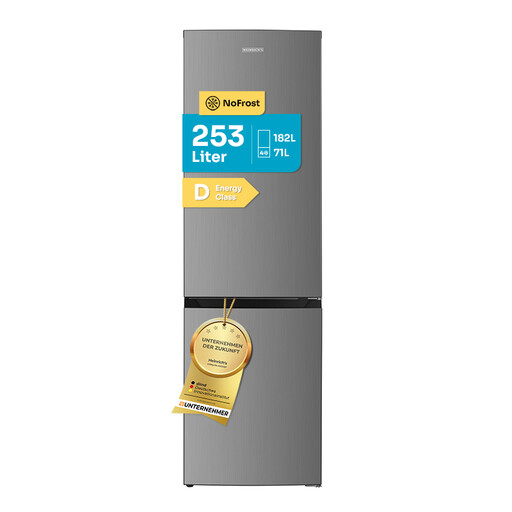
The separate fridge compartment can be used for leftover melon, provided the container fits on the shelf.
182 l fridge compartment and 71 l freezer compartment; No Frost; 39 dB; 181 cm tall.
 No image available
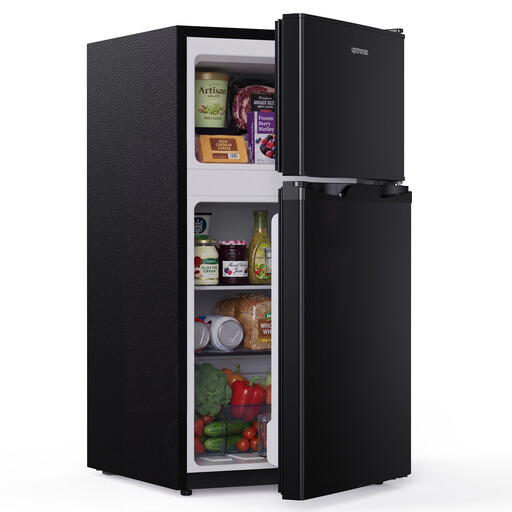
This compact appliance could work if its small fridge compartment is large enough for your container and it fits the available space.
59 l fridge compartment and 25 l freezer compartment; 7-setting thermostat; 39 dB.
 No image available
The separate compartments offer space for leftover melon and other fresh and frozen food, provided the appliance fits in your kitchen.
262 l fridge space and 113 l freezer space; energy efficiency class A; 112 kWh/year; Total No Frost.
 No image available
The fridge compartment can be used for leftover melon if the appliance is suitable for your kitchen units and the container fits on a shelf.
183 l fridge space; additional 37-litre 0 °C fresh food compartment; energy efficiency class A; 108 kWh/year; 29 dB.
The appliance is described as fully integrated; check the installation requirements before buying.
 No image available
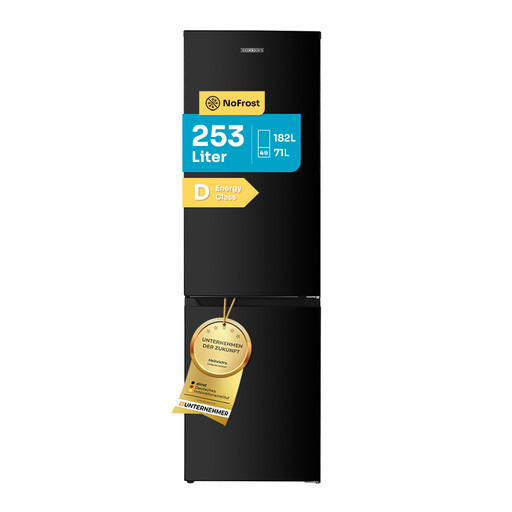
The separate fridge compartment can be used for leftover melon, provided the container fits on the shelf.
182 l fridge space; 253 l total capacity; 181 cm tall; No Frost.
Keep it covered or in a sealed container in the fridge, and eat it soon. The German Federal Centre for Nutrition recommends eating pre-cut melon within a day. NoFrost or a freshness compartment is no reason to keep it for longer.
Measure the space and door clearance, and check that your melon container fits on a shelf. Once the appliance is switched on, check the actual temperature where you plan to store food, as the set temperature alone doesn’t confirm what temperature has been reached. Follow the instructions for your specific model when installing and setting it up.
Compare the stated consumption in kWh/year with your electricity tariff and how long you plan to run the appliance. The Federation of German Consumer Organisations points out that energy consumption rises with fridge size, so choose only as much storage space as you actually need.
Yes. According to information from the European Union, the energy label for fridges and freezers that require one must also be clearly visible in online shops. The A-to-G scale shows the appliance’s rating; it isn’t an official recommendation for a particular efficiency class.
No. The Federation of German Consumer Organisations recommends taking it to a local collection point. For larger old appliances, a take-back scheme when buying a replacement may be available. Check how this works before delivery.