Holidaymakers with pre-cooked meals
If you want to store cooked vegetables in individual portions, consider the temperature where you’ll keep them and whether there’s room for covered containers. The BfR recommends keeping leftovers chilled.


You won’t need an additional cooling appliance if your existing fridge has enough room and you can check the temperature where food is stored. If you regularly keep meals chilled but don’t need freezer space, a fridge without a freezer compartment could be a good choice. A fridge-freezer is worth considering if you genuinely need to freeze food, while a compressor cool box is a better fit if you need to transport the appliance. The German Federal Institute for Risk Assessment (BfR) recommends storing perishable foods at between 2 °C and 7 °C at most; the temperature shown on the control dial does not confirm the temperature inside the food.
If you want to store cooked vegetables in individual portions, consider the temperature where you’ll keep them and whether there’s room for covered containers. The BfR recommends keeping leftovers chilled.
In a small kitchen, the usable fridge space, floor area and door opening all need to work together. The consumer advice centre recommends taking your storage needs into account when choosing an appliance.
If you also want to freeze food, consider the fridge and freezer space separately, and check that the model’s permitted ambient temperature is suitable for where you plan to put it.
A good fit if: there’s room for covered, shallow portions and you can check the temperature where the food is stored.
The trade-off: You won’t need another appliance, but if space is limited or the temperature hasn’t been checked, safe storage isn’t guaranteed.
A good fit if: you regularly store chilled meals and groceries but don’t need freezer space.
The trade-off: All the interior space is available for chilled food, but you won’t be able to freeze anything.
A good fit if: you genuinely want to freeze food as well as keep meals chilled.
The trade-off: A freezer compartment takes up space. Also check the climate class and the room temperature where you plan to put the specific model.
A good fit if: you need to take the cooling appliance with you and have a suitable power supply.
The trade-off: The Dometic model reviewed has a capacity of 28 l, so it offers less space than the tabletop fridges considered.
| Priority | What to check when buying | Who is it important to? |
|---|---|---|
| Safe, hygienic chilled storage | Check there’s room for shallow, covered containers and that the temperature can be adjusted. The BfR recommends storing perishable foods at between 2 °C and 7 °C at most; check the temperature where food is stored once the appliance is set up. | If I want to store cooked vegetables, effective cooling matters more to me than an extra feature. Around 31 % of consumers put suitable cooling first. |
| Storage and floor space | Compare usable capacity, shelves, appliance dimensions and the space needed to open the door. The manufacturers’ specifications reviewed range from 92 l for the Liebherr Re 1000 Pure to 134 l for the Bosch KTR15NWEB. | If my holiday kitchen needs to fit both containers and groceries, I compare the interior layout and the space the appliance takes up. Around 25 % of consumers prioritise storage capacity and installation space. |
| Chilling or freezing | First work out whether you genuinely need freezer space. If you choose a fridge-freezer, check the fridge and freezer capacities separately, along with the climate class. | If I want to freeze food as well as keep meals chilled, a freezer compartment is essential to my choice of appliance. Around 19 % of consumers put freezing options first. |
| Energy consumption | Compare the specific model’s kWh/year figure and EU energy label. Don’t assume the annual figures directly reflect consumption during a short holiday stay. | If the appliance will be running for longer or on a regular basis, I want to compare its stated energy consumption with that of other suitable models. Around 13 % of consumers prioritise running costs. |
| Transport | Check the capacity, weight, connections and power supply both on the way and at your destination. Check the temperature before storing cooked food. | If I want to take the cooling appliance between home and my holiday home, a portable design is important to me. Around 12 % of consumers put portability first. |
When storing cooked food, it’s also important to cool it promptly, cover it and check the temperature where it’s kept. A salad drawer or freshness function doesn’t guarantee these conditions.
Make room for shallow containers and, once the appliance is set up, check the temperature where you’ll put the food.
The Bomann models reviewed specify different minimum ambient temperatures: +10 °C for the VS 2195.1 and +16 °C for the stainless-steel KG 322.1 variant reviewed.
Check the lowest room temperature where you plan to put the appliance against the climate-class information for the exact model variant.
A fridge without a freezer compartment uses all its interior space for chilled food. A freezer compartment is mainly useful if you genuinely plan to freeze food.
First decide whether you want to freeze food. If you choose a fridge-freezer, compare the fridge and freezer capacities separately.
The Bosch KTR15NWEB is a freestanding tabletop fridge without a freezer compartment, with 134 l of fridge space.
The full-size fridge VS 2195.1 and the fridge-freezer KG 322.1 represent two different types of appliance.
The VKS 8808 is a tabletop fridge without a freezer compartment, with a usable capacity of 120 l.
The Re 1000 Pure is a smaller tabletop fridge with a stated capacity of 92 l.
The CFX2 28 is a portable compressor cool box for situations where transport matters too.
This selection includes compact fridges for small holiday kitchens and a portable compressor cool box.
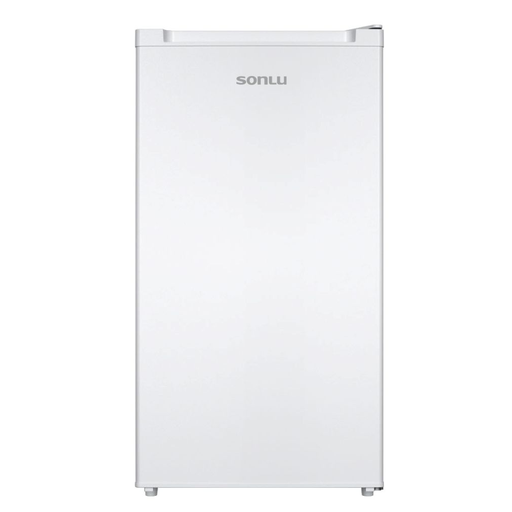 No image available
A compact fridge option for chilled food in a small holiday kitchen.
82 l capacity; single door; energy class E.
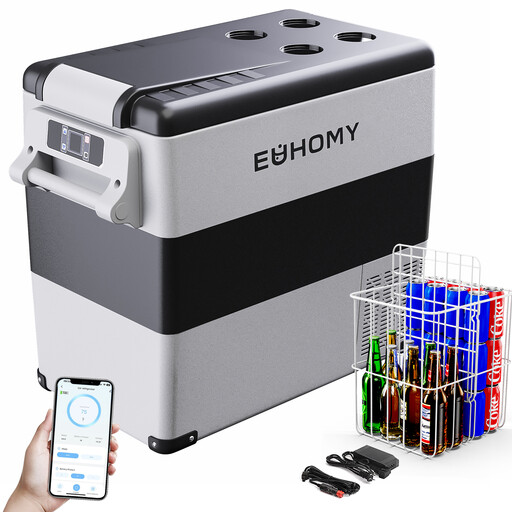 No image available
A portable cool box for keeping food chilled on the way and at your holiday home, provided a suitable power supply is available.
49,4 l capacity; 12/24 V DC and 240 V AC according to the product name.
 No image available
A compact fridge option if you need chilled food storage and a chiller box.
90 l total capacity; three glass shelves according to the product specifications; energy class E.
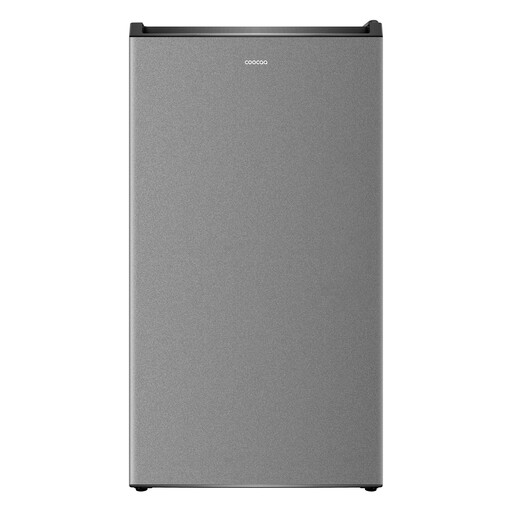 No image available
A compact option for chilled food if a single-door fridge fits the space available.
83 l capacity; energy class E.
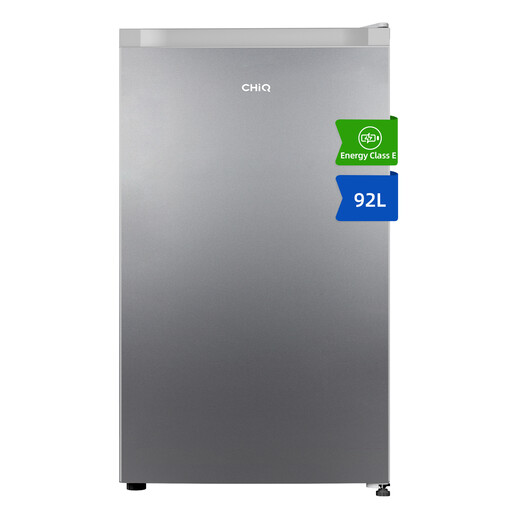 No image available
A compact fridge option for smaller kitchens. Check that the stated width will fit the space available.
92 l capacity; 47 cm wide; energy class E.
The BfR recommends quickly cooling hot food to below 7 °C if you plan to store it for longer, then keeping it covered and separate from other foods. For larger quantities, the BfR suggests using several shallow dishes. It also recommends eating leftovers within two to three days. These recommendations also depend on how the food is prepared and stored.
No. The control setting doesn’t confirm the temperature where your food is stored. The BfR recommends storing perishable foods at between 2 °C and 7 °C at most. Once the appliance is running, check the temperature where you’ll put the food. The consumer advice centre’s general recommendation for the top shelf of a fridge isn’t a measured temperature for every shelf.
It depends on the specific model’s climate class and the actual room temperature. Bomann gives a range of +10 °C to +43 °C for the VS 2195.1, and +16 °C to +43 °C for the stainless-steel KG 322.1 variant reviewed. If the room temperature falls below this range, these specifications don’t confirm that the relevant model is suitable.
Before ordering, check the floor space, door opening and any delivery or connection services on offer. For the VKS 8808, Severin recommends leaving the appliance to stand for at least four hours before switching it on if it wasn’t kept upright throughout transport. Don’t assume this advice applies to other models without checking. According to the German Environment Agency, old electrical appliances should be disposed of through separate collection.