For a holiday home with a permanent place for a fridge and regular storage of fresh food, a suitably sized fridge without a freezer compartment is a sensible starting point. If you need to keep food chilled while travelling or use the appliance in different places, a portable compressor cool box may be a better fit. The Consumer Advice Centre recommends storing yoghurt on the middle shelf of the fridge at 5 to 7 °C. So check the temperature at the intended storage spot, the space available and the power supply. If your holiday home is unheated, the appliance’s climate class must also be suitable for its location.
Which option suits you
Holiday home with a fitted kitchen
If you regularly store yoghurt and other fresh food, the usable fridge capacity should suit both your supplies and the space available. The Consumer Advice Centre recommends choosing an appliance size that meets your needs.
Travellers bringing chilled food
If you want to keep yoghurt chilled during the journey and continue using the appliance at your holiday destination, portability and suitable connections are important factors to consider. The Federal Centre for Nutrition recommends transporting perishable food chilled wherever possible and putting it straight into the fridge afterwards.
Owners of a seasonal holiday home
If your holiday home is sometimes empty or left unheated in winter, compare the stated annual energy consumption and check that the appliance’s permitted ambient temperature range suits its location. The Consumer Advice Centre and Liebherr both identify energy consumption and climate class as relevant checks.
What to look for when buying
The Consumer Advice Centre recommends storing dairy products such as yoghurt on the middle shelf of the fridge at 5 to 7 °C. When choosing an appliance, consider the actual temperature at the storage spot as well as the space it takes up, how you’ll use it and where it will be installed.
| What you need |
What to check when buying |
Who this matters most to |
| Keeping yoghurt at the right temperature |
Check the temperature controls and whether you can check the temperature at the intended storage spot. The Consumer Advice Centre recommends 5 to 7 °C on the middle shelf for dairy products. |
If I regularly keep yoghurt in my holiday home, I want to know whether it will stay sufficiently chilled where I store it. Around 36% of consumers would make keeping yoghurt at the right temperature their top priority. |
| Space for supplies |
Compare the external dimensions and usable fridge capacity separately. If an appliance has a freezer compartment, don’t mistake its total capacity for the fridge space. |
If space is limited or I have extra supplies, I need enough room in the fridge without having to install an unnecessarily large appliance. Around 29% of consumers would prioritise space and supplies. |
| Seasonal use and installation location |
Check the annual energy consumption, climate class and manufacturer’s instructions for the specific model. To assess suitability, you’ll also need to consider how long it will be running and the conditions at the location. |
If my holiday home is sometimes empty or unheated, I want to check its energy consumption and permitted ambient temperature in advance. Around 21% of consumers would make seasonal use their main priority. |
| Transport and power supply |
Check the power source, connections, actual capacity and weight of the specific appliance. The Federal Centre for Nutrition recommends transporting perishable food chilled wherever possible. |
If I want to keep yoghurt chilled on the journey and take the appliance with me, I need a portable option with suitable connections. Around 14% of consumers would make chilled transport their top priority. |
Common selection mistakes
-
Assuming the set temperature is the same as the temperature where you store food
Being able to set a target temperature doesn’t, on its own, confirm the temperature the appliance actually reaches where you keep your yoghurt.
Follow the storage instructions on the packaging and check the temperature at the intended storage spot.
-
Choosing a bigger appliance than you need
An oversized appliance takes up more floor space and may use more electricity. The Consumer Advice Centre recommends choosing a size that meets your actual needs.
Think about which foods you’ll want to chill at the same time, then compare fridge capacity, external dimensions and the stated annual energy consumption.
-
Assuming you need a freezer compartment to store yoghurt
Yoghurt belongs in the fridge compartment. A freezer compartment is for an additional need and may reduce the space available for fresh food.
Choose based on how much frozen food you actually need to store, and check how much fridge space will be left for fresh food.
-
Overlooking the climate class in an unheated holiday home
The climate class describes the ambient temperature range the appliance is designed for. Conditions in your holiday home may fall outside the range specified for a particular appliance.
Compare the lowest temperature at the installation location with the climate class and the instructions for the model.
Brands to consider
Severin
The larder fridges considered here offer different amounts of fridge space. Whether a particular model will fit in your holiday home kitchen depends on its usable capacity and external dimensions.
- According to the manufacturer, the VKS 8808 has a usable capacity of 120 l and an annual energy consumption of 71 kWh; the VKS 8817 is listed as having a capacity of 242 l and using 83 kWh per year.
- Compare the dimensions and energy consumption of the specific model with your needs rather than assuming these figures apply to other models from the brand.
Liebherr
The Rdgd 1401 considered here is an under-counter fridge with a freezer compartment. It may suit you if you genuinely need to store frozen food as well as fresh produce.
- According to the manufacturer, the appliance has a total capacity of 111 l and measures 85 × 55 × 60,7 cm externally; the temperature setting is specified as +2 to +8 °C.
- The total capacity is not the same as the fridge capacity alone. Also check that the climate class is suitable for the intended installation location.
Dometic
The CFX2 45 considered here is a portable compressor cool box for use both on the journey and at your holiday home.
- According to the manufacturer, it has a capacity of 45 l, can be set from +20 to −22 °C and can be powered by AC or DC.
- Its stated net weight of 16,57 kg and smaller storage capacity compared with the household fridges considered here are worth bearing in mind. The temperature setting doesn’t replace checking the actual storage temperature.
Beko
The range includes fridges with and without a freezer compartment. The right design depends on how much fresh and frozen food you need to store.
- The range of designs lets you choose according to your actual need for fridge and freezer space.
- Check the energy consumption, climate class and suitability for the installation location for the specific model.
Joybuy products
This selection includes freestanding fridges and portable compressor cool boxes for storing food at your holiday home or keeping it chilled in transit.
 No image available
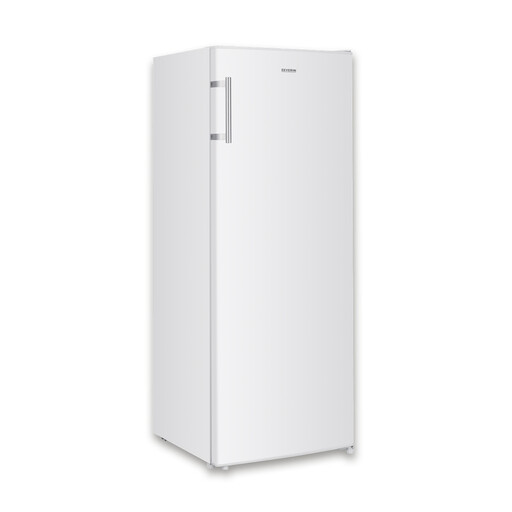
Severin VKS 8817 larder fridge, 242 l
For a permanent spot and regular storage of other fresh food; product details state that it has no freezer compartment.
242 l fridge capacity; energy efficiency class D; 143 cm high; 83 kWh per year; adjustable shelves and a salad drawer.
Joybuy
 No image available
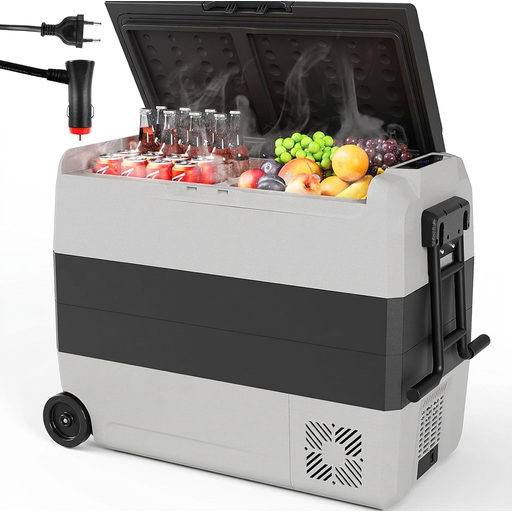
Compressor cooler, 56,5 l
For anyone looking for a portable cooling appliance for the journey and their holiday home; check in advance that its connections match the available power sources.
56,5 l; adjustable temperature range from −20 to +20 °C; 12/24 V DC and 100–240 V AC; wheels and a handle.
Joybuy
 No image available
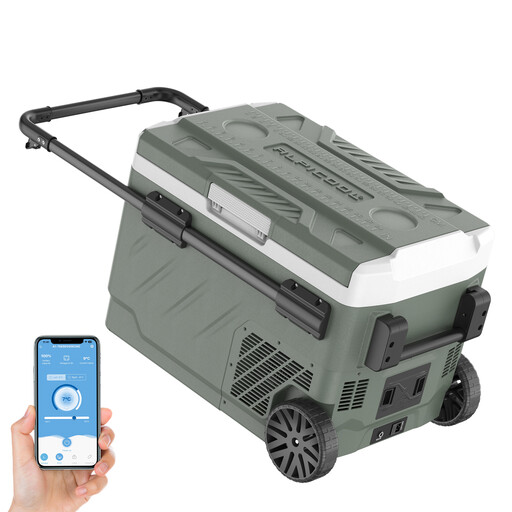
Alpicool EZGW41 compressor cool box, 40 l
For keeping food chilled in transit and using the appliance at your holiday destination; check the power connections and storage capacity you need before buying.
40 l; dual-zone design; temperature range from −20 to +20 °C; 12/24 V DC and 100–240 V AC; energy efficiency class C.
Joybuy
 No image available
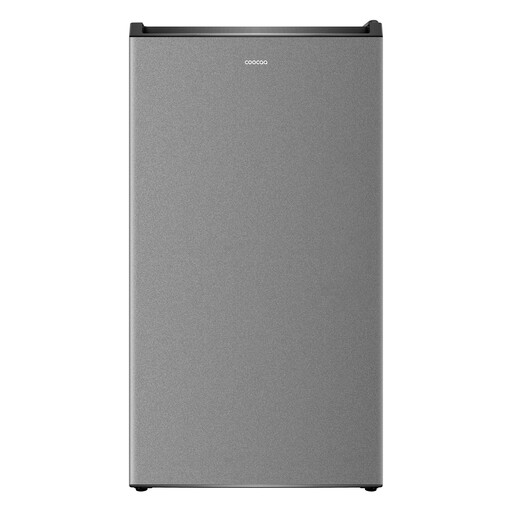
Coocaa SRS-120DTE fridge, 83 l
For a permanent spot where space is limited; compare the appliance’s dimensions with the space available.
83 l fridge capacity; energy efficiency class E; adjustable feet and shelf; door shelves and a salad drawer.
Joybuy
 No image available
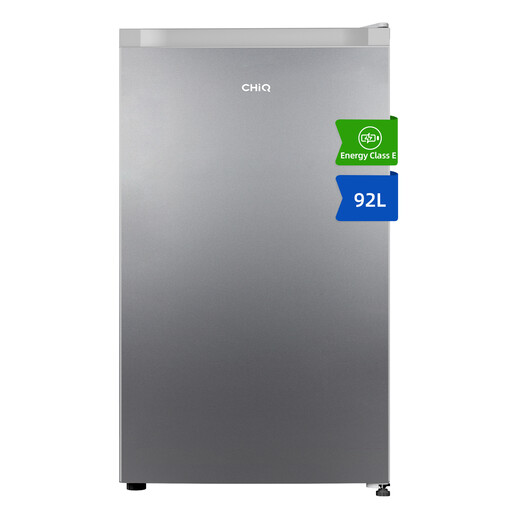
CHiQ JR92DSE fridge, 92 l
For a permanent spot where width is limited; check that the stated width of 47 cm, with enough room to open the door, will fit the space available.
92 l; 47 cm wide; energy efficiency class E; seven temperature settings; adjustable glass shelves and a salad drawer.
Joybuy
Frequently asked questions
Where should you keep yoghurt in the fridge?
On the middle shelf. The Consumer Advice Centre recommends 5 to 7 °C there for dairy products such as yoghurt. Also follow the storage instructions on the packaging.
What should I bear in mind when taking yoghurt to my holiday home?
The Federal Centre for Nutrition recommends keeping perishable dairy products chilled during transport wherever possible, especially in hot weather, and putting them straight into the fridge. A compressor cool box may be suitable if you have access to a compatible power source.
Can I run a fridge in an unheated holiday home in winter?
It depends on the lowest room temperature and the specific model. Before using the appliance there, compare the conditions at the installation location with its climate class and instructions.
How much fridge space do I need for yoghurt and other supplies?
Choose a fridge capacity based on the food you want to store at the same time, and check that it fits the space available. If the appliance has a freezer compartment, don’t confuse its total capacity with the fridge space available.
What does the EU energy label tell me about a fridge?
The EU energy label helps you compare the appliance characteristics and energy consumption shown. You can find further product information in the EU’s EPREL database. On its own, the label doesn’t tell you whether an appliance is suitable for the temperatures at a particular installation location.


