Guests with pre-cooked leftovers
If you’re reheating chilled mashed potato in portions, look for even heating and easy-to-use controls. The consumer advice centre recommends stirring food regularly when reheating it in a microwave.


If you’ll mainly be reheating individual portions of mashed potato and other leftovers in your holiday home, a freestanding solo microwave with straightforward controls and enough room for your bowl is a sensible place to start. A grill or convection function only matters if you also want to brown or bake food; a larger capacity also takes up more space. For chilled food, the consumer advice centre recommends stirring it regularly. The Federal Institute for Risk Assessment recommends reheating food to at least 70 °C for at least two minutes.
If you’re reheating chilled mashed potato in portions, look for even heating and easy-to-use controls. The consumer advice centre recommends stirring food regularly when reheating it in a microwave.
When worktop space is limited, the appliance needs to fit alongside your bowl. Check the internal dimensions and turntable as well as the external size; Stadtwerke Osnabrück lists space requirements and appliance features among the key buying considerations.
When different guests will be using the appliance, clear settings and easy-to-clean parts matter. Extra features are worthwhile if they suit the way you actually plan to cook in your holiday home.
If you’ll mainly be reheating mashed potato, the right dimensions and simple controls matter more than grill or baking programmes. Choose extra features to suit the other dishes you plan to prepare.
A good choice if: you mainly want to heat up mashed potato and other leftovers.
Keep in mind: it won’t brown food or bake; stirring is still important when reheating.
A good choice if: you want to brown dishes such as small casseroles as well as reheat food.
Keep in mind: the grill won’t ensure even heating or remove the need to stir mashed potato.
A good choice if: your holiday home could also do with an oven or a way to roast food.
Keep in mind: models with a larger capacity need more space; there’s no proven extra benefit if you’re only reheating mashed potato.
| Buying priority | What to check | Who is this most important to? |
|---|---|---|
| Even heating | Power settings and controls; stir food regularly while reheating. | If I’m reheating chilled mashed potato for several guests, I want it to be hot enough throughout; around 36% of consumers prioritise even and hygienic heating. |
| Worktop space and bowl size | Compare the external dimensions, internal capacity, turntable diameter and installation instructions for the specific model. | With a small kitchenette, I want to know whether the appliance and my bowl will actually fit; around 29% of consumers prioritise worktop space and container size. |
| Controls and cleaning | Check the controls and removable parts on the model you’re considering. | If different guests will use the appliance, clear settings and easy cleaning make life simpler; around 21% of consumers put ease of use first. |
| Extra features | Only opt for a grill or convection function if you really want to brown or bake food and have enough space. | If I also want to grill or bake in my holiday home, I need the right extra features; around 14% of consumers prioritise additional cooking methods. |
The capacity in litres alone won’t tell you whether your bowl of mashed potato will fit on the turntable or rotate inside the microwave.
Measure your bowl and compare its dimensions with the internal space and turntable of the specific appliance.
Power settings and the grill serve different purposes from even heating. A hot surface doesn’t tell you whether the mashed potato is hot enough throughout.
Stir the mashed potato several times as it heats. The Federal Institute for Risk Assessment recommends reheating food to at least 70 °C for at least two minutes.
The stated microwave output is not the appliance’s electrical input power.
If you want to compare electricity consumption, check the input power of the specific model and take your actual usage into account.
The MW 7770 is an example of a solo microwave with mechanical controls.
The freestanding FFL020MS2 is an example of a solo microwave with rotary controls.
The freestanding MW 49 SL has a grill function for extra browning.
The range includes a grill model for comparison and a larger combination microwave with convection.
The CMSN 20 Wh is a useful comparison model for a solo microwave with mechanical controls.
This selection includes freestanding solo microwaves for reheating food, including models with rotary controls or extra power levels.
 No image available
The rotary controls and selectable power levels are a good option if you want to adjust the settings directly on the appliance while reheating.
20 l; 700 W; six power levels; external dimensions 44,6 × 36,3 × 24,3 cm.
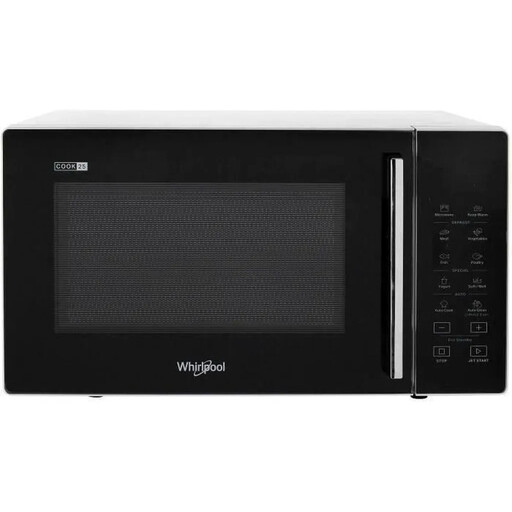 No image available
The 27-cm turntable may help you choose a model if you want to use a particular bowl; check its dimensions against your container.
25 l; 900 W; seven power levels; turntable diameter 27 cm.
According to the product description, allow at least 10 cm of clearance at the sides and 20 cm above the appliance when positioning it.
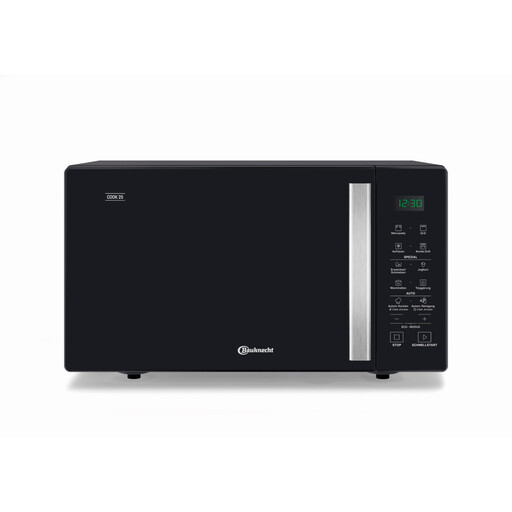 No image available
The power settings and Rapid-Start function are useful if you want to select the power level and start the appliance directly.
20 l; 700 W; seven power levels; Rapid-Start function.
The product description recommends placing the appliance on a stable, level surface with enough space around it for ventilation.
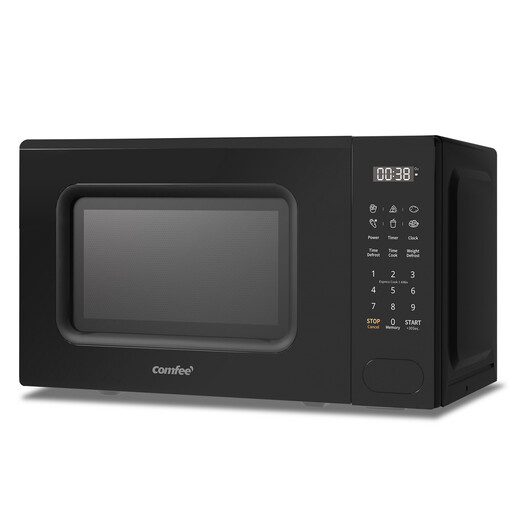 No image available
With 11 power levels, you can select the output on the appliance; check the external dimensions against the space available.
20 l; 700 W; 11 power levels; external dimensions 440 × 319 × 259 mm.
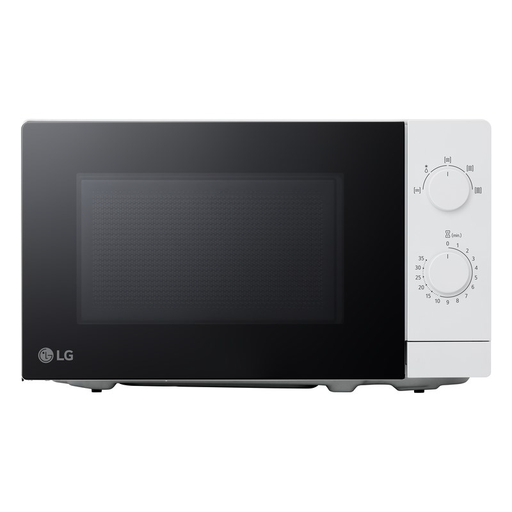 No image available
The rotary controls for selecting power and time offer a straightforward way to use the appliance, especially when several guests will be sharing it.
20 l; 700 W; turntable diameter 255 mm.
Put the mashed potato in a microwave-safe container and stir it several times as it heats. The consumer advice centre recommends stirring food regularly; the Federal Institute for Risk Assessment recommends reheating food to at least 70 °C for at least two minutes. The turntable or wattage alone won’t confirm that it has reached this temperature.
Measure the available space and your bowl, and follow the positioning and ventilation instructions in the manual for the specific model. External dimensions and turntable diameters vary; the capacity in litres alone won’t tell you whether your container will fit.
New electrical appliances covered by the Low Voltage Directive or the 1. ProdSV and designed for 50 to 1,000 V AC must carry CE marking before being made available. The Federal Institute for Occupational Safety and Health explains these requirements; the marking does not assess how well an appliance heats food.