Brands and models to help you choose
The details below relate to specific models and product ranges and aren’t a general assessment of the brands.
Bosch
The WQB245B40 heat pump tumble dryer is designed for larger loads as well as smaller, occasional ones.
- Bosch lists a 9 kg rated capacity, Auto Dry, a quick programme and a self-cleaning condenser for this model.
- The quick programme’s running time won’t necessarily apply to every load. Bosch’s instructions still require you to maintain the filter.
Siemens
According to Siemens, the WQ35B2B30 heat pump tumble dryer has features to suit different load sizes.
- Siemens lists an 8 kg capacity, autoDry, a half-load option and a 40-minute quick programme.
- Whether the quick programme is suitable depends on the fabrics and load. Check the model’s instructions for details.
AEG
The manufacturer also describes the TR9T75680 heat pump tumble dryer as suitable for mixed loads and more delicate fabrics that can be tumble dried.
- AEG lists an 8 kg capacity for this specific model.
- Claims about the manufacturer’s own systems aren’t independent proof of how well they work for school clothes. Care labels and programme instructions remain essential.
Miele
The TWC640WP heat pump tumble dryer provides model-specific details on Eco-cycle energy use and condensate drainage.
- Miele lists an 8 kg capacity, 95 kWh per 100 Eco cycles and an integrated condensate drainage system.
- The Eco-cycle energy figure isn’t a measurement for a quick, small load. App features are no substitute for clear instructions for guests.
Beko
The DC 7130 N is a conventional condenser dryer without a heat pump.
- Beko lists a 7 kg capacity, plus sensor and timed programmes for this model.
- The German Consumer Advice Centre considers heat pump dryers more energy-efficient than condenser dryers; that doesn’t amount to an individual assessment of every Beko model.
Heat pump tumble dryers at Joybuy
The Joybuy products below are heat pump tumble dryers for different laundry volumes and drying needs. For quick programmes, check the permitted load; for capacity, consider whether it suits the amount of laundry you actually have.
 No image available
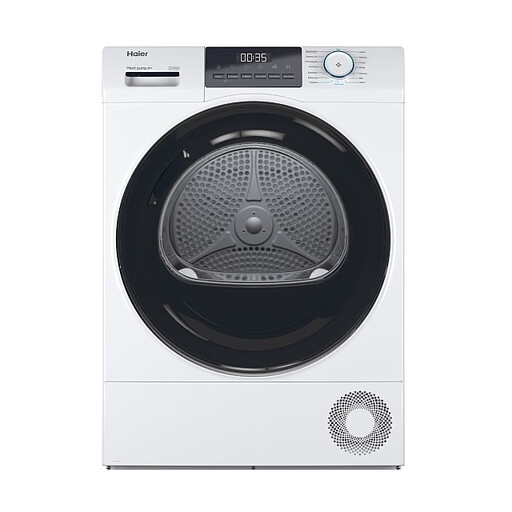
Haier I-Pro 1 HD80-E929E-DE, 8 kg
With sensor drying and a range of programmes, this model is suited to different laundry loads and routines.
Heat pump tumble dryer with an 8 kg capacity.
View at Joybuy
 No image available
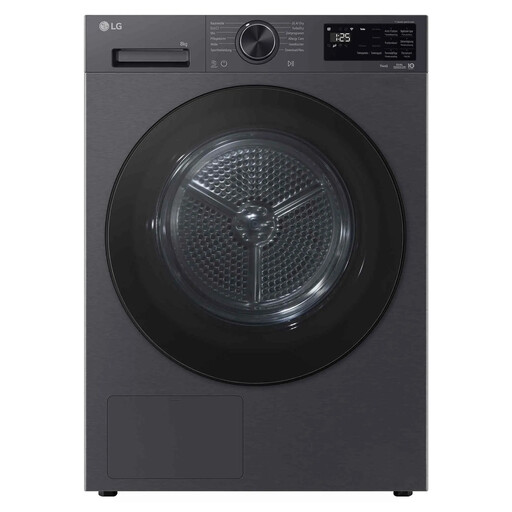
LG RT80X7B, 8 kg
The TurboDry programme listed may be useful for individual loads needed in a hurry; check which load size and fabrics it’s designed for.
Freestanding heat pump tumble dryer with an 8 kg capacity. Product details list 85 kWh per 100 cycles.
View at Joybuy
 No image available
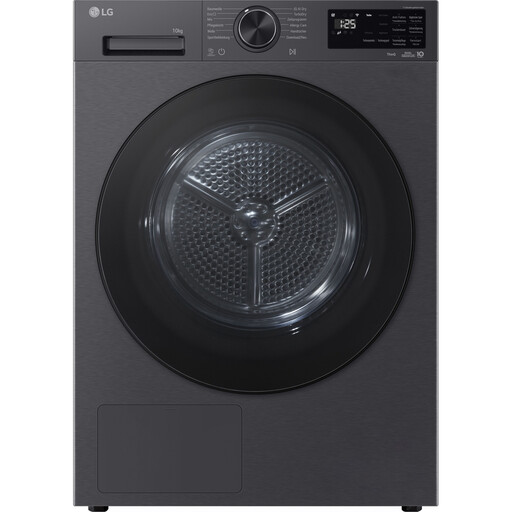
LG RT10X7B, 10 kg
The product details list programmes for different fabrics; check that your chosen programme is suitable for the care labels.
Heat pump tumble dryer with a 10 kg capacity. Product details list 85 kWh per 100 cycles, as well as programmes for wool, mixed loads and sportswear.
View at Joybuy
 No image available
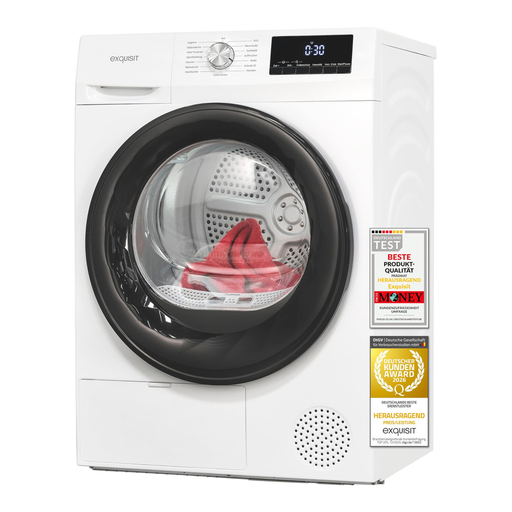
EXQUISIT, 7 kg
The product details list a Quick-30' cycle; before using it, check which fabrics and load sizes it’s intended for.
Heat pump tumble dryer with a 7 kg capacity and 15 programmes. The digital display shows the remaining time.
View at Joybuy
 No image available
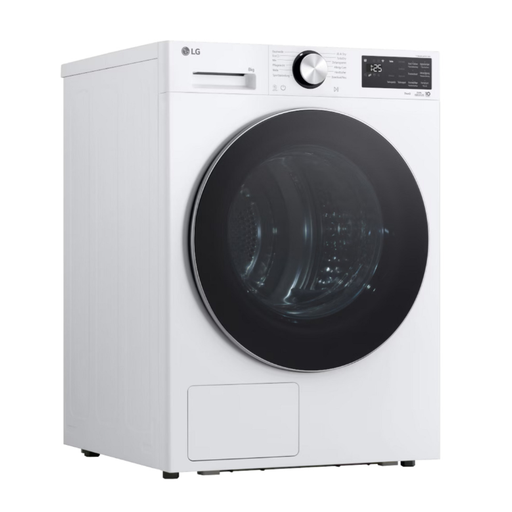
LG RT80X72W, 8 kg
The product details list programmes for mixed loads and wool; check the care instructions for each item before drying.
Heat pump tumble dryer with an 8 kg capacity. Listed features include 85 kWh per 100 cycles, a self-cleaning condenser system and a fluff filter.
View at Joybuy
Frequently asked questions
Will a 40-minute programme dry a full drum of school clothes?
Not necessarily. Check the instructions for the specific model to see which load size and fabrics the programme is designed for, and follow the care label.
What should you clean between guest stays?
Clean the fluff filter according to the instructions for your chosen appliance, and empty the condensate tank unless a suitable drain has been installed. Bosch recommends cleaning the fluff filter after every drying cycle for its tumble dryers.
How can you compare electricity costs using energy figures?
Use the kWh per 100 Eco cycles shown on the relevant new EU energy label. For a rough estimate, multiply this figure by the number of Eco cycles you expect to run, divided by 100, then multiply the result by your electricity price per kWh. Quick programmes and different load sizes may use different amounts of energy.
Are a guarantee and statutory consumer rights the same for a holiday let?
No. Statutory rights apply to claims against the seller under the law; a guarantee is a voluntary promise with its own terms. Whether a purchase for a holiday let counts as a consumer purchase depends on its purpose. Under § 13 BGB, the key question is whether the transaction can be attributed predominantly to neither a commercial nor a self-employed professional activity. Check the specific contract and guarantee terms.
Is a tumble dryer with an old A+++ label automatically not permitted?
No. Since 1 July 2025, the rescaled EU label, running from A to G, has applied. The European Commission explains that the new ecodesign requirements don’t apply retrospectively to appliances that were already placed on the market. So don’t compare old and new energy ratings directly.


