Families keeping an eye on portion sizes
If you’re packing individual bars for holiday outings, compare the calories in each bar you’ll eat rather than relying solely on the information on the front of the pack.


When choosing a snack bar for a holiday outing, start by checking the energy in the amount you’ll actually eat. The options listed by REWE — CORNY Free White Chocolate at 68 kcal per 20-g bar and FULFIL Chocolate Salted Caramel at 149 kcal per 40-g bar — show why you need to compare serving sizes as well as calories. Also check the sugar, sweeteners and allergens. According to the Verbraucherzentrale, products containing sweeteners and sugar substitutes are generally not a suitable alternative for children.
If you’re packing individual bars for holiday outings, compare the calories in each bar you’ll eat rather than relying solely on the information on the front of the pack.
If you’re looking for a protein bar with a low stated sugar content, remember to take its serving size and calories per bar into account too.
For bars labelled vegan or gluten-free, the ingredients and allergen information for the specific product still matter.
For your planned holiday break, first compare the weight and calories per bar. Then consider the sugar, ingredients and, where relevant, whether the product suits your dietary preferences.
| What to check | What to look for | Who it matters to |
|---|---|---|
| Calories per serving | Compare the calories per bar and its weight, not just the nutrition information per 100 g. | I want to pack exactly one bar for a holiday break and know how many calories it contains. Around 50% of shoppers prioritise energy per bar. |
| Sugar and sweeteners | Check the sugar per bar, along with any sweeteners and sugar alcohols in the ingredients list. | If the bar is for my child, I want to know what it’s sweetened with. For around 30% of shoppers, this is the first thing they consider. |
| Protein, dietary preferences and allergens | Consider the protein per bar alongside its calories. If needed, check the ingredients and allergen information for the specific product. | Protein or a particular dietary preference matters more to me than choosing the smallest serving. If I have allergies, I also need to check the exact ingredients. Around 20% of shoppers put these requirements first. |
The CORNY Free White Chocolate and FULFIL Chocolate Salted Caramel bars listed by REWE contain 68 and 149 kcal per bar respectively. Their weights differ too: 20 g compared with 40 g.
Compare the calories per bar and consider how many bars you’re actually planning to eat as a snack.
A bar with no added sugar may still contain sweeteners or sugar alcohols. According to the Verbraucherzentrale, products containing sweeteners and sugar substitutes are generally not a suitable alternative for children.
Before packing a bar for a child, check the ingredients list as well as the nutrition table.
A market review by Lebensmittelklarheit found that protein claims on bars were not consistent, making them difficult to compare. A figure on the front of the pack is no substitute for checking the serving size and full nutrition information.
Compare the protein, sugar and calories in each bar you’ll eat.
The vegan Barebells Caramel Choco Chip listed by REWE contains wheat and soya protein. The gluten-free Nature Valley Salted Caramel listed there contains peanuts, almonds, milk and soya.
If you have allergies, check the ingredients and any ‘may contain’ warnings on the specific pack you’re buying.
The details below refer to the specific products listed by REWE, not every bar made by each brand.
CORNY Free White Chocolate is a cereal bar sold in individual 20-g portions.
FULFIL Chocolate Salted Caramel is a 40-g protein bar.
Barebells Caramel Choco Chip vegan is a protein bar labelled as plant-based.
Nature Valley Salted Caramel is a protein bar labelled gluten-free.
Layenberger Schoko-Banane is a low-carb protein bar weighing 35 g.
This selection includes a cereal bar in 20-g portions and a protein bar in 40-g portions. For your holiday break, compare the nutrition information per bar and the ingredients in each product.
 No image available
The 20-g bars are a handy choice when you’re planning an individual holiday break. Compare the calories per bar and, if you’re packing snacks for children, check the ingredients list too.
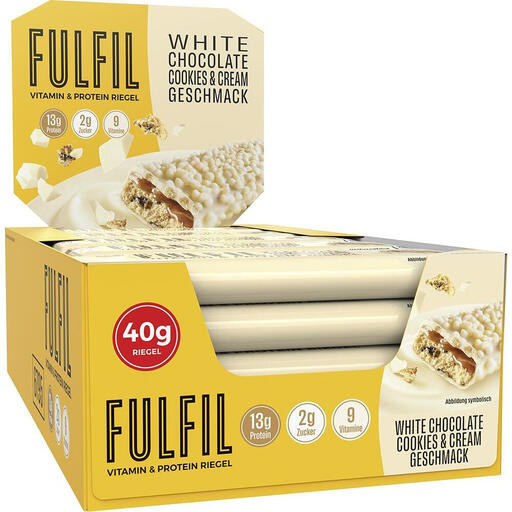 No image available
This 40-g protein bar may suit you if protein is a priority. Remember to consider the calories per bar, ingredients and allergen information for this product too.
No. ‘No added sugar’ doesn’t tell you how many calories the bar contains. Compare the energy per bar and per 100 g, and check the ingredients list for sweeteners.
A protein bar isn’t automatically the better choice just because it contains protein. If you want to limit the calories in your snack, compare the weight and energy per bar. A market review by Lebensmittelklarheit also found that protein claims on bars were not consistent.
Check the recommended portion, sugar content and ingredients. The Verbraucherzentrale generally doesn’t consider products containing sweeteners and sugar substitutes to be suitable alternatives for children.
No. These labels don’t replace checking for the allergens that matter to you. Read the ingredients and any ‘may contain’ warnings on the specific pack you’re buying. The Verbraucherzentrale notes that ingredient and allergen information is part of food labelling.