
Lieferung heute & morgen

Qualitätsgarantie

Willkommens-Angebote freischalten: KOSTENLOSE Lieferung | Bis zu 80 % RABATT | Kostenlose 30-Tage-JoyPlus-Testphase
App herunterladen
Home appliances should make everyday life easier, be safe to use and suit the size of the room. Yet poor purchases are often caused not by missing features, but by unsuitable dimensions, confusing performance claims or ongoing costs.
Three common pitfalls are particularly easy to fall into:
When buying a 60 cm ceramic hob, check not only its overall width, but especially the required cut-out dimensions. The TOPWISH model measures 590 × 520 × 52 mm and, according to the product details, requires a worktop cut-out of 560 × 490 mm. As the appliance is supplied without a plug and comes with a connection cable, it must be connected by a suitably qualified electrician.
The recommended room size for a dehumidifier is a guide. The VINO model with a 12-litre capacity is specified for rooms up to 24 m², while the 20-litre version is intended for rooms up to 40 m². High ceilings, frequent indoor clothes drying, cold external walls and poor air circulation can all affect its actual performance.
A quiet dehumidifier should be assessed by checking its decibel rating and the specific operating mode. The VINO 12L is listed as producing 32 dB in sleep mode in the description, while the technical specifications give a noise level of 38 dB(A). The VINO 20L is listed at 35 dB in sleep mode, with a noise level of 40 dB(A) in the technical details. These should be treated as product specifications; actual levels may vary depending on the room, surface and operating conditions.
Power consumption also affects running costs. You can estimate them using this formula:
Power in kilowatts × operating hours × electricity price per kilowatt-hour
For example, a 195 W appliance uses around 1.95 kWh over ten hours. Actual consumption depends on the target humidity, temperature and how long the compressor runs.
A built-in hob with touch controls should have a clearly visible residual heat indicator, a child lock and an automatic switch-off function. The TOPWISH hob comes with nine power settings, a timer of up to 99 minutes, overheat protection and an ‘H’ indicator. The automatic safety shut-off is specified at 90 minutes.
For families with children, an electric hob with a child lock is a sensible choice, provided the lock is used consistently. Find out more about home safety solutions in the child safety locks range.
A portable white noise machine should be positioned out of the baby’s reach. A sleep aid is no substitute for a safe sleep environment. Volume, distance and secure fixing matter more than the number of sounds available.
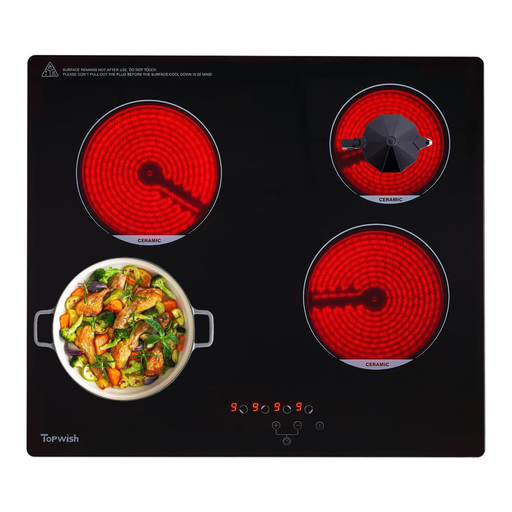
Why this product suits this profile: This 60 cm built-in hob is designed for households looking to combine four cooking zones, touch controls and essential safety features in one appliance.
The specified cut-out dimensions of 560 × 490 mm help you plan for more than just the visible width of the appliance. The child lock and residual heat indicator address common safety concerns.
Four cooking zones, nine power settings, a timer of up to 99 minutes and automatic safety shut-off.

Why this product suits this profile: Suitable for living rooms, bedrooms or home offices up to 24 m², this appliance offers app control, scheduling and a dedicated sleep mode.
The recommended room size, 1.8-litre tank and option for continuous drainage via a hose make its limitations clear.
12 litres of moisture removal per day under the stated conditions, Wi-Fi app control, a laundry-drying function and a child lock.

Why this product suits this profile: Designed for rooms up to 40 m², this version is suited to larger living areas, frequent indoor clothes drying or significant condensation problems.
Its higher capacity is put into context with a recommended room size, 2.5-litre tank, hose drainage option and automatic shut-off.
Up to 20 litres per day under the stated conditions, Wi-Fi control, a laundry-drying function and 360-degree castors.
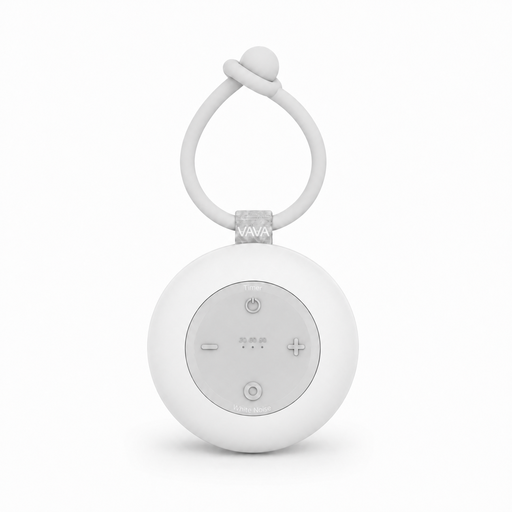
Why this product suits this profile: This portable white noise machine combines 18 sounds, five light modes, a timer and a USB-C rechargeable battery for use at home or on the go.
The rechargeable battery means you don’t have to rely on a cable. A child lock, 30-, 60- and 90-minute timer settings, and separate sound and light controls make it easy to use.
1000-mAh battery, up to 40 hours’ runtime according to the product details under a specified setting, and five light modes to use as a night light for babies.
We’ve put together a complete, regularly updated list of products that meet these strict selection criteria and fully comply with the safety regulations in force in the EU.
Consumption depends on power, running time and operating mode. Appliances that generate heat, such as hobs, use comparatively high levels of power while running. A dehumidifier’s compressor does not necessarily run continuously. For a realistic estimate, multiply the rated power by the expected operating time and check the manufacturer’s consumption information too.
A 12L dehumidifier rated for rooms up to 24 m² may be enough for smaller spaces. For larger or damper rooms, consider a 20L dehumidifier rated for spaces up to 40 m². If you’re dealing with mould and damp, you should also look for the underlying cause, such as inadequate ventilation, thermal bridges or water ingress. A dehumidifier is no substitute for building repairs.
A white noise machine can be part of a consistent bedtime routine, but it cannot guarantee that your baby will sleep. Keep the device out of your baby’s reach and away from their head, and use it at a low, comfortable volume. If you use it in a cot, secure it firmly to the outside of the cot bars.