
Lieferung heute & morgen

Qualitätsgarantie

Willkommens-Angebote freischalten: KOSTENLOSE Lieferung | Bis zu 80 % RABATT | Kostenlose 30-Tage-JoyPlus-Testphase
App herunterladen
For many coffee lovers, the desire for a coffee that tastes just like it does at their favorite café is the reason to consider their own home barista setup. However, preparing an espresso, cappuccino, or a latte macchiato with artistic milk foam requires more than just a coffee machine. It's the interplay between a high-performance machine and the right accessories that makes all the difference.
This article serves as a guide. We will introduce you to components suitable for assembling a functional home barista set. The goal is to provide you with a factual basis for your purchasing decision, so you can find the equipment that meets your standards for quality and control.
Assembling the right components is crucial for the success of your coffee creations. Here are some practical points to help you with your selection.
An espresso machine set starts with the machine itself. A portafilter machine offers the necessary control over the brewing process. Pay attention to the pump pressure, which is indicated in bars. A pressure of around 9 bars at the brew head is considered the industry standard for espresso extraction. Many machines for home use operate with a higher pump pressure of 15 bars to consistently guarantee this target pressure. An equally important feature is a powerful steam wand. Only with sufficient steam pressure can you froth milk into the creamy, fine-pored microfoam essential for latte art.
For latte art, the right latte art accessories are of central importance. A high-quality stainless steel milk pitcher is the foundation here. The material is not only durable and food-safe but also conducts temperature well, helping you feel the right moment to stop frothing. The shape of the spout is crucial. Specially designed spouts allow for a controlled and precise pour, which is necessary for creating patterns like hearts or rosettas.
A complete espresso and cappuccino coffee set consists of several coordinated parts. Besides the machine and milk pitcher, a suitable tamper for compacting the coffee grounds and a good coffee grinder are also important components of a home barista setup. In this article, we focus on the core components for preparing espresso and milk foam: the espresso machine and specialized milk pitchers.
A set doesn't always have to come out of a single box. Often, combining individual, specialized products is the better choice. Here, we present an espresso machine and two different milk pitchers that are well-suited for creating a custom set.
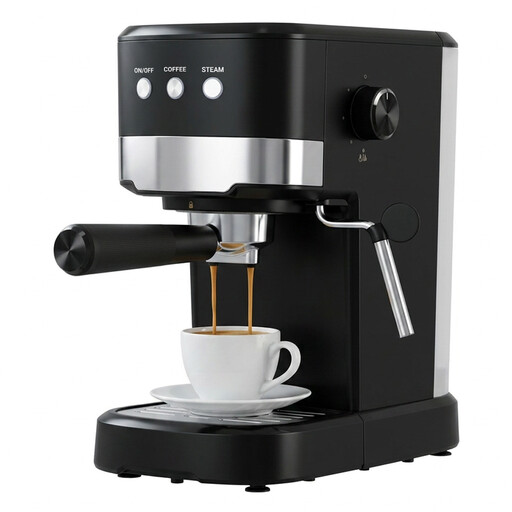
Why It Stands Out: This espresso machine from Ochama provides a solid foundation for any portafilter machine with accessories setup. It operates with a 15-bar high-pressure extraction designed to release the full aroma from the coffee grounds. The integrated steam function is powerful enough to create the silky milk foam needed for cappuccino and latte art.
Advantages:
Who Is It For? This model is suitable for beginners and ambitious home baristas looking for a reliable machine with the essential functions for espresso and milk foam preparation.
Precision in pouring is the key to latte art. The choice of the right milk pitcher depends on the desired level of control and the patterns you aim to create.
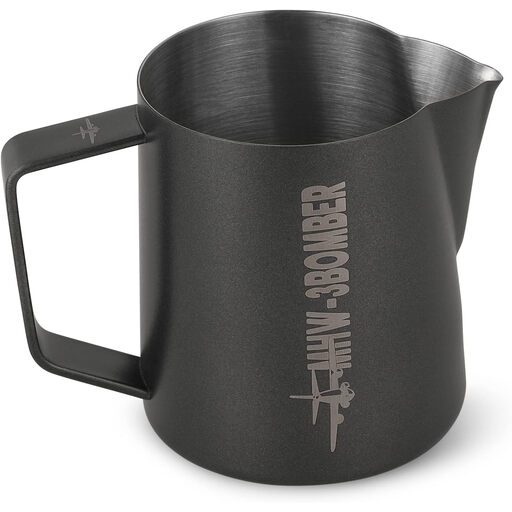
Why It Stands Out: This milk pitcher is distinguished by its patented "crocodile-style" spout design. The double-curved flow channels are specifically engineered for high pouring precision, making it easier to control the creation of detailed latte art patterns.
Advantages:
Who Is It For? Ideal for home baristas who are focused on refining their latte art technique and want to pour detailed, intricate patterns.
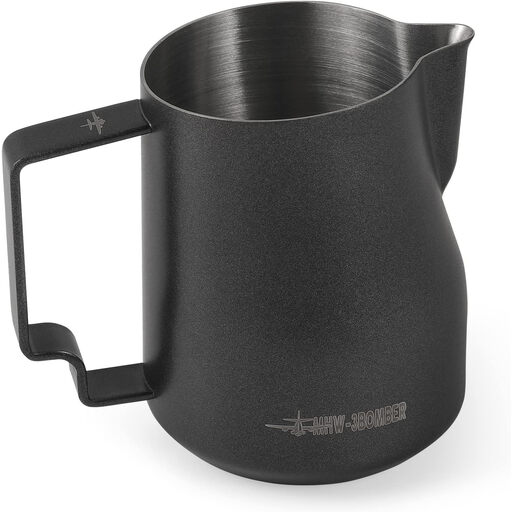
Why It Stands Out: This model features a "hawksbill" spout design with double, curved guide grooves. According to the manufacturer MHW-3BOMBER, this facilitates "gathering" the milk and stabilizes the milk flow. The cylindrical construction is based on the turbine principle to promote better milk rotation during frothing.
Advantages:
Who Is It For? This pitcher is aimed at advanced users who are looking for professional-grade equipment and value an optimized foam texture as well as maximum control when pouring.
The products presented here are a selection for creating a custom set. If you are looking for further alternatives or different types of milk pitchers, you can find additional models in our broader category.
? Discover more milk frothers and pitchers here
1. What belongs in a good home barista set? A basic set consists of a portafilter machine with a steam wand, a coffee grinder (ideally a conical or flat burr grinder for uniform grounds), a tamper for compacting the coffee powder, and a stainless steel milk pitcher for preparing milk foam.
2. How many bars of pressure does a good espresso machine need? For the extraction of a classic espresso, a pressure of about 9 bars directly at the brew head is ideal. Many home machines are equipped with pumps that generate 15 bars or more to ensure that the target pressure of 9 bars is consistently achieved, even with slight variations in grind size or tamping density.
3. Which milk pitcher is suitable for latte art? A good milk pitcher for latte art is made of stainless steel, as this material conducts heat well and allows for control over the frothing process. A sharply defined, pointed spout is crucial for precise pouring. Common sizes range from 350 ml to 600 ml, depending on whether you want to prepare a cappuccino or a larger latte macchiato.