
Lieferung heute & morgen

Qualitätsgarantie

Willkommens-Angebote freischalten: KOSTENLOSE Lieferung | Bis zu 80 % RABATT | Kostenlose 30-Tage-JoyPlus-Testphase
App herunterladen
Charging an electric car at home is a crucial factor for convenience and efficiency. Instead of relying on public charging stations, a private charging option allows you to fully recharge your vehicle overnight. However, the market offers a wide variety of options, from permanently installed wallboxes to portable chargers.
This guide is designed to help you understand the technical features and make an informed decision on an EV home charger that meets your specific needs. We will look at charging power, installation types, and smart features to give you clear guidance.
Choosing the right charging station depends on several factors, including your vehicle model, your living situation, and your daily usage habits. Here are three key aspects you should consider.
The charging power, measured in kilowatts (kW), determines how quickly your vehicle's battery is charged.
Check your vehicle's maximum AC charging capacity to select a compatible charging station. A Type 2 charging cable is the European standard for AC charging.
Your living situation is crucial in choosing between a permanently installed and a portable solution.
Modern charging stations offer more than just charging. Smart features can significantly increase convenience and efficiency.
Based on the criteria above, we have compiled a selection of chargers that cover different needs.
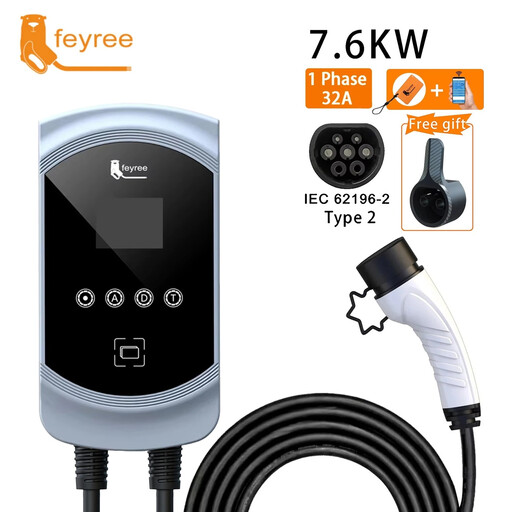
Why it stands out: This permanently installable wallbox combines a solid 7.6 kW charging power with comprehensive connectivity. It is conveniently controlled via the Tuya Smart App, which allows for flexible adjustment of the charging current and scheduling of charging sessions.
Advantages:
Who is it for? For homeowners looking for a reliable and smartly controlled charging station for their electric car who want to adapt the charging power to their home's electrical system.
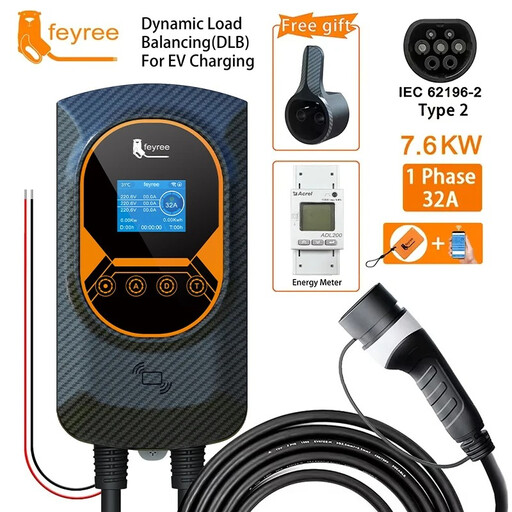
Why it stands out: The key feature of this model is its Dynamic Load Management (DLB) function. It intelligently balances energy consumption between the charging vehicle and other household appliances. This prevents overloading the electrical connection while ensuring the car always charges at the maximum available power.
Advantages:
Who is it for? For households with energy-intensive appliances (e.g., heat pumps, instantaneous water heaters) or for users who plan to charge multiple electric vehicles in the future and require smart energy distribution.
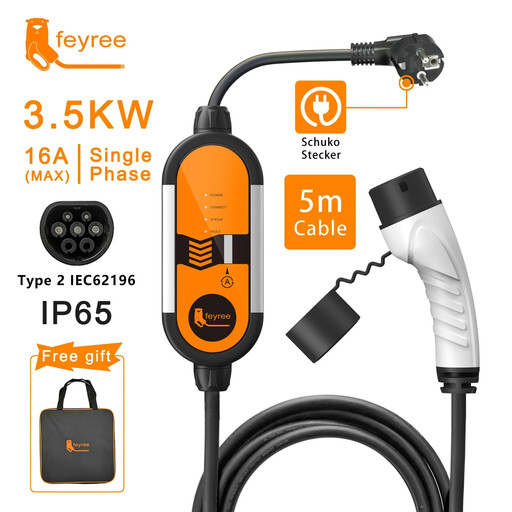
Why it stands out: This portable EV charger offers maximum flexibility. It can be plugged directly into a standard household socket and requires no permanent installation. With its 5-metre Type 2 charging cable and adjustable current, it's a practical solution for on the go or at home.
Advantages:
Who is it for? For renters who are not allowed to install a wallbox, for owners of plug-in hybrids with smaller batteries, or as a secondary or emergency charger for all EV drivers.
The products presented here cover common use cases. If you haven't found the right solution for your specific situation, there are many other models with different power levels and feature sets.
Explore our full range of Type2 Kabel EVSE to compare more chargers and accessories.
1. Do I need a permit for a wallbox in Germany? In Germany, wallboxes with a charging capacity up to and including 11 kW only need to be registered with the responsible grid operator. This is usually handled by the certified electrical contractor performing the installation. For charging stations with more than 11 kW (e.g., 22 kW), approval from the grid operator is required before installation.
2. Can I charge my EV from a regular socket? Yes, with a portable charger (Mode 2 charging cable), you can charge your vehicle from a standard household socket. However, this should only be considered an occasional or emergency solution. Household sockets are not designed for the hours of continuous high-current load, which can lead to overheating and a fire hazard. A permanently installed wallbox is the safer and significantly faster method.
3. What is the difference between a single-phase and a three-phase charging cable? A single-phase charging cable uses only one phase of the power grid and typically achieves charging powers of up to 7.6 kW. A three-phase cable uses all three phases, enabling higher charging powers like 11 kW or 22 kW, which results in a significantly shorter charging time. The choice depends on your home's electrical connection and your vehicle's charging capability.