
Lieferung heute & morgen

Qualitätsgarantie

Willkommens-Angebote freischalten: KOSTENLOSE Lieferung | Bis zu 80 % RABATT | Kostenlose 30-Tage-JoyPlus-Testphase
App herunterladen
A home cinema projector transforms your living room into a private theatre, offering a big-screen experience that TVs can hardly match. But the market is flooded with technical jargon and marketing promises that often confuse more than they clarify. An uninformed decision can quickly lead to a device that disappoints in reality. This guide highlights the most common pitfalls and explains the objective criteria that truly matter when making your choice.
Before diving into the technical details, it's crucial to understand the common marketing traps that lead to disappointment.
To avoid these traps, you should base your decision on three objective core parameters.
Brightness is crucial for image quality in varying light conditions. The only reliable value is ANSI lumens, as it is measured according to a standardized procedure.
The native resolution indicates how many physical pixels the projected image actually consists of.
Ensure the native resolution meets your requirements and don't be swayed by the "4K Supported" claim alone.
Modern projectors offer features that significantly simplify setup and make usage more flexible.
Here are some recommendations tailored to different user profiles that meet the quality criteria mentioned above.
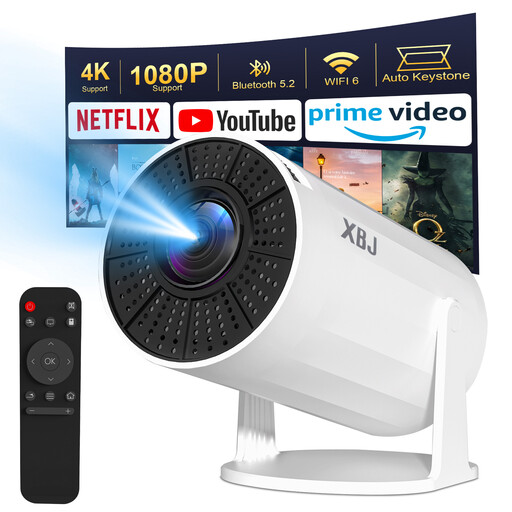
Why This Fits Their Persona: Ideal for anyone who wants to easily and flexibly project movies or series onto a wall or ceiling. Its compact design and rotating stand make it the perfect companion for the bedroom or spontaneous movie nights.
Despite its budget-friendly price, the brightness is transparently stated as 200 ANSI lumens, which is realistic for darkened rooms. The integrated Android 11 provides solid smart functionality.
The 180° rotating stand allows for easy ceiling projection without an additional tripod. The automatic vertical keystone correction simplifies setup.
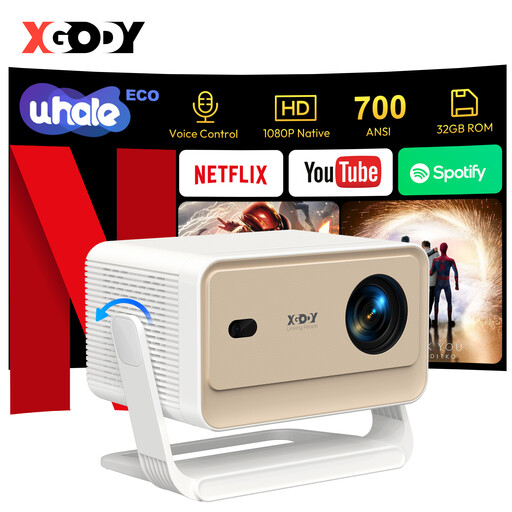
Why This Fits Their Persona: For users seeking a reliable all-in-one solution for high-quality streaming and movies. This model combines high brightness with a fully functional, licensed operating system for frustration-free entertainment.
This model bypasses the "smart frustration" with an official Netflix license according to the manufacturer. It delivers a native 1080p resolution and a clear 700 ANSI lumens, representing an honest performance claim.
The combination of autofocus, automatic keystone correction, and obstacle avoidance makes setup extremely easy. WiFi 6 ensures a stable streaming connection.
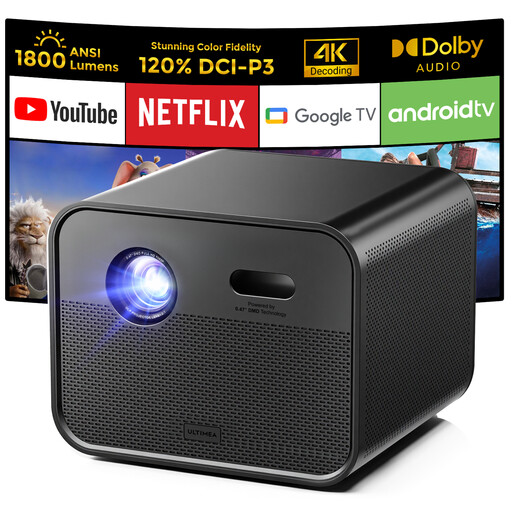
Why This Fits Their Persona: For users who prioritize maximum image quality and brightness. Thanks to its high light output, this projector is also suitable for rooms that are not completely dark and delivers a cinema-grade picture for movies, sports, and gaming.
With an impressive 1800 ANSI lumens and DLP technology, this model avoids the lumen trap, delivering an extremely bright and high-contrast image. The integrated Google TV ensures a full-featured and licensed smart experience.
The high brightness and MEMC technology (motion interpolation) for smooth motion make it ideal for sports broadcasts and action movies. The 6D keystone correction offers maximum flexibility in placement.
We have compiled a complete, up-to-date list of products that fully meet these strict selection criteria and German safety regulations.
It depends on your environment. For a dedicated, dark home cinema room, 300–500 ANSI lumens may be sufficient. If you want to use the projector in a living room with some ambient light, 700 ANSI lumens or more is recommended to ensure a vibrant and high-contrast image.
Not necessarily. For playback in HD or 4K quality, projectors require official certification from the respective streaming provider (e.g., Netflix). Devices without this license can often only play content in standard definition (SD), or the app may not work at all. An alternative is to use an external streaming stick (e.g., Amazon Fire TV Stick, Google Chromecast) connected via the HDMI port.
Both features simplify setup but address different aspects of the image. Autofocus automatically adjusts the image sharpness, so the picture is clear and not blurry. Automatic keystone correction adjusts the shape of the image. It ensures the picture is rectangular, even if the projector is placed at an angle to the projection surface. Modern devices often combine both functions for a setup that takes just seconds.