
Lieferung heute & morgen

Qualitätsgarantie

Willkommens-Angebote freischalten: KOSTENLOSE Lieferung | Bis zu 80 % RABATT | Kostenlose 30-Tage-JoyPlus-Testphase
App herunterladen
A dedicated home cinema projector transforms your living room into a movie theatre, making film nights or sporting events an immersive experience. But the market is flooded with technical promises that often create more confusion than clarity. Before you make a decision, it's crucial to understand the typical marketing traps that can lead to a poor purchase.
This guide will help you understand the key features and find a home projector that truly meets your needs.
Many marketing claims are designed to make products seem more premium than they are. Pay close attention to these three points:
To make the right choice, focus on the following objectively measurable criteria.
Brightness, measured in ANSI lumens, determines how visible the image is in various lighting conditions.
Native resolution indicates how many individual points of light (pixels) the projected image is actually composed of.
Modern projectors are more than just playback devices. Look for future-proof connections and features.
Here are some models that are well-suited for different user profiles based on their objective technical specifications.
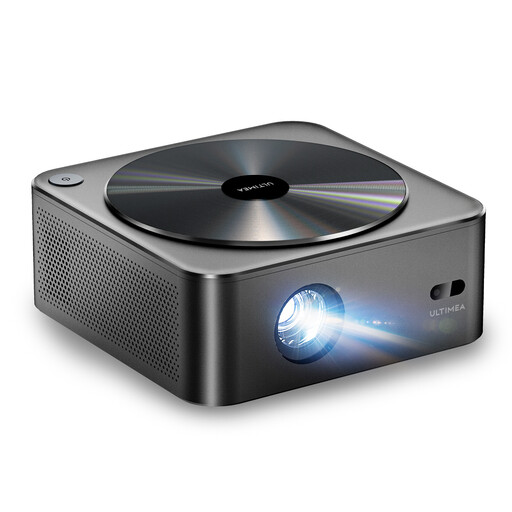
Why this model is a great fit: Perfect for anyone looking for a straightforward and versatile projector. Thanks to autofocus and automatic keystone correction, it's ready to go in seconds—ideal for a spontaneous movie night in the living room or even in the garden. Its compact design makes it a practical portable projector.
The model clearly states a brightness of 700 ANSI lumens and features a native 1080p resolution, rather than advertising with misleading metrics.
The fully automatic image setup (autofocus and 6D keystone correction) in this price range provides superior convenience and a perfectly aligned picture every time.
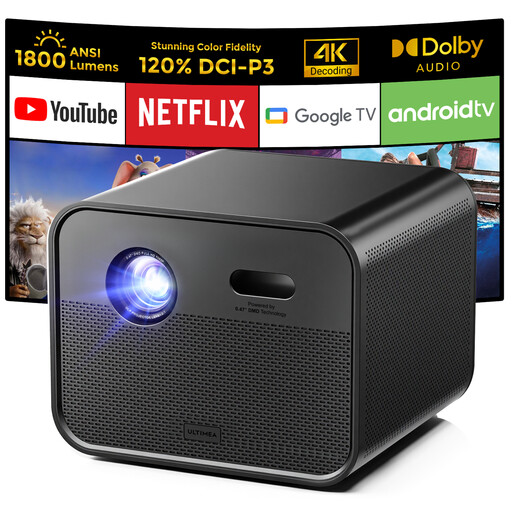
Why this model is a great fit: For users who prioritise image quality above all else. With a very high 1800 ANSI lumens and DLP technology, this projector delivers a brilliant, high-contrast image even in rooms that aren't completely dark. The integrated Google TV makes it a full-fledged TV replacement.
The brightness is transparently stated as 1800 ANSI lumens. The integrated Google TV is a full-featured, licensed operating system that ensures stable access to all popular streaming apps.
The combination of DLP technology and high brightness creates superior image quality with deep blacks and vibrant colours that set it apart from LCD models.
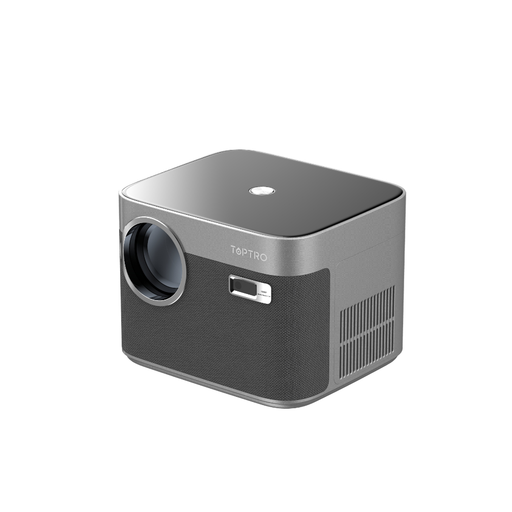
Why this model is a great fit: This device is designed for users who want an all-in-one solution without needing extra gadgets. With its integrated Android system and pre-installed apps like Netflix and YouTube, you can start streaming immediately. Wi-Fi 6 ensures a fast and stable connection.
The integrated smart system provides direct, licensed access to streaming services, bypassing the problems of unstable, unofficial apps. The resolution is clearly declared as native 1080p.
The combination of Wi-Fi 6 and a full-featured operating system eliminates the need for external streaming sticks, providing a seamless entertainment experience right out of the box.
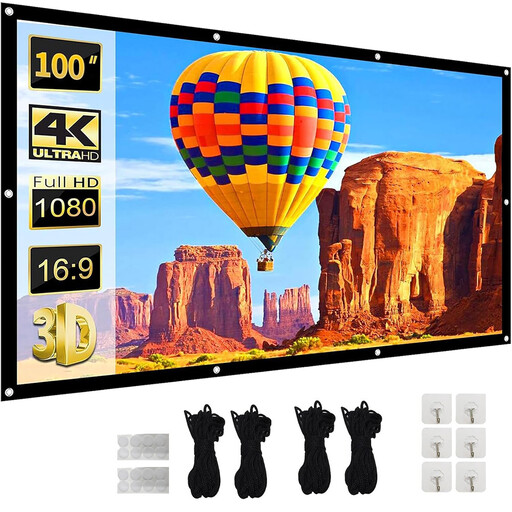
Why this accessory is a great fit: A good projector screen is crucial for image quality. It ensures uniform light distribution and accurate colour reproduction, something a plain white wall can't provide. This model is foldable and easy to transport, making it ideal for flexible use indoors and outdoors.
Prevents issues like uneven illumination, colour distortion from wall paint, or loss of detail due to a rough wall surface.
The wrinkle-free material and wide 160° viewing angle ensure that everyone in the audience sees a clear, bright picture, regardless of their seating position.
We have compiled a complete, up-to-date list of products that fully meet these strict selection criteria and all relevant safety standards.
ANSI Lumens is a standardised measurement method where brightness is measured at nine different points on the projection surface and an average is calculated. This provides a realistic and comparable value. Terms like "Lumens" or "LED Lumens" are often non-standardised and can be heavily inflated marketing figures that do not reflect the actual image brightness.
Projecting onto a smooth, white wall is possible, but a dedicated projector screen significantly improves image quality. It reflects light more evenly, ensures more accurate colours, and provides higher contrast. A screen is essential for an optimal result, especially on textured walls (like woodchip wallpaper) or walls with a slight colour tint.
No. For Netflix to run stably and in high definition, the projector needs an official license from Netflix. Many budget-friendly smart projectors use unofficial Android versions where the Netflix app either doesn't work at all, crashes frequently, or only streams in low SD quality. Look for models with integrated Google TV or those that explicitly advertise an official Netflix certification. Alternatively, you can use an external streaming stick (like a Fire TV Stick or Chromecast) via the HDMI port.