
Lieferung heute & morgen

Qualitätsgarantie

Willkommens-Angebote freischalten: KOSTENLOSE Lieferung | Bis zu 80 % RABATT | Kostenlose 30-Tage-JoyPlus-Testphase
App herunterladen
Investing in a television with a screen size over 80 inches is a decision to embrace a viewing experience that transcends everyday TV. The goal is to create a cinematic atmosphere in your own living room. However, given the multitude of technologies and specifications, selecting the right model can be complex. This article serves as a guide, presenting objective criteria and select models to support you in your purchasing decision.
Before we look at specific models, it's helpful to understand some fundamental technical aspects. These parameters are crucial for picture and sound quality, as well as suitability for specific applications like movies and gaming.
The choice of display technology is fundamental to picture quality. Two leading technologies in the high-end television segment are Mini LED and OLED.
For an immersive experience, the refresh rate and supported standards are critical.
Based on the criteria mentioned, we have compiled a selection of models designed for demanding home cinema and gaming applications.
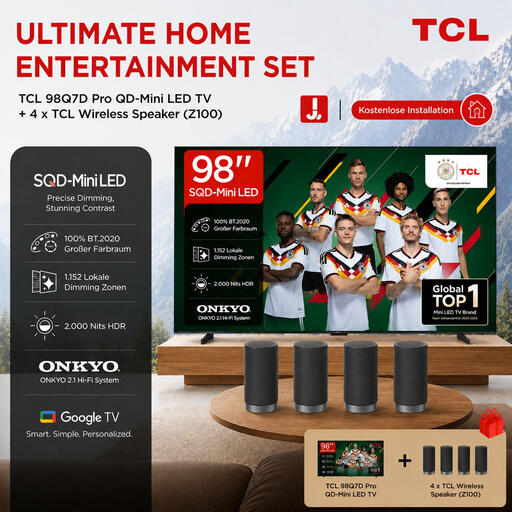
What Makes It Stand Out: The TCL 98Q7D PRO is a 98-inch TV that relies on SQD-Mini LED technology. With 1,152 local dimming zones and a rated peak brightness of up to 2,000 nits, it is designed for detailed presentation in both bright and dark scenes. According to TCL, the combination of Super Quantum Dots and spectral filters allows the model to achieve up to 100% of the BT.2020 color gamut, enabling highly accurate and vibrant color reproduction. The included Onkyo 2.1 Hi-Fi sound system with a subwoofer supports Dolby Atmos.
Advantages:
Who is this model for? This model is aimed at home cinema enthusiasts and gamers looking for a very large screen with high brightness and excellent color accuracy, especially for use in well-lit rooms.
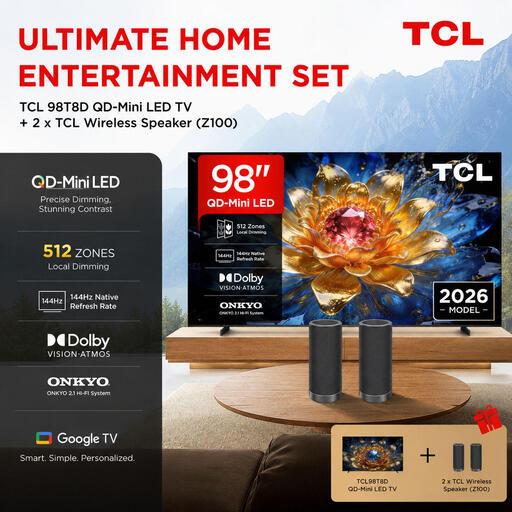
What Makes It Stand Out: The TCL 98T8D is also a 98-inch TV featuring QD-Mini LED technology. It has 512 dimming zones and the AiPQ Pro Processor, which, according to the manufacturer, analyzes content in real-time to optimize color, contrast, and clarity. The QLED technology is said to be capable of displaying over a billion colors. For gamers, the device offers a native 144Hz refresh rate, a 288Hz Game Accelerator (VRR), and AMD FreeSync Premium Pro. The package is completed by the included Z100 Onkyo 2.1 soundbar for Dolby Atmos sound.
Advantages:
Who is this model for? Users seeking a combination of a very large screen, intelligent image processing, and a gaming-focused feature set will find a suitable solution here.
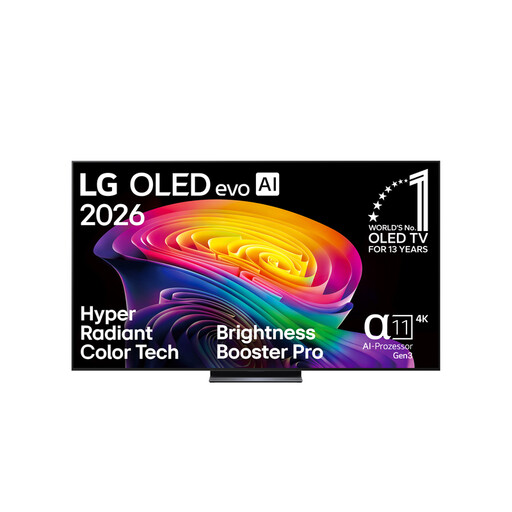
What Makes It Stand Out: The LG OLED83C67LA is an 83-inch TV that leverages the strengths of OLED evo TV technology. Powered by the α11 AI Processor, it delivers perfect black levels and infinite contrast. The model supports Dolby Vision for a cinematic HDR presentation. Its slim design allows for seamless integration into any living space. For gamers, the support for VRR up to 165 Hz is particularly interesting. The webOS operating system offers personalized recommendations and quick access to apps.
Advantages:
Who is this model for? This device is an excellent choice for cinephiles and design-conscious users who value uncompromising picture quality with perfect black levels and primarily use their TV in controlled lighting environments.
The models presented cover specific requirements in the high-end segment. If you wish to further customize your setup, for example, with an even more powerful audio system that goes beyond the included solutions, it's worth looking at separate components. In our category for TV speakers, you will find a wide selection of soundbars and home cinema systems that are compatible with these televisions.
1. How large should a TV be for a home cinema? The ideal size depends on the viewing distance. For an immersive experience, it is often recommended that the screen fills about 40 degrees of your field of view. For a 98-inch TV, this corresponds to a viewing distance of about 3 to 4 meters (10 to 13 feet). For an 83-inch TV, the recommended distance is approximately 2.5 to 3.5 meters (8 to 11.5 feet).
2. What is the difference between Mini LED and OLED on large TVs? In summary, the main difference lies in how light is produced. Mini LED TVs use a very fine backlight to achieve high peak brightness, making them advantageous for bright rooms. OLED TVs generate light at the pixel level, resulting in perfect black levels and superior contrast in dark environments.
3. Do I need a separate sound system for a large TV? Modern high-end TVs have integrated speaker systems that are sufficient for everyday use. Some models, like the TCL ones presented here, already come with a soundbar. However, to unlock the full potential of formats like Dolby Atmos and create a true cinema feeling, a dedicated sound system or a high-quality soundbar is a worthwhile addition.