
Lieferung heute & morgen

Qualitätsgarantie

Willkommens-Angebote freischalten: KOSTENLOSE Lieferung | Bis zu 80 % RABATT | Kostenlose 30-Tage-JoyPlus-Testphase
App herunterladen
Rising summer temperatures can significantly impact concentration in the office and relaxation at home. The right fan provides pleasant air circulation and noticeable cooling. But the selection is vast, ranging from compact desk models to powerful floor fans.
This article serves as a guide. We will introduce different fan types, explain key selection criteria, and present a selection of models for various needs to help you make an informed decision.
To find the right device for your needs, a few technical features and designs are crucial.
The choice of fan type primarily depends on the intended location and the desired air distribution.
A powerful fan isn't always the right choice, especially in noise-sensitive environments.
Modern fans offer more than just an airflow.
Here is a selection of models that are well-suited for different applications due to their specific features.
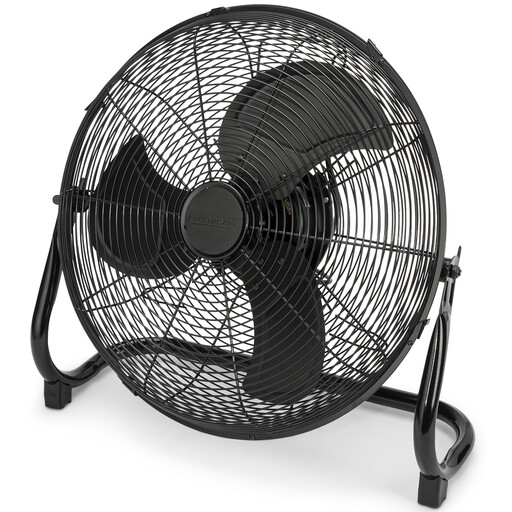
Why it stands out: This model combines high performance with a robust retro design. With a 50 cm blade diameter and a 120-watt motor, this floor fan generates a powerful airflow suitable even for large rooms.
Pros:
Best for: Users looking for a powerful and durable metal fan for large living areas, lofts, or covered patios, who also appreciate a striking design.
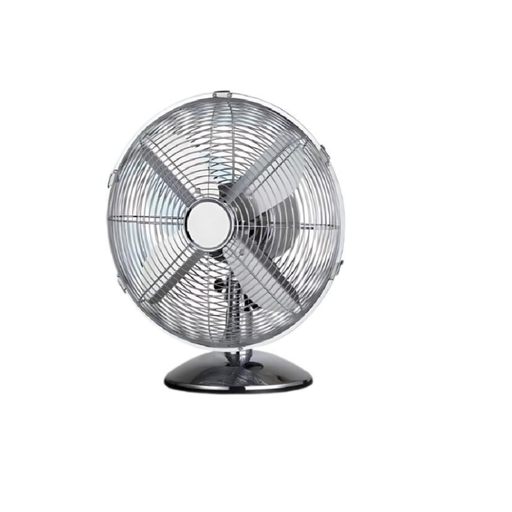
Why it stands out: The AKAI VT30CX is a compact desk fan made entirely of metal, offering a classic look with its chrome finish. It is designed for targeted cooling at a workstation or on a nightstand.
Pros:
Best for: Individuals who need a robust, stylish, and compact fan for their desk, kitchen, or nightstand.
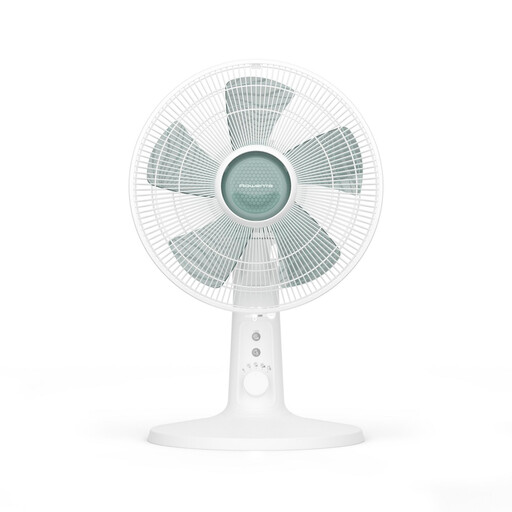
Why it stands out: This model is specifically designed for use in noise-sensitive environments. With a noise level of just 35 dB(A) on its lowest setting, it is an exceptionally quiet fan, ideal for the bedroom or for focused work.
Pros:
Best for: Ideal for those seeking a fan for the bedroom or home office who place the highest priority on whisper-quiet operation.
Haven't found the right model for your needs yet? Our range includes a wide variety of other devices, from simple desk fans to multifunctional pedestal models.
? Explore our entire selection of fans here
1. What is the difference between a fan and an air cooler? A fan circulates the existing air in a room. The movement of air on the skin creates an evaporative effect that feels cooling. An air cooler (also called an evaporative cooler) draws in warm air, passes it over a filter moistened with water, and releases the air, which has been cooled by evaporative cooling. This actively cools the air but also increases the humidity in the room.
2. How important is the oscillation feature on a fan? An oscillating fan is highly recommended for cooling an entire room rather than just a single person. The swivelling motion distributes the cool air evenly, making the overall room climate more pleasant and preventing a stiff neck from a constant, direct draught.
3. Which fan is best for the bedroom? For a fan in the bedroom, the noise level is the most important criterion. A quiet fan with a rating below 40 dB(A) on the lowest setting is ideal. Additional features like a timer, which allows the device to turn off automatically after a set time, and a special night or sleep mode with reduced airflow are also very beneficial.