
Lieferung heute & morgen

Qualitätsgarantie

Willkommens-Angebote freischalten: KOSTENLOSE Lieferung | Bis zu 80 % RABATT | Kostenlose 30-Tage-JoyPlus-Testphase
App herunterladen
The desire for a café-quality espresso in the comfort of your own home leads many coffee lovers to purchase a home portafilter machine. But the market is flooded with technical promises and marketing buzzwords that make the choice difficult. As a Joybuy Product Recommendation Officer, I'll help you identify the crucial features and avoid common purchasing pitfalls, ensuring your investment pays off in the long run.
Before we dive into the important technical details, let's clear up the most common misconceptions that often lead to disappointment.
To make an informed decision, you should focus on a few, but crucial, technical parameters. These largely determine the quality of your espresso and the user-friendliness in daily use.
As mentioned, it's not the maximum pump pressure that's crucial, but the constant pressure at the group head. While a 20-bar portafilter machine offers plenty of reserve power, only an espresso machine with a pressure gauge gives you the visual feedback to confirm that the extraction is happening in the optimal 9–10 bar range. This instrument is essential for correctly adjusting the grind size and coffee dose (tamping) to achieve consistently good, reproducible results.
Most home portafilter machines use a thermoblock heating system. This system heats water quickly on demand. Look for models with a high-quality thermoblock, ideally made of stainless steel, as this promises better temperature stability and durability. A compact portafilter machine with a solid metal body is not just a visual upgrade for your kitchen; it also protects the internal components and helps with heat retention.
For lovers of milk-based coffee drinks, a powerful steam wand is a must-have. A good espresso machine with a milk frother allows you to create the fine-pored, creamy microfoam needed for latte art. Look for a steam wand that is flexible to move and generates sufficient steam power. This makes the difference between a simple milky coffee and a true home cappuccino machine.
Here are some recommendations tailored to different needs and priorities.
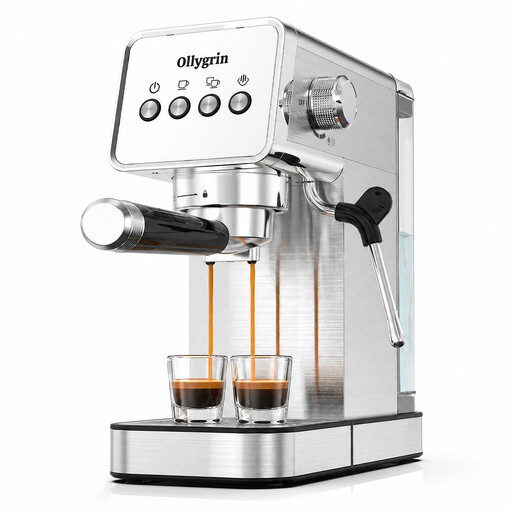
Why this model fits: Ideal for those looking to upgrade from capsule or filter coffee without spending a fortune. It offers the essential functions for espresso and cappuccino in a straightforward package.
Focuses on essential features (20-bar pump, steam wand) and forgoes complex extras that are often unreliable in this price range. The stainless steel housing is a plus compared to all-plastic models.
Large, removable 1.2-litre water tank for easy filling and cleaning; simple operation that eases the entry into the world of portafilter machines.
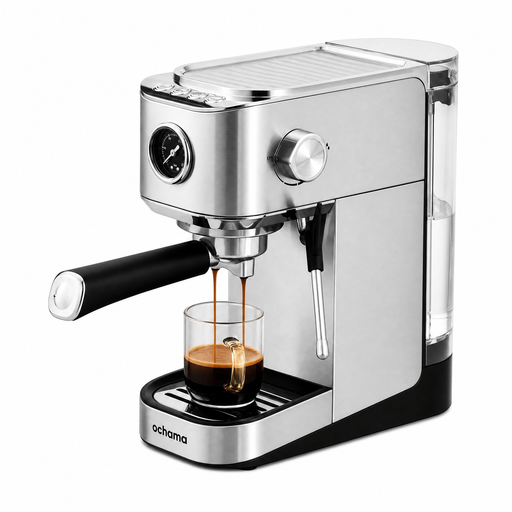
Why this model fits: For users who want to control and optimise the brewing process. The pressure gauge and robust construction provide a solid foundation for consistent results and experimentation.
Directly addresses the "lack of control" pitfall with an integrated pressure gauge. The full-metal body stands for durability and bypasses the problem of inferior materials.
Pressure gauge for monitoring extraction pressure; cup warmer function for pre-heated cups and better taste; robust full-metal body.

Why this model fits: Perfect for smaller kitchens or apartments where every inch counts. It combines professional features like a pressure gauge with a compact design, without compromising on material quality.
Proves that a compact build doesn't have to mean inferior materials. The brushed stainless steel housing and the pressure gauge offer quality and control in a small footprint.
Compact dimensions (approx. 28.5 cm wide); brushed stainless steel housing; removable drip tray allows for the use of cups up to 13 cm tall.
We've compiled a complete, up-to-date list of products that meet these strict selection criteria. Many models include practical features like an easy-to-clean, removable water tank.
1. Is an espresso machine with a pressure gauge worthwhile for beginners? Yes, absolutely. A pressure gauge is a valuable learning tool. It gives you direct feedback on whether your grind size and tamping pressure are correct. This helps you develop a feel for proper preparation much faster and avoid the frustration of watery or bitter espresso from the start.
2. How often do you need to descale a portafilter coffee machine? The frequency depends heavily on the water hardness in your area and your usage. As a rule of thumb, it's recommended to descale the machine every two to three months. Some devices have a reminder function. Regular descaling is crucial for the machine's longevity and consistently good coffee taste.
3. What grind size is required for a portafilter machine? For a portafilter machine, you need a fine, consistent grind size, reminiscent of powdered sugar or fine table salt. Pre-ground coffee from the supermarket is often too coarse and leads to overly fast extraction (under-extraction). Investing in a good coffee grinder is therefore a crucial step to fully unlock your machine's potential.