
Lieferung heute & morgen

Qualitätsgarantie

Willkommens-Angebote freischalten: KOSTENLOSE Lieferung | Bis zu 80 % RABATT | Kostenlose 30-Tage-JoyPlus-Testphase
App herunterladen
A home espresso machine should do more than just dispense coffee at the touch of a button. Many buyers first look at a high bar pressure rating, an attractive stainless steel casing or as long a list of features as possible. In doing so, important details are easily overlooked: actual coffee compatibility, cleaning, space requirements and ease of use.
The term 20 Bar espresso machine sounds convincing. However, this figure primarily describes the maximum possible pump pressure. What also matters for preparation is how the pressure is applied during extraction. Grind size, dosage, tamping, coffee beans and water temperature all influence the result.
A 20-bar rating is therefore a technical comparison value, but not a standalone mark of quality. Models with 15 or 19 bar can also be suitable for home use if the rest of the features match your usage profile.
Not every capsule and espresso machine accepts the same capsules. Some machines are only compatible with a specific capsule system, while others also support ESE pods or ground coffee. If you want to switch between capsules, pods and ground coffee later on, you should read the product description carefully.
With a portafilter machine, you will also need a suitable espresso grinder. Pre-ground coffee is more straightforward, whereas freshly ground beans offer more adjustment options but require additional space and cleaning.
A removable drip tray and a detachable water tank make daily maintenance easier. A steam wand must be wiped down and briefly flushed after each milk preparation to prevent milk residue from building up.
Before buying, measure not just the width, but also the depth, height and the space above the machine. A compact espresso machine may fit on a small worktop, but might need room to remove the tank or open the bean hopper.
Pay attention to the pump performance stated by the manufacturer, as well as single and double shot options. Models with 20 bar are listed in the product data of several machines in this selection. That does not automatically mean every cup will taste the same. A consistent coffee dose and a suitable grind size remain crucial.
If you want to make cappuccino or latte macchiato, you will need either an espresso machine with a steam wand or an integrated milk system. A manual steam wand offers more control over milk texture, but requires a bit of practice. An automatic milk system is more convenient for everyday use, but has more components that need cleaning.
For several drinks in a row, tanks between around 1.1 and 1.5 litres are practical. Smaller tanks save space and are sufficient for single-person households, but need refilling more often. Also check:
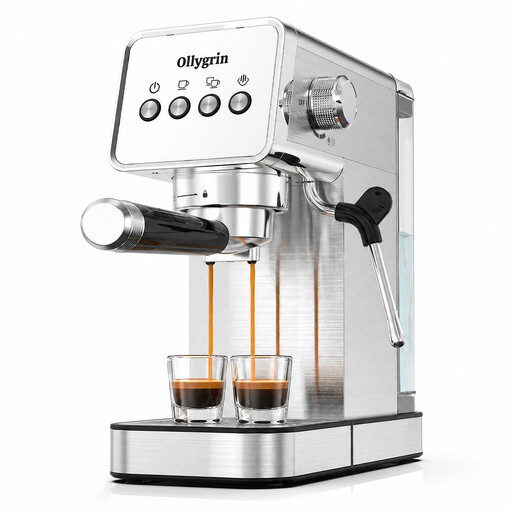
Why this product fits the profile: This semi-automatic espresso machine is aimed at beginners who want to use ground coffee and prepare milk froth manually. The 1.2-litre tank is designed for daily home use.
The removable water tank and detachable drip tray make refilling and cleaning easier. The steam wand is clearly specified and not just described as a general milk programme.
20-bar pump according to product specification, 1.2-litre water tank and manual steam wand.

Why this product fits the profile: If you want more controlled brewing, you get a pressure gauge, single and double shot options and an adjustable steam wand.
The pressure gauge makes the extraction process more readable. In addition, the water tank, drip tray, filter baskets and portafilter are removable according to the product description.
20-bar rating, 1.1-litre tank, pressure gauge and cup warming function.
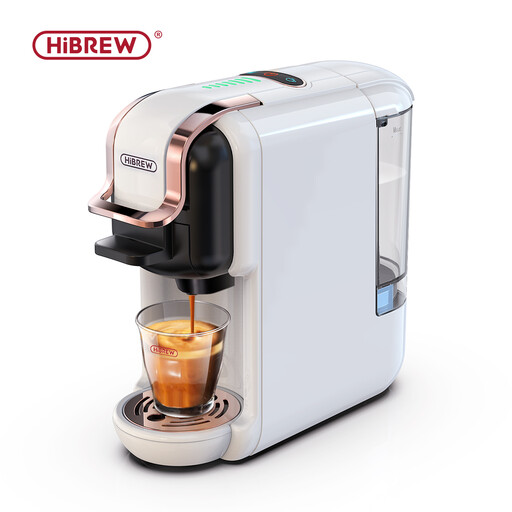
Why this product fits the profile: This machine is interesting for households that want to switch between ground coffee, ESE pods and different capsule types. The compact design also suits smaller kitchens or offices.
The supported systems are explicitly listed. This means you can check before buying whether your preferred capsules or pods will fit.
Multiple preparation methods, hot and cold function and a 20-bar rating according to product data.
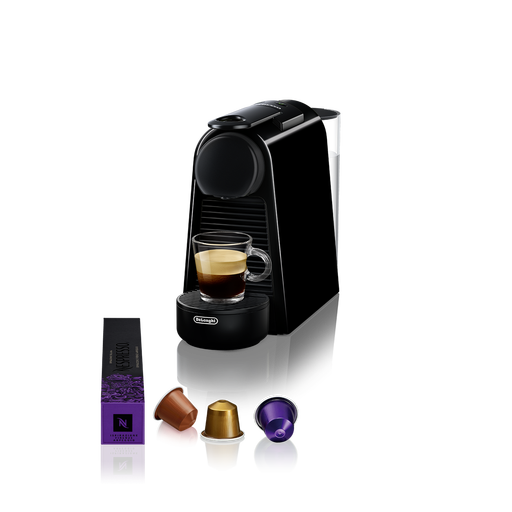
Why this product fits the profile: For users who want to make espresso and lungo without a grinder, portafilter or steam wand, the capsule concept is space-saving and simple to operate.
The system is clearly designed for Nespresso Original capsules. If you want to use other capsules or freshly ground coffee, you should choose a more flexible model.
19-bar rating, 0.6-litre tank, two programmable cup sizes and compact dimensions of 11 × 20.5 × 32.5 cm.
We have put together a complete, regularly updated list of products that fully meet these strict selection criteria and the safety regulations in force in the EU.
For newcomers, a semi-automatic espresso machine with a removable water tank, clear buttons and included filter baskets is usually manageable. If you do not prepare milk-based drinks, you can choose a capsule model. If cappuccino or latte macchiato is regularly on the menu, a steam wand or a designated milk system is necessary.
The lifespan depends on usage, water quality, cleaning and descaling. A fixed durability cannot be deduced from pump pressure or housing material. Rinse the portafilter after use, wipe the steam wand immediately and follow the manufacturer's instructions for descaling.
In addition to electricity consumption, there are costs for coffee, capsules or ESE pods, water filters and descaling agent. Ground coffee or beans can have a different cost structure than individual capsules when used frequently. With a machine that has an espresso grinder, you should also factor in the space required and the cleaning effort of the grinder.