
Lieferung heute & morgen

Qualitätsgarantie

Willkommens-Angebote freischalten: KOSTENLOSE Lieferung | Bis zu 80 % RABATT | Kostenlose 30-Tage-JoyPlus-Testphase
App herunterladen
Having your own piece of fitness equipment can make strength training at home and regular cardiovascular exercise easier. At the same time, unclear product specifications, oversized equipment or poorly matched resistance levels can quickly lead to disappointing purchases. When comparing home fitness equipment, you should therefore look beyond the price or an eye-catching product description.
A rowing machine or cross trainer may look compact in product images, but it needs sufficient room for movement during use. You also need space to position the equipment, get on and off it, and move it around. For a folding rowing machine or a folding cross trainer, three measurements should therefore be compared:
Transport wheels are useful, but they do not replace a stable, level surface.
A high number of resistance levels does not automatically mean that the equipment is suitable for everyone. With a water rowing machine, resistance typically increases with the speed of the stroke. Magnetic systems, such as those used in a cross trainer, allow defined levels that can be adjusted incrementally.
For beginners, an easily accessible low setting is important. More experienced users should check whether the maximum load, range of motion and frame construction are suitable for their training.
An uncomfortable seat, slipping pedals or poorly secured weight plates can make equipment more difficult to use. You should therefore look for specific details about:
Marketing terms such as “professional” or “durable” are of limited value without technical specifications.
A wooden rowing machine can stand out with a sturdy frame and an appearance that fits comfortably into the home. However, the actual dimensions, net weight and maximum user load are what really matter. A water rowing machine also needs a securely sealed tank and a level surface.
Before buying, check that you can complete the full rowing motion. A folding rowing machine with wheels is an appealing option for smaller homes, provided the folded equipment can be stored safely.
With a cross trainer for home use, the stride length affects how natural the movement feels. The model featured here specifies a 38 cm stride length and, according to the product information, is intended for people up to approximately 175 cm tall. You should compare this information with your own height and preferred range of motion.
A quiet cross trainer is particularly important in rented accommodation or when exercising in the evening. The YOSUDA model is specified as producing less than 20 decibels of noise. In practice, such figures also depend on the floor, assembly and state of maintenance. A non-slip pedal surface and transport wheels are further practical features to consider.
2 kg dumbbells are suitable for light strength exercises, mobility work and combining with cardio sessions. For progressive home training, adjustable dumbbell sets offer greater flexibility, as the load can be changed using weight plates.
With a set featuring screw collars, make sure the plates are distributed evenly and securely fastened before every exercise. Plastic-coated plates can help protect the floor, but they should not be dropped from a great height.
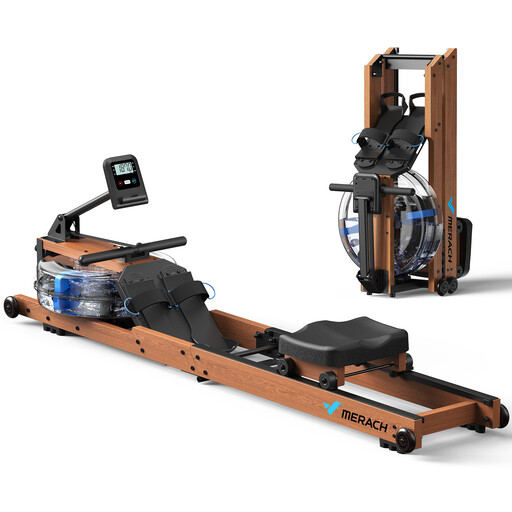
Why this product suits this profile: According to the product information, this water rowing machine combines a wooden frame with a folding design and is suitable for users weighing up to 181 kg.
The product specifications state precise dimensions of 152.4 × 45.7 × 76.2 cm, a folding design with a 180-degree mechanism and wheels for storage.
Water resistance, LCD display, adjustable foot straps and Bluetooth data synchronisation according to the product description.

Why this product suits this profile: This 2 × 2 kg pair takes up little storage space and is suitable for simple exercises in the living room or as an addition to cardio training.
The fixed weight avoids any ambiguity about which plates are included. According to the product description, the hexagonal shape helps prevent the dumbbells from rolling away.
Neoprene coating, contoured grip and compact dimensions of approximately 16 × 8 cm each.
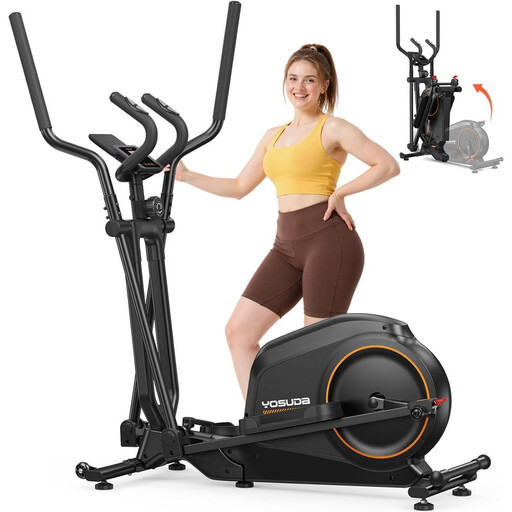
Why this product suits this profile: This folding cross trainer is designed for people who want to combine regular cardiovascular exercise with limited storage space.
The product description specifies 16 resistance levels, a 38 cm stride length, three folding positions and a folded footprint of approximately 0.2 m².
LCD display with six training metrics, large non-slip pedals, transport wheels and an operating noise level of less than 20 decibels according to the product information.

Why this product suits this profile: This set includes combinable weight plates for users who want to adjust their load as their training progresses.
The included plates are clearly listed by weight: 1.25 kg, 1.5 kg, 2 kg and 2.5 kg. Star-lock collars secure them in place.
Available set options weighing 15, 20, 25 or 30 kg, non-slip handles and plastic-coated cement weight plates.
Before ordering space-saving fitness equipment, we recommend checking the following:
We have put together a complete, regularly updated list of products that fully meet these strict selection criteria and the safety regulations applicable in the EU.
It depends on the type of equipment. In addition to the manufacturer’s dimensions, you should allow room for movement and access to the training area. Folding models can reduce the storage space required, but they still need their full footprint when in use.
There is no reliable one-size-fits-all answer. Service life depends, among other things, on training frequency, user weight, assembly quality and care. Moving parts, screws, seals on water rowing machines and cables should be checked regularly.
Manual rowing machines generally do not require an external power supply for resistance. Displays or Bluetooth functions may use batteries. With magnetic cross trainers, power consumption depends on the display and electronic functions of the individual model. You should therefore check the power-source information in the product data sheet.