
Lieferung heute & morgen

Qualitätsgarantie

Willkommens-Angebote freischalten: KOSTENLOSE Lieferung | Bis zu 80 % RABATT | Kostenlose 30-Tage-JoyPlus-Testphase
App herunterladen
Home fitness equipment doesn't have to be big or expensive to be used regularly. What matters is whether a piece of equipment suits your training goals, the space you have available, and the level of resistance you're after. For fitness beginners, hobby athletes, and Pilates and yoga enthusiasts, resistance bands, mini bands, a Pilates ring, a balance board or a yoga block are often ideal choices. There are also compact solutions for strength training at home and light rehabilitation and physiotherapy accessories.
Before you buy, it's worth taking a close look at the product specifications. Marketing phrases like "suitable for all exercises" or "extra sturdy" are no substitute for details on materials, dimensions and weight limits.
Fitness bands are often advertised with nothing more than "strong resistance". Without a clear rating, it's hard to tell whether the band is suitable for beginners, Pilates or more demanding strength training at home. A set with multiple resistance levels can be more practical, because you can gradually increase the intensity.
A piece of training equipment may look compact in product photos, but can require extra room to move when in use. A balance board with a diameter of around 40 cm, for example, needs a clear, non-slip surface. An ab trainer should also not be used right next to furniture or on delicate floors.
Before every workout, you should check bands for tears, rollers for loose handles, and balance equipment for damaged surfaces. For products that bear weight, maximum load capacity, secure attachment and a suitable floor surface are important details. If you have existing health issues or are recovering from an injury, you should get medical advice before use. These items are not a substitute for individual physiotherapy or medical consultation.
The material affects grip, care and where you can use it:
Also look at visible seams, handles, edges and fastenings. A responsible person based in the EU, along with clear manufacturer and contact details, makes it easier to identify the product. A CE mark should not automatically be taken as a sign of quality; what matters are the specific product details and safety instructions.
Beginners usually benefit from low to medium resistance levels. For a versatile home workout, several bands with graded resistances are a good idea. With weight ankle bands, the weight per unit and the total weight should be clearly stated.
For a balance board, the diameter, tilt angle and maximum load capacity are relevant. These figures show whether the board is suitable for simple balance exercises, core stability or a particular user. Always use such equipment on a stable, non-slip surface and start with simple exercises.
For small flats, fitness accessories and training equipment that requires no assembly are often the most practical. Bands, yoga blocks and Pilates rings can be stored away without taking up much space. After use, they should be cleaned and stored dry according to the manufacturer's instructions. Direct sunlight, high heat and sharp objects can damage elastic materials.
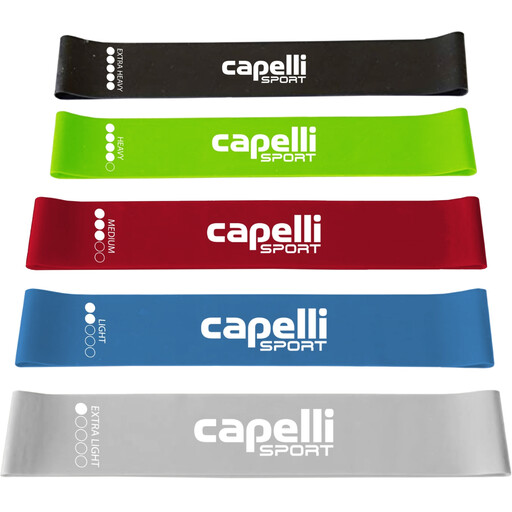
Why this product fits the profile: This set offers five colour-coded resistance levels for legs, glutes, Pilates and simple full-body exercises. A storage bag makes it easy to carry.
The five resistance levels are more specific than a single, undefined strength. You should still check for tears and damage before each use.
Five resistance levels, 5 cm width, 30 cm length and a travel bag.

Why this product fits the profile: The board features a non-slip TPR surface, a diameter of 40 cm and 360-degree rotation with up to 15 degrees of tilt.
The diameter, tilt angle and maximum load of 136 kg are all stated. This makes it easier to check before buying and to choose a suitable surface.
PP and TPR construction, 40 cm diameter, carry handle and non-slip surface.
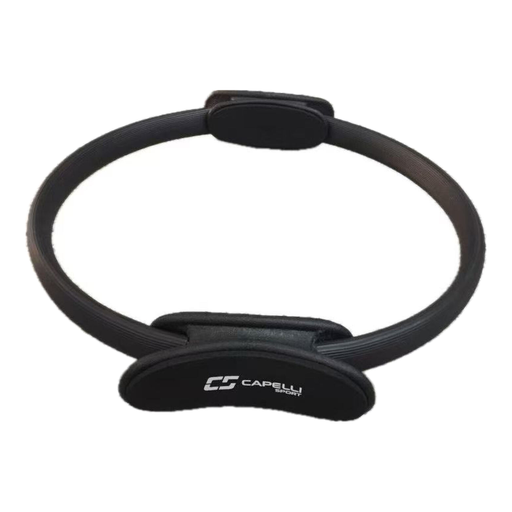
Why this product fits the profile: The lightweight Pilates ring complements exercises for arms, thighs and core, without taking up much storage space.
The fixed diameter of 40 cm and the stated materials (PP and PE) make the choice more transparent than vague claims about training effects.
Lightweight, portable design, no assembly required and versatile use for Pilates, yoga and strength exercises.
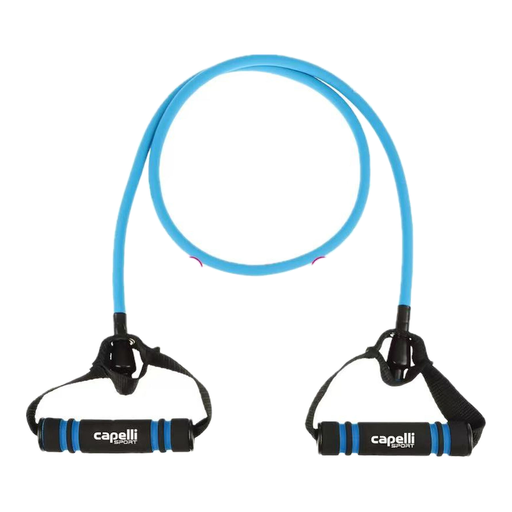
Why this product fits the profile: The 120 cm long TPE band with foam handles is designed for arm exercises, Pilates, general strength training and physiotherapy applications.
The medium resistance level, length and handle type are all clearly stated. Before each use, the band must be checked for tears and should not be overstretched.
TPE material, 120 cm length, foam handles and no assembly required.
We've put together a full, regularly updated list of products that fully meet these strict selection criteria and the safety regulations in force in the EU.
For getting started, resistance bands, mini bands, a yoga block or a Pilates ring are often manageable. They take up little space and allow you to exercise with controlled resistance. The key is to start with a low resistance level and perform each movement with proper form.
There's no one-size-fits-all answer to lifespan. It depends on the material, how often you use it, how you store it and how you care for it. Elastic bands should be checked before each use and thrown away immediately if they show any tears. Heat, direct sunlight and sharp edges can shorten their useful life.
Most compact training equipment has no ongoing electricity costs. Resistance bands, ab trainers, foot trainers, weight ankle bands and balance boards all work without power. You only need to consider the purchase price, cleaning and, if necessary, replacing worn-out parts.