
Lieferung heute & morgen

Qualitätsgarantie

Willkommens-Angebote freischalten: KOSTENLOSE Lieferung | Bis zu 80 % RABATT | Kostenlose 30-Tage-JoyPlus-Testphase
App herunterladen
Deciding to turn your home into a personal fitness space is a major step towards greater flexibility and well-being. But the market for home fitness equipment is crowded and full of promises that aren't always kept. Before you invest, it's crucial to understand the common pitfalls that can quickly turn a good intention into a costly mistake.
As your Joybuy Product Recommendation Officer, I'm here to help you separate marketing hype from reality. This guide focuses on the three most common problems when choosing home workout equipment and shows you what to look out for.
To avoid these traps, let objective criteria—not advertising slogans—guide you. Pay attention to the following three points during your research to make an informed decision for your full-body home workout.
The durability and safety of a piece of fitness equipment depend directly on its materials.
These two factors are closely linked and are crucial for user comfort.
Don't be fooled by compact storage dimensions alone.
Based on these objective criteria, we have identified some home gym equipment that is particularly well-suited for specific user profiles and living situations.
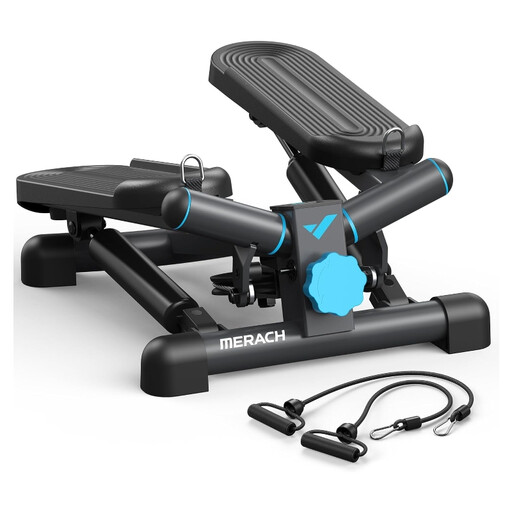
Why It's a Great Fit: This device combines a joint-friendly cardio workout with strength exercises using the integrated resistance bands. Its extremely compact design makes it ideal for small apartments where every square foot counts.
The design, featuring hydraulic cylinders and dampening pads, counteracts the noise trap. It bypasses the space-saving myth, as its operating footprint is barely larger than its storage footprint.
Delivers an effective full-body workout in a minimal amount of space. The robust metal construction, with a weight capacity of 150 kg, points to high durability.
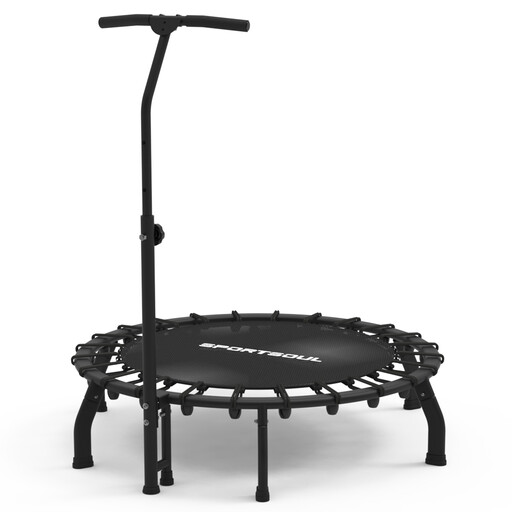
Why It's a Great Fit: This trampoline provides a highly effective, low-impact cardio workout, making it ideal for individuals who want to protect their joints or are looking for a motivating alternative to running.
The sturdy steel frame construction and a maximum weight capacity of 120 kg counteract the pitfall of cheap, unstable equipment. The high-quality spring system is designed for durability and quiet operation.
Improves endurance, coordination, and balance in a joint-friendly manner. The pre-assembled elastic cords and jumping mat significantly simplify assembly.
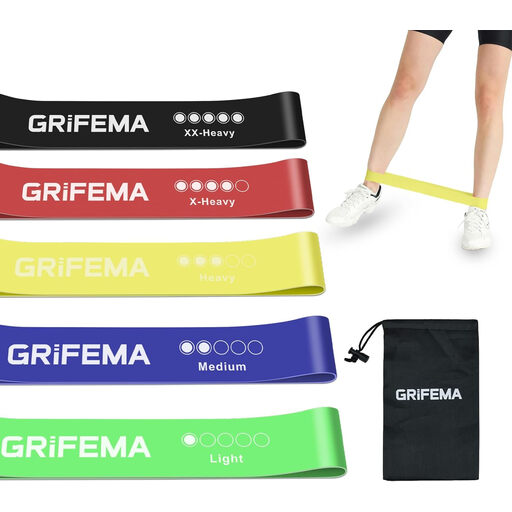
Why It's a Great Fit: This set is the epitome of flexibility and efficiency. It's extremely space-saving, cost-effective, and allows for a progressive full-body strength workout that can be adapted to any fitness level.
This set completely bypasses the space and noise traps. The TPE material is a proven choice in this category, avoiding the pitfall of low-quality rubber that quickly becomes brittle or tears.
Five different resistance levels (from approx. 2.3 to 18 kg) allow for continuous training adjustments. Includes a carrying bag for maximum portability.
There is a wide variety of options, especially in the resistance band category. We've put together a curated selection of products that meet these criteria.
1. How much space do I really need for home workout equipment? Measure the "activity radius," not just the storage space. For a fitness trampoline, for instance, you need not only its approx. 1x1 meter footprint but also a safety clearance of at least half a meter from walls and furniture, plus adequate ceiling height. In contrast, the space required for a Resistance Band Set is minimal and is only limited by your own range of motion.
2. Are resistance bands suitable for beginners? Yes, resistance bands are often an excellent choice for beginners. A set with multiple strength levels, like the one from Grifema, allows for a gentle start. You can begin with the lightest band to learn proper form and gradually increase the intensity. This minimises the risk of injury and ensures continuous progress.
3. What should I look for regarding the maximum weight capacity of fitness equipment? The specified maximum weight capacity (e.g., 150 kg for a Mini Stepper) should be significantly higher than your own body weight. This not only provides a safety margin during dynamic movements but also serves as a reliable indicator of the overall stability and quality of the materials used. A device with a higher weight capacity is typically more robust and durable.