
Lieferung heute & morgen

Qualitätsgarantie

Willkommens-Angebote freischalten: KOSTENLOSE Lieferung | Bis zu 80 % RABATT | Kostenlose 30-Tage-JoyPlus-Testphase
App herunterladen
Deciding to set up your own home gym is a major step towards more flexible and independent training. But the market for home gym equipment is crowded and full of promises. Before you invest, it's crucial to understand the common pitfalls that can quickly turn a motivated purchase into an expensive dust collector.
As a Joybuy Product Recommendation Officer, I see every day what causes purchases to fail. It's often not the obvious defects, but subtle flaws in design or materials that make the difference between a useful training partner and a disappointment.
The 3 Most Common Traps When Buying Home Fitness Equipment:
To avoid these traps, you should focus on objective and verifiable criteria. A solid home gym setup is built on thoughtful decisions, not marketing slogans.
The durability and safety of fitness equipment depend directly on the materials used. Look for descriptions like high-strength steel or alloy steel for the frame. A crucial indicator of quality is the stated maximum load capacity.
Especially in an apartment, space-saving solutions are essential. Multifunctional equipment like an all-in-one home gym or a power tower offers numerous training options within a small footprint.
Instead of making a blanket recommendation, we have identified products tailored to specific needs and training goals.

Why This Fits Their Persona: Ideal for individuals seeking an effective yet low-impact cardio workout. Trampoline rebounding improves endurance and coordination without putting heavy stress on the joints. Perfect for smaller apartments thanks to its foldable design.
The sturdy steel frame and the clear specification of a maximum user weight of 80 kg (176 lbs) prevent the trap of unstable construction and ambiguous load limits. The adjustable handlebar provides extra safety.
Foldable design for easy storage. The pre-assembly of springs and the jumping mat significantly reduces setup time.

Why This Fits Their Persona: For athletes focusing on bodyweight exercises like pull-ups, dips, and leg raises. This power tower provides a stable platform for an intense upper-body and core workout on a relatively small footprint.
The high-strength alloy steel construction and a clear maximum load capacity of 440 lbs (approx. 200 kg) ensure stability even during dynamic exercises. Its height adjustability bypasses the trap of poor ergonomics.
Multifunctionality for a complete upper-body workout. The height-adjustable design adapts to different body sizes and exercises.
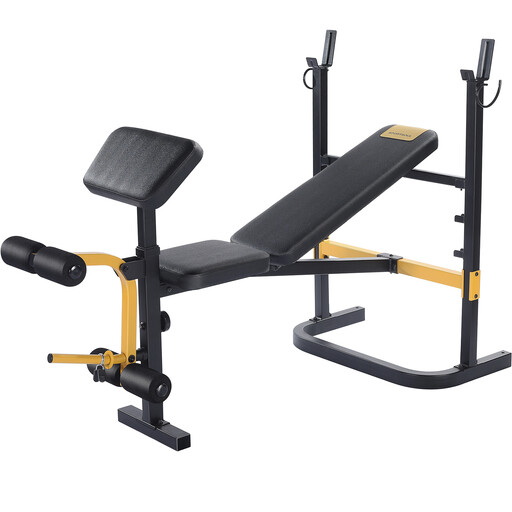
Why This Fits Their Persona: For users who want to build a comprehensive home strength station. This combination of a weight bench, squat rack, and leg developer enables a full-body workout with free weights, covering all major muscle groups.
The clear distinction between dynamic (186 kg / 410 lbs) and static (544 kg / 1200 lbs) load capacity creates transparency. The 4-position adjustable backrest and 3-position adjustable preacher curl pad provide the necessary adaptability for various exercises.
Integrated safety spotters on the rack enhance safety when training without a partner. Combining multiple pieces of equipment into one saves space and money.
Other equipment, like a vibration plate, can supplement your training by increasing muscle activation during static exercises and aiding in recovery. The choice ultimately depends on your individual goals.
We have compiled a complete, up-to-date list of products that fully meet these strict selection criteria and rigorous safety standards.
The space required varies greatly. A foldable fitness trampoline or a storable adjustable weight bench only needs about 2x2 meters (6.5x6.5 feet) during your workout and can be stored under a bed or in a closet afterward. In contrast, a stationary all-in-one home gym or a power tower requires a permanent footprint of about 1.5x1.5 meters (5x5 feet) and sufficient ceiling height (at least 2.20 meters / 7.2 feet for pull-ups).
The maximum load capacity is the sum of your body weight and the weight of the dumbbells or barbell you are using. It's crucial to pay attention to the dynamic load capacity, as this accounts for the forces generated during the exercise. For example, a rating of 250 kg (550 lbs) means that a 100 kg (220 lbs) athlete can train with weights up to 150 kg (330 lbs).
Not necessarily. Stability depends on the quality of the frame and the locking mechanism. High-quality foldable equipment uses solid steel pins and precisely engineered hinges that, when locked, offer stability comparable to fixed models. Look for product descriptions that highlight robust locking systems.
Sincerely,
Your Joybuy Product Recommendation Officer