
Lieferung heute & morgen

Qualitätsgarantie

Willkommens-Angebote freischalten: KOSTENLOSE Lieferung | Bis zu 80 % RABATT | Kostenlose 30-Tage-JoyPlus-Testphase
App herunterladen
Setting up a personal training space in your own home, basement, or garage offers flexibility and independence from commercial gyms. However, choosing the right home gym equipment can be a challenge given the multitude of options. Many aspiring home fitness enthusiasts face questions about which pieces of equipment are truly necessary, how much space they require, and what to look for in terms of quality.
This article serves as a practical guide. It is designed to help you make an informed decision by highlighting key criteria for selecting fitness equipment for your home and presenting a curated selection of functional gear.
The right equipment is the foundation for safe and effective strength training at home. Three factors are particularly relevant to your decision: space requirements, load capacity, and versatility.
Before purchasing any equipment, it is essential to accurately measure your available space. Consider not only the footprint of the equipment itself but also the range of motion you'll need to perform exercises like squats or bench presses. An adjustable squat rack offers a clear advantage here. Models that allow you to adjust their height and width can be flexibly configured for various exercises and body sizes, and can be positioned more compactly when not in use.
Safety is the top priority. Look for a robust construction made of solid steel, especially for load-bearing elements like a squat stand or a barbell rack. The maximum load capacity specified by the manufacturer is a crucial metric. It should be significantly higher than the total weight you plan to lift now and in the future (body weight plus barbell weight). Sturdy feet and clean welds are further indicators of a durable and safe design.
To make the most of your available space, multi-functional equipment is highly recommended. A dip station (also called dip bars), for example, allows not only for triceps and chest dips but also for exercises like leg raises for the core or rowing variations for the back. Such equipment is excellent for classic strength training and as calisthenics equipment. A well-thought-out combination of a few versatile pieces can replace a complete multi-gym while still offering a wide range of exercises.
Based on the criteria mentioned, we have compiled a selection of equipment that stands out for its functionality and design, making it ideal for home use.

Why It Stands Out This dip station is distinguished by its sturdy metal construction and an additional connecting rod that provides enhanced stability during workouts. The padded, non-slip grips offer comfort and safety across a variety of exercises.
Benefits
Who Is It For? This piece of equipment is a great choice for beginners and advanced users in calisthenics and strength training who are looking for a versatile and space-saving solution for bodyweight workouts.

Why It Stands Out This set of two separate, adjustable stands offers maximum flexibility. The height and width can be individually adapted to the specific exercise (squats, bench press, shoulder press) and the length of the barbell. Integrated weight plate holders keep your space organised and provide quick access to weights.
Benefits
Who Is It For? Ideal for strength athletes who need a flexible and robust barbell rack for their home gym. The separate stands make the system particularly adaptable and allow for space-saving storage when not in use.
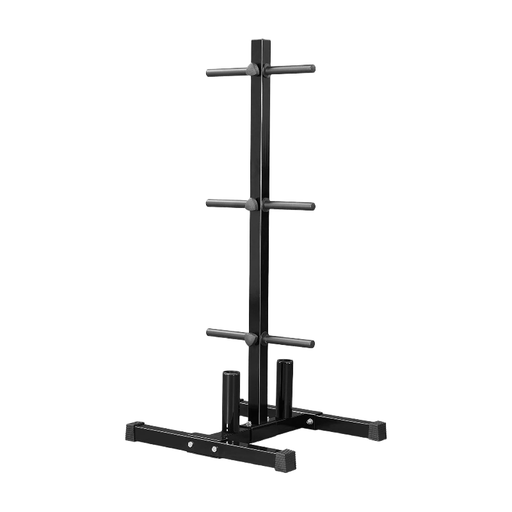
Why It Stands Out Organisation is a key aspect of a functional home gym. This weight plate rack combines storage for weight plates and barbells in a compact, vertical design. This saves valuable floor space and ensures that your equipment is stored safely and is readily accessible.
Benefits
Who Is It For? For all home gym owners seeking a stable and space-efficient solution to organise their weight plates and bars, keeping their training area safe and tidy.
If this selection doesn't include the right product for your individual needs, you can find more functional equipment for your training in our Black Accessories category.
A solid basic setup typically includes an adjustable weight bench, a barbell with a set of weight plates, and a secure rack like a squat stand. Supplemented with a dip station or a pull-up bar, you can already achieve a comprehensive full-body workout.
The space required depends heavily on the chosen equipment and exercises. For training with a barbell at a squat rack, you should plan for a clear area of about 2.5 x 2.5 meters and a ceiling height of at least 2.2 meters to ensure freedom of movement and safety. Measure your space carefully and compare the dimensions with the product specifications.
The maximum weight capacity is a critical safety feature. It indicates the total weight the equipment can safely support. This weight is composed of the user's body weight plus the weight of the barbells being used. Exceeding this limit can lead to material failure and serious injury. Therefore, always choose a piece of equipment with a load capacity well above your planned training weight.