
Lieferung heute & morgen

Qualitätsgarantie

Willkommens-Angebote freischalten: KOSTENLOSE Lieferung | Bis zu 80 % RABATT | Kostenlose 30-Tage-JoyPlus-Testphase
App herunterladen
Deciding to invest in home fitness equipment is the first step towards more flexibility and independence in your training. However, the market is overwhelming and full of promises that often go unkept. Before you make a purchase, it's crucial to understand the common pitfalls that can quickly turn a worthwhile investment into an expensive dust collector.
Many buyers only realise after assembly that their new machine is too loud for their apartment, the folding mechanism is impractical for daily use, or the advertised "smart" features are useless without a costly ongoing subscription. This guide will help you avoid such errors and make an informed choice that aligns with your goals, budget, and living space.
Marketing terms can be confusing. Instead, focus on objective, technical parameters that determine the longevity, safety, and usability of your equipment.
The resistance not only determines the intensity of your workout but also the noise level and the overall training feel.
A wobbly machine is not only unpleasant but also a safety risk. Pay attention to two key metrics:
Before buying, measure the available space precisely—and not just the machine's footprint, but also the range of motion you'll need for your exercises. A rowing machine requires a lot of length, while a cross-trainer needs vertical clearance. If space is limited, a well-designed and easy-to-use folding mechanism is essential. Check if the machine can stand on its own when folded and if transport wheels make it easier to move.
Instead of making a one-size-fits-all recommendation, we have matched products to different user profiles to help you choose.
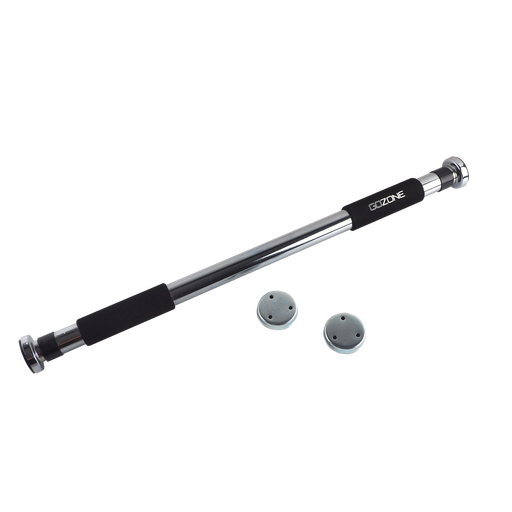
Why This Fits Their Persona: Ideal for renters and those with very limited space. It enables an effective upper-body workout without installation, noise, or a permanent footprint. After the workout, the bar is simply removed and stored.
Avoids the purchase of a bulky machine. The screw-free pressure mechanism prevents damage to the door frame, making it the perfect solution for rental apartments.
Heavy-Duty Steel construction with a load capacity of up to 136 kg. Adjustable width (62-91 cm) fits most standard doors.
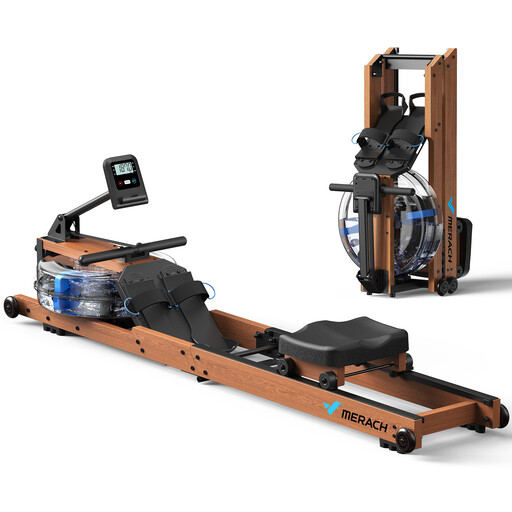
Why This Fits Their Persona: Perfect for users seeking an effective full-body workout machine that combines strength and endurance. The wood design blends aesthetically into living spaces, and the sound of the water is motivating.
Despite its length, the machine can be folded with one hand and moved on its transport wheels. The water resistance creates a pleasant swooshing sound instead of mechanical noise.
The water resistance dynamically adapts to your pulling force. The solid wood construction supports up to 181 kg. Compatible with the MERACH app for data tracking.
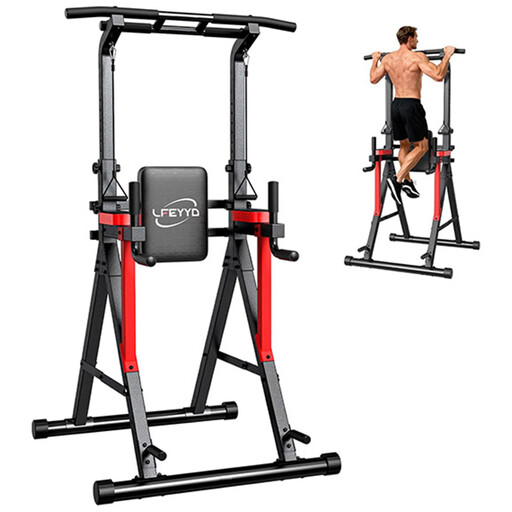
Why This Fits Their Persona: For ambitious home athletes looking for a versatile power station for bodyweight exercises. Ideal for pull-ups, dips, push-ups, and leg raises in a relatively small footprint.
The free-standing, heavy-duty steel construction offers high stability without drilling into walls. It replaces multiple individual pieces of equipment, saving space and money compared to buying separate gear.
13-level height adjustment for different body sizes and exercises. The high maximum weight capacity of 400 LBS (approx. 181 kg) is a testament to its robust design.
We have curated a complete, up-to-date list of products that fully meet these strict selection criteria and safety regulations.
The noise level depends heavily on the resistance mechanism. Machines with magnetic resistance are nearly silent and the most considerate choice for apartments. Water rowing machines produce a steady swooshing sound, which is quieter than machines with air resistance. With power stations, noise is mainly generated by setting down weights, which is not an issue for machines with digital resistance or for bodyweight training.
Not necessarily. Many smart home gyms offer basic functions like manual weight adjustment and rep tracking at no ongoing cost. Subscriptions are often required for additional content such as trainer-led classes, personalised AI training plans, or virtual landscapes. Before buying, check exactly which features are included in the base version to avoid unexpected recurring costs.
A rowing machine requires a long, narrow area of approx. 2.5 m x 1.2 m during use. A cross-trainer is more compact in length but needs more vertical space (approx. 2.2 m ceiling height) and width for arm movements. Measure the intended space carefully, considering not only the machine's dimensions but also a safety buffer of about 0.5 m around it. Pay attention to the specified folded dimensions if you need to store the machine after your workout.