
Lieferung heute & morgen

Qualitätsgarantie

Willkommens-Angebote freischalten: KOSTENLOSE Lieferung | Bis zu 80 % RABATT | Kostenlose 30-Tage-JoyPlus-Testphase
App herunterladen
Never again face empty ice cube trays when guests arrive or you're craving a cold drink. A home ice maker offers a convenient and fast solution to have fresh ice on demand. Whether for cocktails, family gatherings, or use in an RV, the selection of models is vast. This guide will help you understand the technical features and functions of various models to make an informed decision.
Before choosing a model, it's helpful to consider a few key criteria. The following points will help you find an ice maker that fits your lifestyle.
An ice maker's capacity is typically measured in kilograms per 24 hours (kg/24h). For occasional use or small households, a model that produces around 10–12 kg of ice per day is often sufficient. However, if you regularly host parties or need ice for a small office, a machine with a capacity of 20 kg or more is worth considering. Also, pay attention to the cycle time—how long it takes for the first batch of ice cubes to be ready. Many devices can do this in under 15 minutes.
Most ice makers for home use are designed as compact countertop ice machines. They only require a power outlet and take up no more space than a standard coffee maker. If you value flexibility, a portable ice maker with a built-in handle is ideal. Such models are perfect for camping, RVs, or garden parties, as they are easy to transport.
Modern devices offer useful extra features that make daily life easier. An ice maker with a self-cleaning function is particularly practical, as it starts an automatic rinse cycle at the touch of a button, maintaining internal hygiene. Another important aspect is the operating noise level. If you plan to use the device in an open-plan kitchen or office, you should check the decibel rating (dB). A quiet ice maker (typically under 45 dB) won't disrupt conversations or concentration.
Here, we present a selection of models that stand out for their specific features and functions.

Why It Stands Out: This model from EUHOMY is distinguished by its high production capacity and flexible filling methods. Producing up to 20.5 kg of ice per 24 hours, it's equipped for demanding situations. Users can manually fill the 3.2-litre water tank or place a standard water bottle on top.
Pros:
Best For: Ideal for families, office communities, or anyone who regularly entertains guests and needs a reliable, high-performance machine with a large capacity.
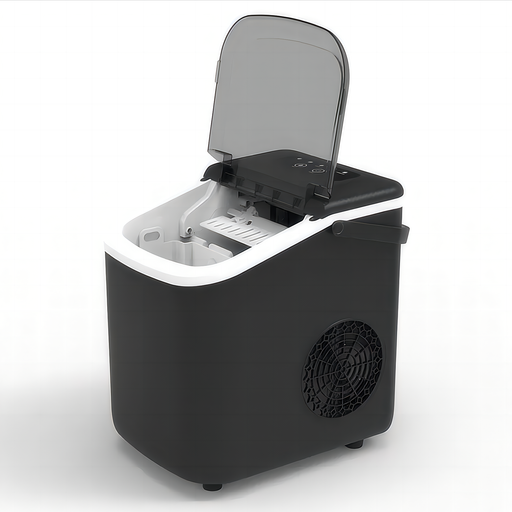
Why It Stands Out: The Cuisync ice maker is designed for speed and mobility. With an integrated carrying handle and compact dimensions, it's an excellent portable ice maker. It produces the first batch of ice in just six minutes.
Pros:
Best For: Perfect for users looking for a fast and mobile solution, such as for use in an RV, camping, a dorm room, or smaller kitchens.
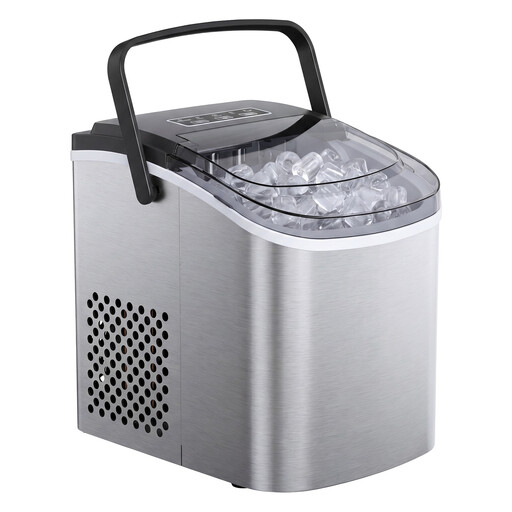
Why It Stands Out: This model from Ochama combines a compact, lightweight design with ultra-quiet operation. Weighing only 6 kg and with a noise level under 45 dB, it fits unobtrusively into any environment.
Pros:
Best For: A great choice for individuals, couples, or small households looking for a compact, lightweight, and exceptionally quiet device for the kitchen, office, or apartment.
The products featured here offer a glimpse into the available options. Each model has its own strengths, whether it's capacity, speed, or portability. If you're looking for different sizes, designs, or specific features, it's worth taking a look at our broader selection.
Discover our full range of Ice Makers.
A countertop ice maker operates without a direct water line. You fill water into a designated tank. A pump then moves the water to cooled metal prongs. The water freezes onto these prongs layer by layer. Once the ice cubes reach the desired size, the prongs are briefly heated, causing the finished ice cubes to drop into the collection basket.
Even an ice maker with a self-cleaning function benefits from regular maintenance. It is recommended to run the automatic cleaning program every few weeks, depending on usage frequency and water hardness. Additionally, the water tank and ice basket should be cleaned manually on a regular basis with a mild detergent and water to prevent buildup and bacteria growth. Empty any remaining water after each use if the device will not be used for an extended period.
Modern ice makers are often surprisingly quiet. Many manufacturers specify the noise level in decibels (dB). Models advertised as a quiet ice maker typically operate at a noise level below 45 dB. This is comparable to the low hum of a modern refrigerator or a whisper and is not considered disruptive in most home or office environments.