
Lieferung heute & morgen

Qualitätsgarantie

Willkommens-Angebote freischalten: KOSTENLOSE Lieferung | Bis zu 80 % RABATT | Kostenlose 30-Tage-JoyPlus-Testphase
App herunterladen
If you’re looking to buy lamps and LED lighting for your home, you’ll find a huge choice of designs, light colours and power options. A pendant light can become a focal point above the dining table, while an LED strip inside a wardrobe needs to be practical above all. Buying the wrong product is often less about the price and more about choosing one with the wrong technical specifications.
A boho lamp or rattan pendant light can look decorative in a living room, but that doesn’t mean it’s right for every space. Room height, lampshade size and the position of the light are all important. A large pendant light above a small table can overwhelm the room. For a hallway or alcove, a compact wall light is often a better fit.
Light colour is measured in Kelvin. Warm white light at around 2,700 to 3,300 Kelvin usually creates a cosy feel, making it a good choice for living rooms, bedrooms and decorative areas. Cool white light at around 5,000 to 6,500 Kelvin helps you see clearly, for example inside a wardrobe, above a kitchen worktop or in a utility room.
It’s also worth checking the brightness. Lumens measure the light output, while watts mainly indicate energy consumption. So an LED bulb with a lower wattage can still be bright enough, as long as its lumen rating suits the space.
Not every light is suitable for damp rooms or outdoor use. An IP20 rating is intended for dry indoor spaces, not areas exposed to splashing water. For a hardwired lamp, you should also check the fitting, maximum wattage, connection type and earthing requirements.
A battery-powered or USB-rechargeable lamp gives you more flexibility when choosing where to place it. However, you’ll need to factor in battery changes, charging time and run time. For LED strips, the power supply, voltage, adhesive surface and heat dissipation also matter.
An E27 fitting works with many standard bulbs, while E14 fittings are often used in smaller wall lights. Before buying, check that your chosen bulb is compatible with the fitting and doesn’t exceed the stated maximum wattage.
The Lameke Rattan Pendant Light is listed with an E27 ceramic fitting, a maximum wattage of 100 watts and a suspension with adjustable elements. According to the product details, the woven shade measures around 45 centimetres in diameter and 28 centimetres high. Bear this in mind when planning where to hang it, especially above a table or in a room with a low ceiling.
Warm white light is often a good choice for living spaces when you want a soft, relaxed atmosphere. Neutral or cool white light can be more practical for worktops, cupboards and shelves. The colour rendering index, Ra or CRI, describes how naturally colours appear under a light. A higher value is particularly useful in areas where you need to distinguish colours accurately.
Measure the available space before you buy. For a wall light, consider not just its width and height, but also how far it will sit from the wall and where the cable will run. An LED strip with a motion sensor can be fitted inside a wardrobe without fixed wiring. Check the sensor’s range, the automatic run time and how the light is attached.
An RGB LED strip is best suited to decorative accents behind furniture, on a TV unit or along shelves. It won’t necessarily replace an adequate main light for illuminating the room. If you’re using a self-adhesive strip, make sure the surface is clean, dry and as smooth as possible.
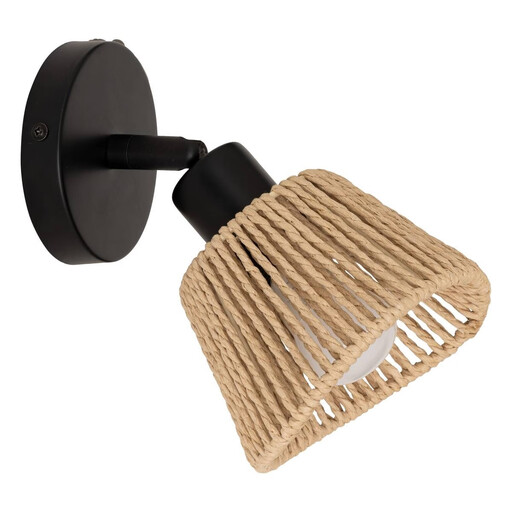
Why it suits this profile: This compact wall light is designed for smaller indoor spaces and, according to the product details, can be mounted on a wall or ceiling. It has an E14 fitting and an adjustable head.
Its 10 × 10 × 19.5-centimetre dimensions make it easier to plan for smaller spaces. The maximum wattage of 25 watts and IP20 rating are clearly stated.
Compact design, adjustable spotlight and a paper lampshade made from FSC-certified material, according to the product description.
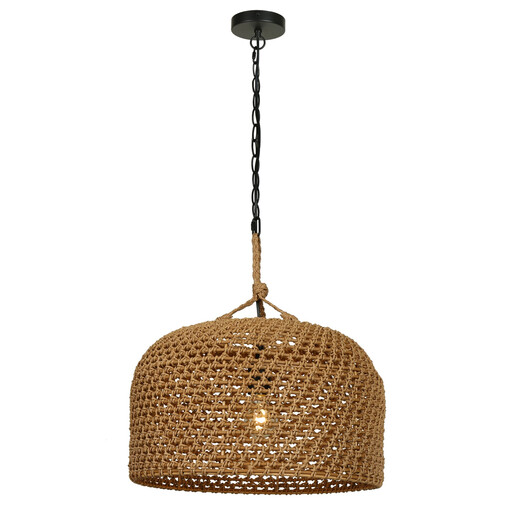
Why it suits this profile: This pendant light pairs a woven shade with an E27 ceramic fitting and a stated total suspension length of 4 feet.
The fitting, maximum wattage, cable length and installation accessories are listed in the product details. This makes it easier to check compatibility before installation.
Woven shade with a 45-centimetre diameter, E27 ceramic fitting and installation accessories included.
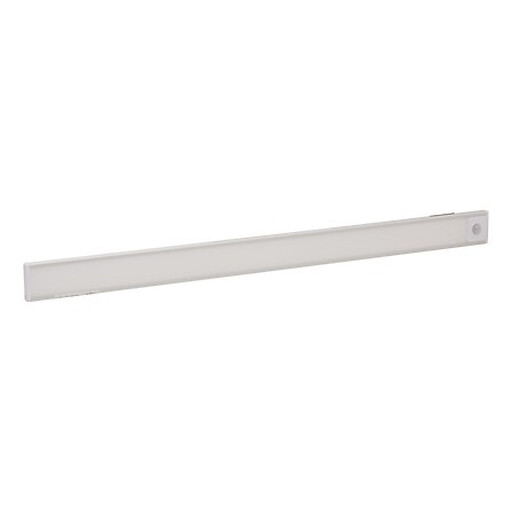
Why it suits this profile: This LED light bar is designed for cupboards, shelves, worktops and hallways. It charges via USB and can be fitted without screws using adhesive strips and a magnetic holder.
The product details specify its intended use, a light colour of 6,000 Kelvin, a sensor range of around 2 metres and an automatic run time of approximately 30 seconds.
60-centimetre length, rechargeable 2,200-mAh battery and automatic activation by motion sensor.
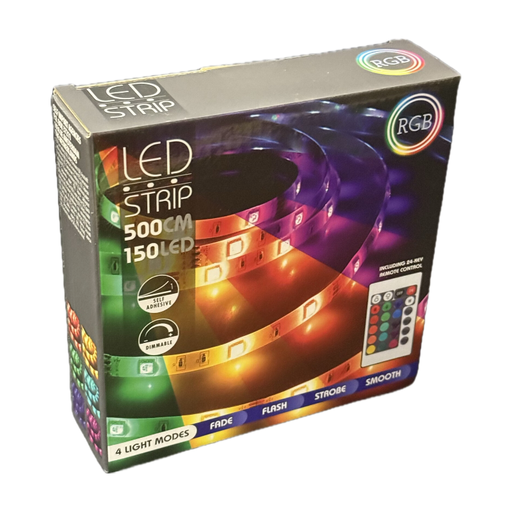
Why it suits this profile: This five-metre RGB LED strip is designed for indirect lighting behind furniture, on shelves or along ceilings.
According to the product details, it’s intended for dry indoor spaces only and has an IP20 rating. The power supply and remote control are included, and the operating voltage is listed as 24 volts.
Five-metre length, choice of RGB colours, dimmable brightness and control via infrared remote.
Warm white light between around 2,700 and 3,300 Kelvin is a popular choice for living rooms. You can pair it with a pendant light, wall light or indirect LED lighting. For a reading area, make sure the light is bright enough and positioned appropriately.
Lifespan depends on the design, how long it’s used, heat dissipation and the surrounding environment. For LEDs with built-in bulbs, check the stated lifespan for the specific product. An LED strip shouldn’t be used while rolled up, as this can cause heat to build up. Power supplies and maximum strip lengths should match the product specifications.
Running costs depend on wattage, daily use and the price of electricity. A rough calculation is: power in kilowatts × operating hours × electricity price per kilowatt-hour. Motion-sensor lights and timers can reduce the time a light is switched on, while the energy used by decorative RGB lighting varies depending on brightness and how it’s used.