What should you look for when buying?
First check that the purifier’s particle-cleaning performance is suitable for your room size. Then compare the noise levels at the fan speed you’ll use while working and check which replacement filter you need.
| Buying criterion |
What to check before buying |
Who should pay particular attention? |
| Pet allergens and cleaning performance |
Compare the particle filter, CADR in m³/h, fan speed used for the rating and the actual room size. A filter efficiency rating is not the same as the cleaning performance of the whole appliance. |
If my main aim is to reduce airborne pet allergens, a particle CADR suited to my room size matters. Around 36% of consumers would put reducing these allergens at the top of their buying priorities. |
| Noise while working |
Check which fan speeds the noise ratings refer to and whether the stated CADR applies at the speed you plan to use while working. Consider the space available and make sure the air inlets will be unobstructed where you plan to put the purifier. |
If I want to run the purifier during focused work or meetings, the noise needs to be bearable at a useful cleaning setting. Around 29% of consumers would make being able to work undisturbed their top buying priority. |
| Replacement filters and running costs |
Check the exact filter name, model compatibility and the manufacturer’s replacement guidance. How often you need to change the filter also depends on how you use the purifier. |
If I use the purifier regularly, I want to be able to plan for the right replacement filter and upcoming changes. Around 21% of consumers would put running costs at the top of their buying priorities. |
| Odours as well as particles |
Check whether the purifier includes activated carbon as well as a particle filter, and which replacement filter is designed for it. You’ll still need to remove the source of any odours. |
If pet odours concern me as well as particles, activated carbon is an extra factor to consider, not a replacement for particle filtration. Around 14% of consumers would put reducing odours at the top of their buying priorities. |
Joybuy products for particle filtration
The following Joybuy products are air purifiers for particle filtration in a home office; some models also include activated carbon or state a room coverage figure.
 No image available
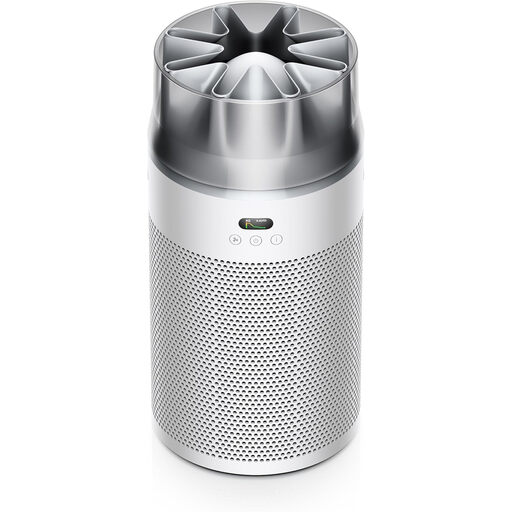
Dyson HushJet Compact Air Purifier
May suit a home office if you’re looking for a compact design and extra activated carbon filtration.
The product name lists 41 dB and 360° activated carbon filtration; the noise figure isn’t linked to a specific fan speed.
View at Joybuy
 No image available
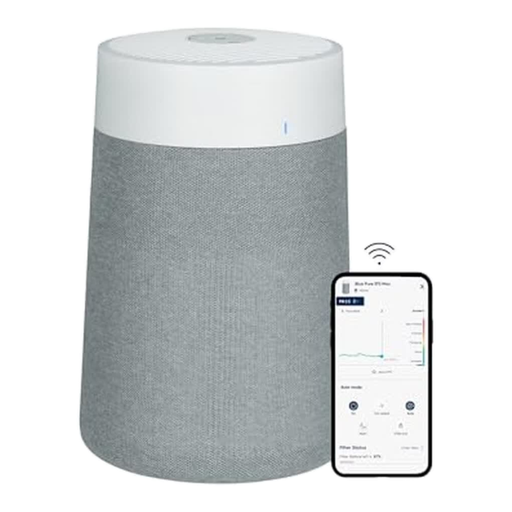
Blueair Blue Pure 511i Max
May be a good fit for a home office if you’re looking for a compact purifier with a stated room coverage figure.
The product name lists 43 m² and HEPASilent technology. Compare the coverage figure with your room size and how you plan to use the purifier.
View at Joybuy
 No image available
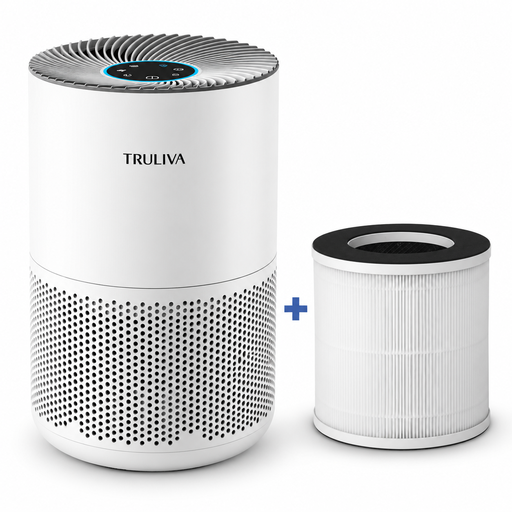
TRULIVA air purifier, 260 m³/h, with extra H13 HEPA replacement filter
May suit a home office if a stated CADR and an extra replacement filter, as listed in the product name, are important to you.
The product name lists a CADR of 260 m³/h, H13 HEPA filtration, a 24-hour timer and a sleep mode at 24 dB. It also includes an extra H13 HEPA replacement filter.
View at Joybuy
 No image available
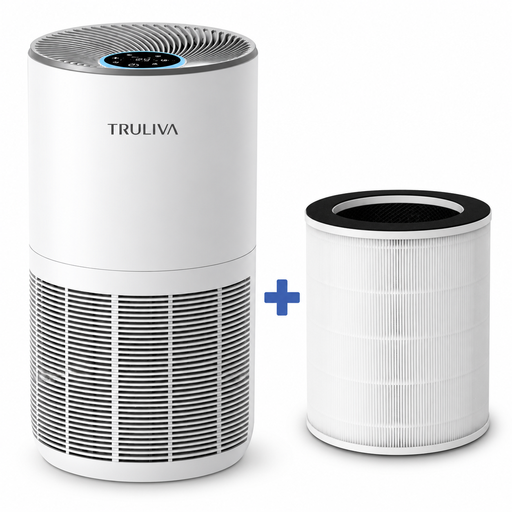
TRULIVA air purifier, 450 m³/h, with H13 HEPA filtration
May be worth considering for a larger workspace if a higher stated CADR and an air quality display are important to you.
The product name lists a CADR of 450 m³/h, H13 HEPA filtration, 360° air circulation, a PM2.5 display and a 24-hour timer. It also lists a child lock and sleep mode.
View at Joybuy
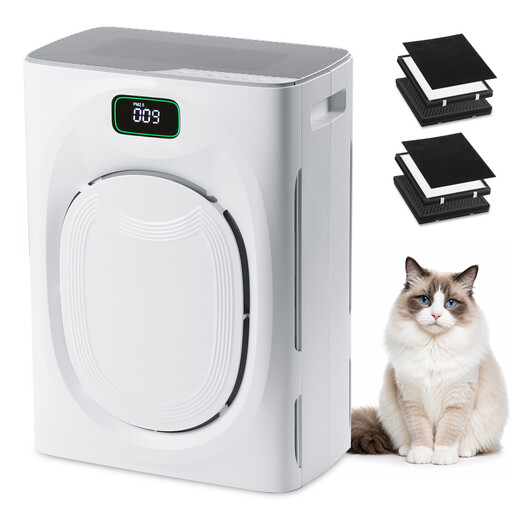 No image available
Rosnek pet air purifier, 295 m³/h, with H13 HEPA filter
May suit a home office where pet particles are a particular concern, provided the stated CADR matches the room size.
The product name lists a CADR of 295 m³/h, a pre-filter for pet hair, an activated carbon filter, a PM2.5 display and a sleep mode at 25 dB.
View at Joybuy
Frequently asked questions
Can an air purifier replace other measures for a pet allergy?
No. An air purifier can reduce airborne particles and the allergens attached to them, but it won’t remove every source of exposure. The Allergy Information Service describes avoiding contact with the animal that triggers the allergy as an important measure. The right steps for you will depend on your individual circumstances.
Where should I place and run an air purifier in my home office?
Choose a spot where the specific appliance can draw in and release air as described in its instructions. Then consider the noise and cleaning performance at the setting you plan to use while working. The lowest noise rating doesn’t automatically tell you how well the purifier performs at a higher setting.
How can I plan for filter changes and ongoing costs?
Check the exact model and replacement filter names, as well as the manufacturer’s guidance for how you plan to use the purifier. Philips specifies the FY1700 filter for the AC1715/11 and recommends changing it after one year; Blueair states that F5MAX is compatible only with the Blue Pure 511i Max. These recommendations don’t establish a standard replacement interval for other appliances.
What should I know about the safety of an electric air purifier in Germany?
Products sold in the EU are subject to product safety regulations. The European Union lists electrical and electronic equipment among the product groups covered by relevant CE rules. CE marking is the manufacturer’s declaration of conformity, not independent confirmation of a particular allergen-filtration performance. Check the labelling and product information for the specific appliance.
Is an ozone generator an alternative to particle filtration in a home office?
An ozone generator shouldn’t be treated as a particle filter when it comes to reducing airborne pet allergens. The US Environmental Protection Agency (EPA) describes ozone generators as devices that deliberately produce ozone and warns against safety and effectiveness claims for occupied indoor spaces. This doesn’t mean that there is a blanket ban on their sale in Germany.


