What should you look for when buying?
Start by measuring the temperature and humidity, and check your ventilation and heating. If an appliance seems necessary, make sure its type and specifications are a good match for your room, how you’ll use it and the actual level of moisture.
| Consideration |
What to check before buying |
Who should pay particular attention? |
| Recurring condensation on windows |
Measure the room temperature and humidity; compare the room size with the conditions stated for the specific model’s dehumidification figures. |
If I keep seeing condensation, I want to understand the moisture levels in the room first and choose an appliance to suit the levels I’ve measured. Around 36% of consumers put recurring damp at the top of their list. |
| Noise and controls |
Check the noise rating and the operating mode it applies to; consider humidity controls, tank shut-off and recommended running times. |
If you want to notice a running appliance as little as possible during calls or focused work, pay particular attention to noise levels and easy-to-use controls. Around 29% of consumers prioritise quiet operation. |
| Cool room temperature |
Measure the temperature while you’re using the room and compare it with the operating range and the conditions stated for the performance figures. |
If my home office isn’t heated much, I want to choose a type of appliance that suits the actual temperature in the room. Around 21% of consumers prioritise suitability for a cool room. |
| Ongoing costs and maintenance |
Work out the cost using the power consumption, your planned running time and your electricity tariff; check the tank, drainage options and any accessories you’ll need. |
If you plan to use the appliance regularly without having to empty the tank or buy extra accessories too often, consider its energy use and maintenance requirements. Around 14% of consumers see these ongoing considerations as a priority. |
Dehumidifiers at Joybuy
The following dehumidifiers from Joybuy are designed for use in living spaces and home offices. Compare the stated room size, operating mode and tank or drainage options with the conditions in your home office.
 No image available
Comfee MDDO-10DEN7, 10 l/day
For a home office where automatic humidity control and a Sleep mode are important.
Rated for up to 10 l/24 h and rooms of around 16 m². The Sleep mode has a stated noise rating of 36 dB(A).
The 2.5-litre tank needs emptying, and the appliance switches off when it’s full. A Smart mode for humidity control is also listed.
View at Joybuy
 No image available
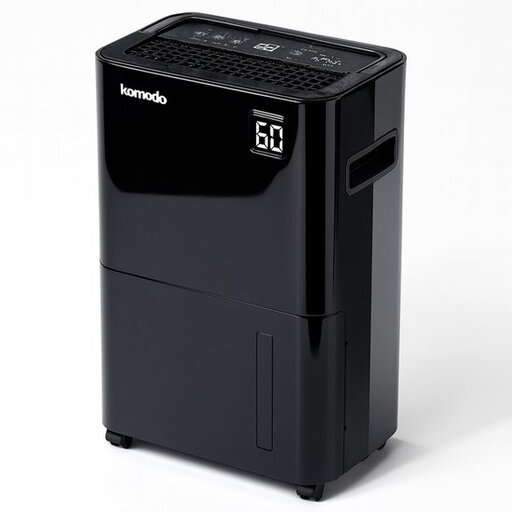
Komodo dehumidifier, 20 l/day
For larger rooms, as long as the stated room size is suitable for your home office.
Rated for up to 20 l/day and rooms of up to 100 m². The noise rating is stated as 40–45 dB.
Humidity control, a timer, automatic defrosting, and tank and hose drainage options are listed. If you’re not using the hose drainage option, the 2.5-litre tank needs emptying.
View at Joybuy
 No image available
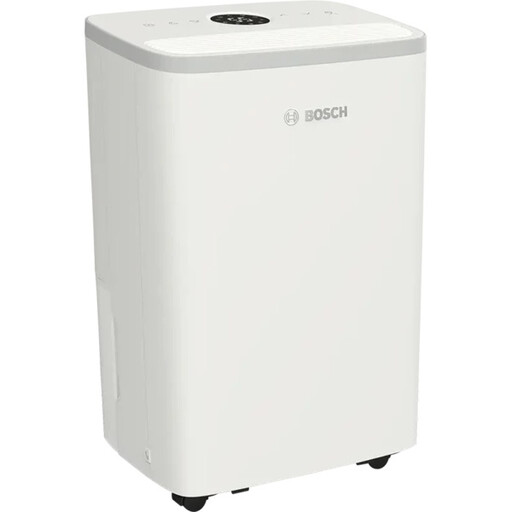
Bosch Dry 2000, 12 l/day
An option if the stated room size and Night mode suit your home office and how you plan to use the appliance.
Rated for up to 12 l/day and rooms of up to 55 m³; the stated noise level is 38 dB.
The appliance switches off automatically when the 2.5-litre tank is full. Auto, Night and Laundry modes, along with two fan speeds, are listed. According to the product details, a hose for continuous drainage isn’t included.
View at Joybuy
 No image available
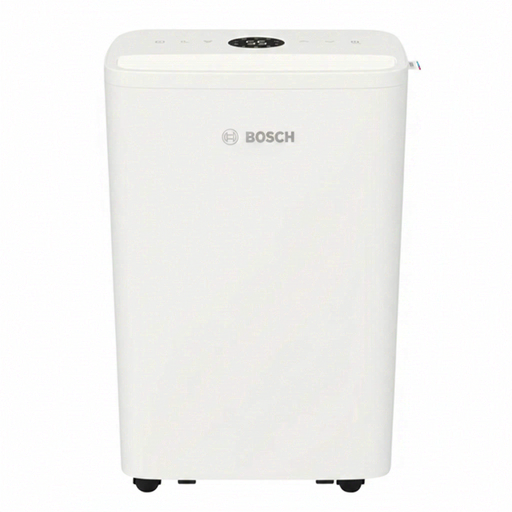
Bosch dehumidifier, 10 l/day
For a room up to the stated size, if a Night mode and drainage option are important to you.
Rated for up to 10 l/day and areas of up to 17 m². The product details give a noise rating of 36 dB in Night mode.
A 2.5-litre tank and a hose for continuous drainage are listed, along with automatic operating modes.
View at Joybuy
 No image available
Bosch Dry 4000, 16 l/day
An option for larger rooms, if the stated room size is suitable for your home office.
Rated for up to 16 l/day and areas of up to 75 m³. The appliance switches off automatically when the 2.5-litre tank is full.
Auto, Night and Laundry modes, along with two fan speeds, are listed. A hose is needed for continuous drainage.
View at Joybuy
Frequently asked questions
What humidity level should I check before buying?
Measure the temperature and relative humidity with a thermo-hygrometer. German consumer advice centres suggest around 18 to 22 °C and 40 to 60% relative humidity as a guide to a comfortable indoor climate. The consumer advice centre notes that in winter, the risk of mould may increase if relative humidity is regularly above 50%. These figures aren’t a universal setting for every window.
Does a dehumidifier mean I don’t need to ventilate?
No. A dehumidifier doesn’t replace ventilation. The German Environment Agency points out that regular, adequate ventilation can help prevent mould in many cases. Working also produces CO₂ and other indoor air pollutants, which simply removing moisture won’t get rid of.
What should I consider when it comes to the tank and condensation drainage?
Allow space for easy access when emptying the tank, and check whether a drainage hose will work where you plan to put the appliance. Bosch states that the Dry 4000 has a 2.5-litre tank with an automatic shut-off when full, as well as the option of continuous drainage via a hose. Check the tank size, shut-off and drainage options for each model individually.
How can I work out the electricity costs of a dehumidifier?
Multiply the power consumption in watts by the actual running time in hours, then divide the result by 1,000 to get the energy use in kWh. Multiply this figure by your electricity price per kWh, and take automatic shut-off times into account. Also check whether any accessories you want are included: Bosch sells the Dry Filter for the Bosch Dry 4000 separately.
What should I know about product safety and disposal in Germany?
EU consumer information lists electrical and electronic equipment among the product groups that must carry a CE marking. The CE marking indicates the manufacturer’s declaration of conformity; it isn’t an independent EU approval of the individual appliance. The German Environment Agency advises that waste electrical and electronic equipment must be collected separately and not put in household waste.


