Home office affected by shower humidity
You notice dampness in your office after showering and want to find out whether it’s coming from the bathroom before buying a dehumidifier.


You don’t automatically need a dehumidifier in your home office after showering. The German Environment Agency recommends ventilating the bathroom straight away to clear the peak in humidity, and keeping the bathroom door closed. If humidity in your office still regularly gets too high, a dehumidifier suited to the actual room temperature may help. In a room that stays cool for long periods, an adsorption model is worth considering. Compare operating conditions, noise, controls and power consumption rather than focusing solely on the maximum daily extraction rate.
You notice dampness in your office after showering and want to find out whether it’s coming from the bathroom before buying a dehumidifier.
Your home office stays cool for long periods, and you need extra dehumidification even after clearing the humidity from the bathroom. The key is whether the specific appliance is designed to work at the actual room temperature.
You want to dehumidify while you’re on calls or concentrating on work, so you’re comparing operating settings, noise levels and controls, as well as the option to run the appliance outside working hours.
When it makes sense: If humidity mainly rises straight after showering, the German Environment Agency recommends ventilating the bathroom immediately and keeping the bathroom door closed.
Bear in mind: This requires a suitable way to ventilate the room; an appliance in your home office is no substitute.
When it makes sense: If you’re clearing humidity from the bathroom but the air in your office still regularly feels damp, and the room stays cool for long periods, consider an adsorption dehumidifier designed for that temperature.
Bear in mind: Regeneration uses electricity and may produce warmer outgoing air. The manufacturer’s figures won’t necessarily reflect conditions in your own room.
When it makes sense: If your home office is usually heated and you still need a dehumidifier, you can compare a suitable compressor model with an adsorption model under similar temperature and humidity conditions.
Bear in mind: Trotec notes that the performance of many compressor dehumidifiers may drop at low temperatures. A higher litres-per-day rating alone doesn’t prove that a model is better suited to your needs.
The points below are aimed at consumers considering a dehumidifier for their home office because of shower humidity. What you should check first depends on what matters most in your working day.
| Priority | What to look for when buying | Who is this particularly important to? |
|---|---|---|
| Dehumidifying in the right place | Check bathroom ventilation and how the door is managed; monitor humidity in your home office before and after showering. | If I first want to find out whether shower humidity is reaching my home office at all, I want to keep an eye on bathroom ventilation and the air in the room; around 33% of consumers want to establish the cause first. |
| Dehumidification at room temperature | Compare the usual room temperature with the specific model’s permitted temperature range; consider performance figures in light of the temperature and humidity conditions they were measured in. | If my home office stays cool for long periods, I want to know whether the specific appliance can be used at that temperature; around 27% of consumers prioritise suitability for cooler conditions. |
| Working without disruption | Check the noise level for each operating setting, along with humidity controls, the timer and possible operating times. | If I want to dehumidify while on calls or concentrating on work, the noise level of the setting I’ll actually use is key; around 20% of consumers prioritise a quiet working environment. |
| Power use and water disposal | Consider power consumption and possible running times; check the tank, the full-tank shut-off and whether a drainage hose is supported. | If the appliance is going to run regularly, I want to be able to estimate its electricity use and how much effort it’ll take to empty; around 20% of consumers prioritise ongoing operation and water disposal. |
The German Environment Agency recommends clearing peaks in humidity directly in the bathroom and keeping the bathroom door closed. A dehumidifier in a nearby room is no substitute for this.
First, check the ventilation options in your bathroom and see whether humidity in your home office actually remains high after showering on a regular basis.
De’Longhi gives the DNS65’s dehumidification rate at 30 °C and 80 % relative humidity. This figure doesn’t tell you how the model will perform in a cool home office.
Compare the temperature and humidity conditions stated for the specific model with those in your room.
A noise figure for a particular setting or an automatic mode doesn’t necessarily describe operation at full dehumidifying capacity.
Check which setting the noise figure applies to, what control options are available and what power consumption is stated for the operating mode you’ll actually use.
The DD8L adsorption range is worth considering for cooler spaces; features vary by model.
The TTR 57 E is a domestic adsorption dehumidifier that, according to Trotec, is also designed for cooler rooms.
The Tasciugo AriaDry Light DNS65 is an alternative to compare, with noise level, humidistat and power consumption all worth considering.
The WDD80 is a sorption model designed for cooler rooms.
The Joybuy models listed are dehumidifiers with different control, timer and night-mode options depending on the model. If you’re specifically looking for an adsorption dehumidifier for a cool home office, check the dehumidification technology and permitted temperature range of the specific model before buying.
 No image available
Sleep mode and humidity control are useful features to consider if you’re planning to run the appliance while working.
10 l/day; 2,5-l water tank; 3 modes; 24-hour timer; for rooms up to around 40 m³ (16 m²); sleep mode at 36 dB(A).
 No image available
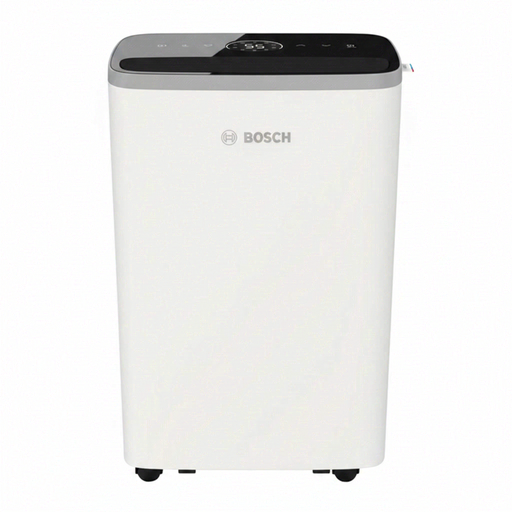
The stated night mode may appeal if you want to take operating noise and the display into account while using the appliance.
16 l/day; for rooms up to 75 m³; 2,5-l water tank; 2 fan speeds; night mode at 40 dB.
 No image available
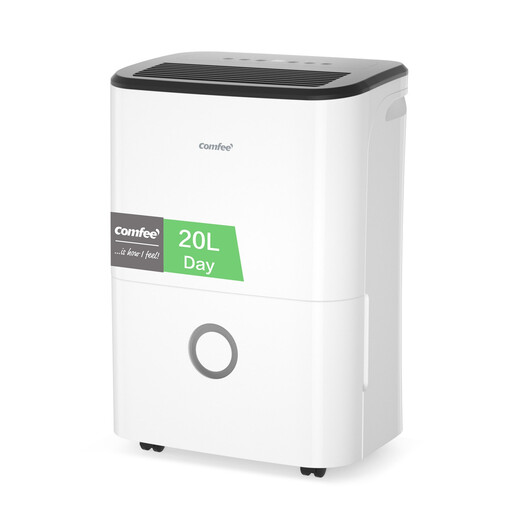
The stated continuous drainage option can be an alternative to regularly emptying the tank during longer operating periods.
20 l/day; 3-l water tank; continuous drainage; 3 modes; 24-hour timer; for rooms up to around 100 m³ (40 m²).
 No image available
App control, scheduling and sleep mode are among the listed options for anyone who wants to choose when the appliance runs.
20 l/day; 2,5-l water tank; 3 modes; Wi-Fi control; sleep mode at 35 dB; for rooms up to 40 m².
 No image available
Automatic mode, app control and scheduling are among the listed options if you want to set the appliance to run when needed.
12 l/day; 1,8-l water tank; 3 modes; Wi-Fi control; sleep mode at 32 dB; for rooms up to 24 m².
No. The German Environment Agency recommends clearing peaks in humidity straight away in the bathroom and keeping the bathroom door closed to stop moisture spreading around your home. If ventilation is limited, you should also wipe water off the walls and floor after showering.
Not without checking the exact location and the manufacturer’s instructions. ELEKTRO+ explains that electrical installations around showers and baths are subject to specific requirements; sockets and switches aren’t permitted there. A model being suitable for a home office doesn’t mean it’s approved for use in a wet area.
Empty the tank and maintain the filter and air inlets and outlets as directed in the instructions for your model. Use a drainage hose only if the appliance is designed for one and it can be routed safely at the location. Trotec lists an overflow-protected tank for the TTR 57 E.
Multiply the power consumption in watts by the actual running time in hours, then divide the result by 1,000 to get the energy use in kilowatt-hours. Remember to take the operating mode and running time into account, as a model with automatic controls won’t necessarily run continuously at the same power level.
No. An additional manufacturer’s warranty is separate from your statutory rights in respect of defects. § 438 BGB generally sets a two-year limitation period from delivery for the defect claims specified there; any voluntary warranty is subject to its own terms and conditions.