What should you look for when buying?
Ventilate the bathroom first, then monitor the dampness in your study. If you need an appliance, check that it’s suitable for the room size and temperature, and take noise, water tank capacity and maintenance into account too.
| What you need |
What to check when buying |
Who is this important to? |
| Persistent dampness |
Monitor levels after showering and ventilating; check the room size against the specific model’s stated capacity. |
If I still detect dampness after ventilating, I want to investigate how long it lasts and what’s causing it, rather than focus only on the litres-per-day figure; around 40% of consumers put persistent dampness first. |
| Noise while working |
Compare the model’s noise rating with the relevant operating mode; check for an automatic or night mode. |
When concentrating or on video calls, I want an appliance whose noise rating suits the mode I plan to use; around 30% of consumers prioritise quiet operation. |
| A cool study |
Check the usual room temperature and the model’s operating temperature range; consider the type of appliance that’s suitable. |
In a cool study, I want to check first that the temperature range and appliance technology are a good match; around 20% of consumers prioritise suitability for cool rooms. |
| Energy use, tank and maintenance |
Consider power consumption and planned running time; compare the tank, drainage options and care instructions. |
If I’ll be using it regularly, I want to assess energy use, emptying and maintenance together; around 10% of consumers put ongoing effort first. |
Dehumidifiers at Joybuy
The dehumidifiers below are designed for rooms that experience recurring dampness. Compare the stated room size, noise level and drainage options with your study and how you plan to use the appliance.
 No image available
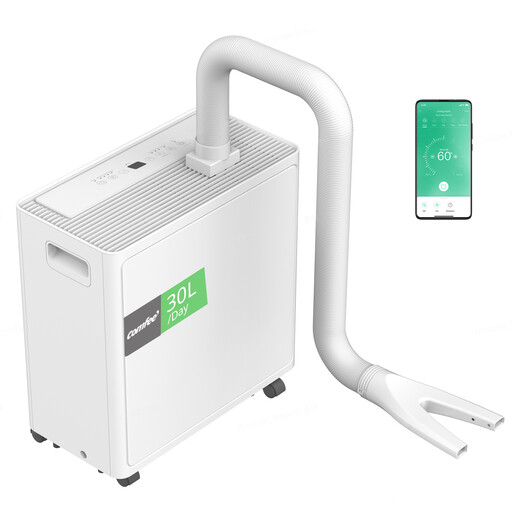
Comfee’ MDDA-30DEN7-SD, 30 l/day
For larger rooms within the stated room size; check that its capacity suits your study.
Up to 30 l/24 h; recommended room size around 130 m³ (73 m²); 3,2-l water tank; app control, four modes and a 24-hour timer.
View at Joybuy
 No image available
Comfee’ MDDO-10DEN7, 10 l/day
For a smaller study within the stated room size; also consider the noise level in sleep mode when comparing models.
Around 40 m³ (16 m²); 2,5-l water tank; three modes and a 24-hour timer; 36 dB(A) in sleep mode.
View at Joybuy
 No image available
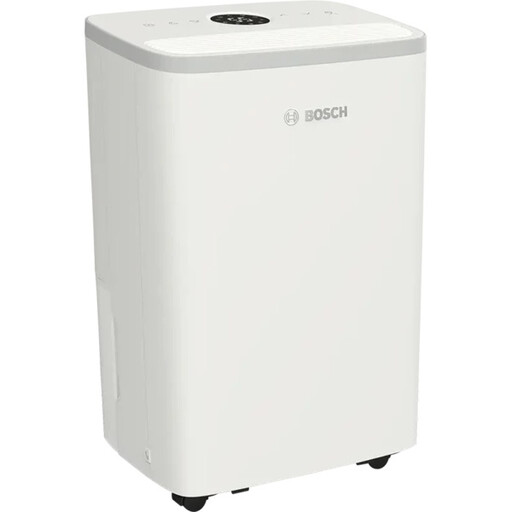
Bosch Dry 2000, 12 l/day
An option for a study within the stated room size; compare the noise level with the operating mode you plan to use.
Up to 55 m³; 2,5-l water tank; 38 dB; automatic, night and laundry-drying modes. A hose is required for continuous drainage; it’s not included.
View at Joybuy
 No image available
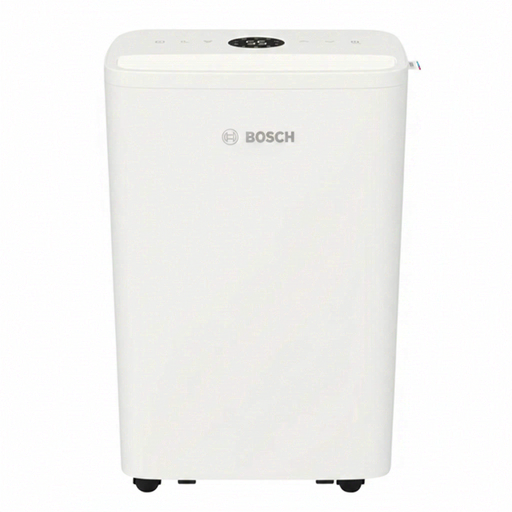
Bosch dehumidifier, 10 l/day
For a smaller study within the stated room size; check that the operating mode suits the way you work.
Up to 17 m²; 2,5-l water tank; 36 dB on the highest setting; two fan speeds, plus night and automatic modes.
View at Joybuy
 No image available
Bosch Dry 4000, 16 l/day
For a room within the stated size; check that the noise level and intended running time suit how you use your home office.
Up to 75 m³; 2,5-l water tank; 40 dB; automatic, night and laundry-drying modes, plus two fan speeds. A hose is required for continuous drainage and is not included.
View at Joybuy
Frequently asked questions
Should I leave the bathroom door open after a shower so one appliance can dehumidify both rooms?
No. The German Environment Agency recommends ventilating the bathroom thoroughly straight away and keeping the door closed. This clears the moisture peak before it can spread around your home.
What should I check before putting a dehumidifier in my study?
Check the room size and temperature against the specifications for the model, and follow the positioning guidance in the manual. For the Meaco DD8L Junior, the manual specifies a clearance of at least 30 cm from curtains and other objects.
How much does it cost to run a dehumidifier?
Energy use depends on the appliance’s power consumption, its actual running time and your electricity tariff. To work out consumption in kWh, calculate: watts ÷ 1,000 × running hours. You’ll also need to empty the tank and, where applicable, maintain the filter.
Is a manufacturer’s guarantee the same as your statutory rights?
No. According to the consumer advice centre, your statutory rights are against the seller; a guarantee is a voluntary additional service with its own terms and conditions.
What are the rules in Germany for CE marking and disposing of electrical appliances?
According to the EU, CE marking is required for products covered by the relevant harmonised EU rules. The German Federal Ministry for the Environment says that retailers must take back waste electrical appliances without a new purchase only if none of the appliance’s external dimensions exceeds 25 cm; other return options depend on the applicable conditions.


