What should you consider when choosing one?
First, work out whether the damp keeps returning and what temperature your home office usually reaches. Then weigh up noise and ongoing maintenance against the level of dehumidification you need.
Compressor dehumidifier
Suitable if: Your home office is heated and damp keeps returning despite adequate ventilation. Check the room coverage and target humidity controls of the specific model.
Things to weigh up: The noise, power consumption and need to empty the tank or connect a drain must suit the way you use the room. Daily extraction rates are only useful to compare when the test conditions are comparable.
Electric desiccant dehumidifier
Suitable if: The room is genuinely cool and the model you choose is designed to work at the temperature you have measured. Meaco says the DD8L Junior can be used from 0 °C.
Things to weigh up: Check the temperature range, noise and power consumption for the specific model. These details are not enough to make a general comparison of running costs with compressor dehumidifiers.
Non-electric moisture absorber
Suitable if: You have a localised damp problem and the information for the specific product confirms that it is suitable.
Things to weigh up: Before buying, check what room coverage and refill or replacement requirements are specified for the particular moisture absorber.
| What matters |
What to check before buying |
Who it matters most to |
| Recurring damp |
Check the stated room coverage in m² or m³ and the target humidity controls. Compare daily extraction rates only alongside the test temperature and relative humidity. |
If damp keeps coming back despite ventilation, I want to keep an eye on the room conditions and possible causes rather than simply choosing the highest daily extraction rate. Around 33% of consumers put humidity control first. |
| Working without disruption |
Check the noise level and operating mode, and see whether the specific model has a mode that suits your working routine. |
If I work or make calls in the same room, I want to know whether the dehumidifier will disrupt conversations and which setting I’ll need to use. Around 25% of consumers prioritise working without disruption. |
| Running and emptying the dehumidifier |
Check the tank capacity and whether the unit switches off when the tank is full. If it has a drain connection, check what’s included and whether it can be positioned appropriately. |
If the dehumidifier runs regularly, I want to know how often I’ll need to empty the tank and what maintenance is involved. For around 25% of consumers, ongoing operation and emptying are the main considerations. |
| Cool room |
Measure the usual room temperature and check it against the temperature range specified for the model. |
If my home office is genuinely cool, the type of dehumidifier needs to suit the measured temperature range; other operating details matter too. Around 17% of consumers prioritise performance in cooler conditions. |
Dehumidifiers for your home office
This Joybuy selection includes dehumidifiers for recurring damp in a home office, from models for smaller rooms to options with a higher stated daily extraction rate. Check the room coverage, noise level and emptying requirements against the way you’ll use it.
 No image available
Comfee MDDO-10DEN7, 10 l/day, 2.5 l tank
If humidity control and a tank for regular use are important in your home office, compare the stated room coverage with your own conditions.
The stated specifications include 10 l/24 h, a 2.5 l tank and a room size of around 40 m³ or 16 m². The listing title also mentions 3 modes and a 24-hour timer.
View at Joybuy
 No image available
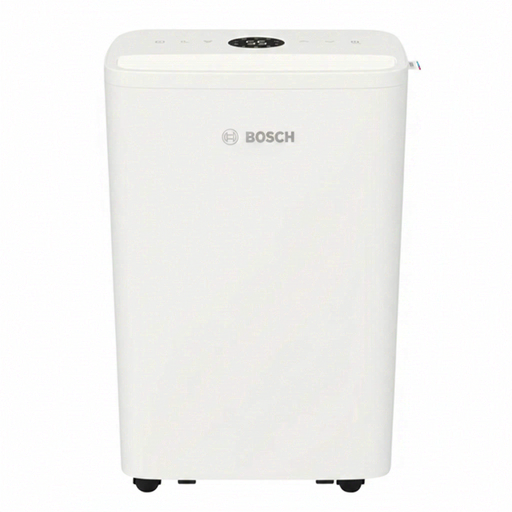
Bosch dehumidifier, 10 l/day, up to 17 m²
If you have a smaller home office, compare the stated room size with your actual room and check which mode will suit your working hours.
The listing title specifies a 2.5 l tank, 36 dB, two fan speeds, and night, laundry, continuous and automatic modes.
View at Joybuy
 No image available
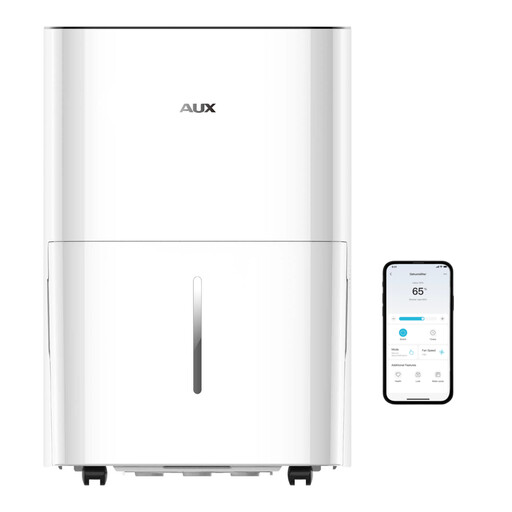
AUX dehumidifier, 20 l/day, Wi-Fi control
The stated room coverage may suit a larger home office. Before choosing, check that it matches your room and intended use.
The listing title specifies 20 l/day, Wi-Fi control, R290, up to 8 hours of continuous operation and suitability for rooms up to 25 m².
View at Joybuy
 No image available
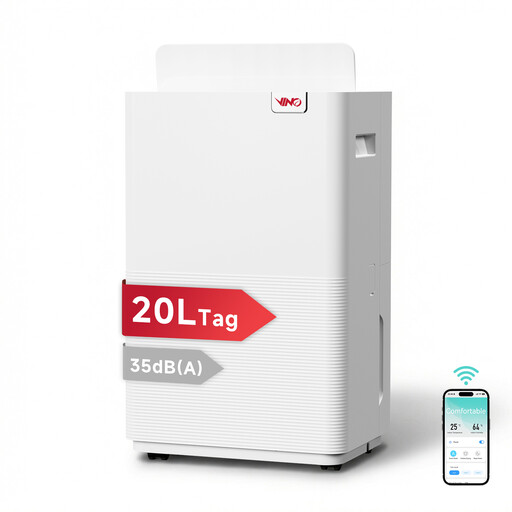
VINO dehumidifier, 20 l/day, 2.5 l tank
If you’re considering a dehumidifier for a larger room, check the stated room coverage and whether the sleep mode and tank capacity suit your working routine.
The listing title specifies suitability for up to 40 m², Wi-Fi control, R290 and three modes: Auto, Dry and Sleep. The sleep mode is rated at 35 dB.
View at Joybuy
 No image available
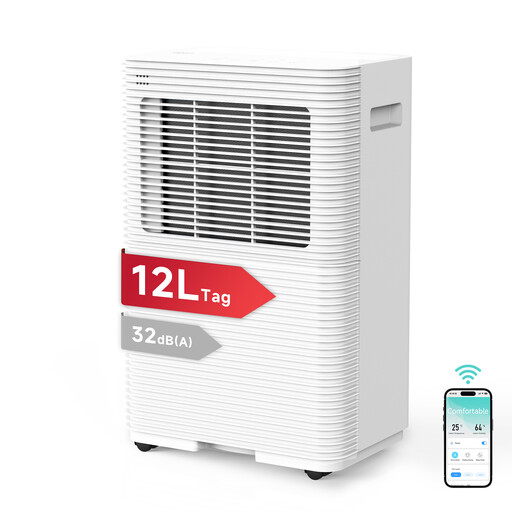
VINO dehumidifier, 12 l/day, 1.8 l tank
For a home office within the stated room coverage, compare the extraction rate with your needs and check whether the timer and hose drainage suit the location you have in mind.
The listing title specifies suitability for up to 24 m², Wi-Fi control, R290 and three modes: Auto, Dry and Sleep. The sleep mode is rated at 32 dB.
View at Joybuy
Frequently asked questions
Is a dehumidifier enough if there is already visible mould in my home office?
No. The German Environment Agency recommends identifying and addressing the cause of high humidity; affected materials must also be dealt with. The right approach depends on the extent of the mould.
How should I position an electric dehumidifier in my home office?
Follow the instructions for the specific model. Manufacturers’ guidance may include placing the dehumidifier on a stable surface and keeping the air inlets clear. General clearance measurements won’t necessarily apply to every model.
How can I estimate the electricity use when working from home?
You’ll need the appliance’s actual power consumption and how long it runs; the rated power alone won’t tell you how long it will operate. Also check the tank, airways and, where applicable, filters according to the instructions for the model you’ve bought.
Is the CE marking an official recommendation for a product?
No. By applying the CE marking, the manufacturer declares, under its own responsibility, that the product complies with the relevant requirements. The European Union says there is no central EU body that issues a general certificate for using the marking; it is not an independent assessment of performance.
How should I compare the stated dehumidification rate?
Compare l/24 h figures only alongside the stated test conditions, particularly temperature and relative humidity. Also consider room size, the noise level, tank or drainage arrangements, and the temperature range for the specific model.


