
Lieferung heute & morgen

Qualitätsgarantie

Willkommens-Angebote freischalten: KOSTENLOSE Lieferung | Bis zu 80 % RABATT | Kostenlose 30-Tage-JoyPlus-Testphase
App herunterladen
Setting up a functional workspace at home starts with choosing the right desk. It's the centre of your productivity and should not only fit your space but also support the way you work. However, given the vast array of models, sizes, and features, the decision can be complex.
This article serves as a practical guide. We'll explain the key criteria to consider when making your selection and present a curated list of desks that meet different needs for space, ergonomics, and storage. Our goal is to provide you with objective information so you can make an informed decision for your ideal home office desk.
Before you decide on a model, there are a few key considerations to keep in mind. The following points will help you define your needs and narrow down your options.
The dimensions of your desk are crucial. Measure your available space accurately and plan for enough room to move around the desk. A desktop should be at least 120 cm wide and 60 cm deep to provide enough space for a monitor, keyboard, and work documents.
Ergonomics are an equally important aspect. The standard height for desks is between 72 and 76 cm. For a flexible and healthy posture, an electric height-adjustable desk is a worthwhile investment. It allows you to easily switch between sitting and standing, which can reduce strain on your back and neck.
A tidy desk promotes focus. Consider how much storage you need. A computer desk with drawers helps keep office supplies, documents, and personal items stored out of sight. Open shelves offer quick access to books or binders.
For users who need a lot of space or want to make the most of an unused corner, a corner desk with storage is a highly efficient solution. It maximises the work surface and often integrates generous storage options without overwhelming the room.
A desk is a piece of furniture that should blend harmoniously into your living environment. A modern office desk with clean lines and a neutral colour scheme fits well into many interior styles. Materials like engineered wood with a high-quality finish offer a durable and easy-to-clean surface, while metal frames provide stability and an industrial touch. Look for a sturdy construction and high-quality craftsmanship.
Based on the criteria above, we have compiled a selection of desks that are well-suited for various home office applications due to their functionality and design.

This L-shaped desk from Tribesigns is a comprehensive solution for anyone looking to combine workspace and organisation. With its reversible design, it can be flexibly placed in the left or right corner of a room.
Why it stands out The combination of a generous work surface, four drawers, and two open shelves makes this desk a complete workstation. The two-tone finish in walnut and white also gives it a modern character.
Benefits
Who is it for? Ideal for users who want to set up a dedicated workspace in a corner while maximising storage and surface area. It's well-suited for multitasking, creative projects, or as a gaming station.
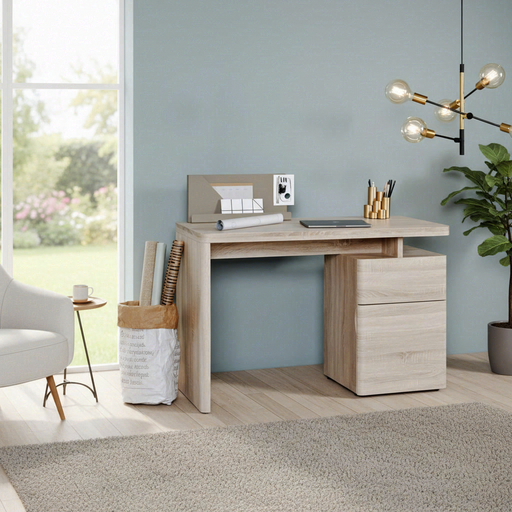
The "CU-LIBRE 120" desk by jahnke is a small desk for a study that impresses with its simple yet elegant design. With a width of 120 cm, it also fits well into more compact rooms or living areas.
Why it stands out Its minimalist appearance with handle-free fronts and elegant rounded edges makes it an unobtrusive piece of furniture. The integrated storage, consisting of a drawer and a cabinet, ensures a clutter-free surface.
Benefits
Who is it for? Perfect for students or professionals who need a functional yet space-saving workstation. It also works beautifully as a secretary desk in a living room or as a vanity table.
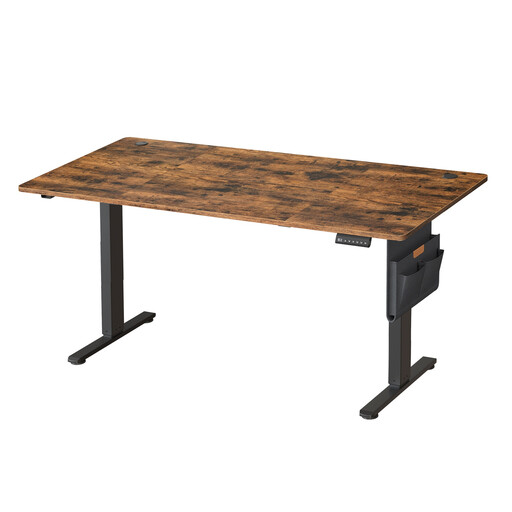
This electric height-adjustable desk from Ochama puts ergonomics first. At the touch of a button, the working height can be seamlessly adjusted between 72 and 120 cm, allowing for a dynamic transition between sitting and standing.
Why it stands out In addition to its electric height adjustment, this model offers a memory function to save up to four height settings. Practical details like a USB-C charging port, cable grommets, and a fabric organiser complete the functional package.
Benefits
Who is it for? This desk is the right choice for anyone who spends many hours a day at their desk and values ergonomics and comfort. It is especially suitable for home office workers who want to proactively prevent posture-related health issues.
The models presented already cover a wide range of needs. However, if you haven't found the right solution yet, or if you are specifically looking for models with even more integrated storage, it's worth exploring other configurations.
Discover our entire collection of office desks with side cabinets to find more designs and functional layouts that suit your work style.
1. How big should a home office desk be? The ideal size depends on your available space and your needs. As a rule of thumb, a desktop should be at least 120 cm wide and 60 cm deep. This provides enough space for a monitor, a keyboard, and some documents. If you work with multiple monitors or need a lot of surface area for drawing, widths of 140 cm or 160 cm are recommended.
2. What is the correct height for a desk? The standard desk height is between 72 and 76 cm. The height is ergonomically correct when your forearms rest horizontally on the desktop with your shoulders relaxed, and your knees form a 90-degree angle. Since this depends on your body height, height-adjustable desks are an excellent solution for customising the height and enabling the switch between sitting and standing.
3. What material is suitable for a desktop?Engineered wood (e.g., MDF or particleboard) with a melamine or paper finish is a common and practical choice. It is robust, easy to clean, and available in many different decors. Solid wood is more durable and has a natural appeal but requires more maintenance. Glass tops look modern and light but are more prone to fingerprints and scratches.