
Lieferung heute & morgen

Qualitätsgarantie

Willkommens-Angebote freischalten: KOSTENLOSE Lieferung | Bis zu 80 % RABATT | Kostenlose 30-Tage-JoyPlus-Testphase
App herunterladen
Setting up a functional workspace at home starts with choosing the right desk. However, the market is saturated with models whose quality and utility often only become apparent after purchase. An unstable frame or a scratch-prone surface can quickly hinder productivity. This guide will help you identify common pitfalls and make an informed decision that meets the demands of a modern workspace.
Before diving into designs and features, it's wise to understand the typical flaws that only become noticeable in daily use.
To avoid these mistakes, you should check three essential criteria. These form the foundation for a durable and functional workspace.
The desktop is the most heavily used component. Its quality determines its longevity and user comfort.
An ergonomic workspace promotes well-being and concentration. The height of the desk is a crucial factor.
The shape of the desk should suit your available space and your workflow.
Here are some models tailored to specific user profiles and their requirements.
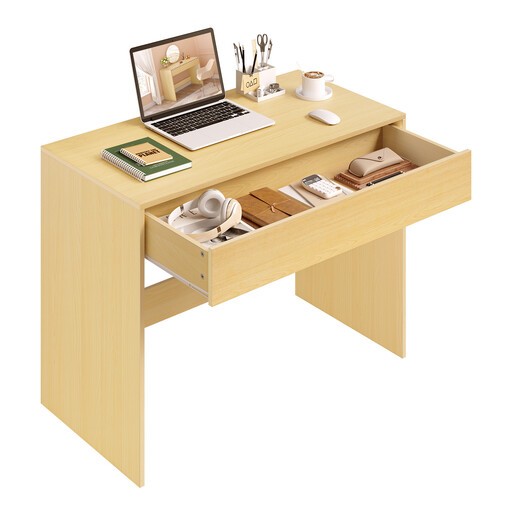
Why this model is a great fit: Perfect for smaller apartments or work nooks where every centimetre counts. Its compact 100 x 50 cm footprint and integrated drawer help keep the workspace tidy without needing extra furniture.
The H-shaped frame with a cross-brace specifically addresses the issue of instability. Its melamine-coated surface is water-repellent and easy to clean, avoiding the drawbacks of delicate high-gloss finishes.
Combines a compact design with practical storage, featuring a large, handleless drawer.
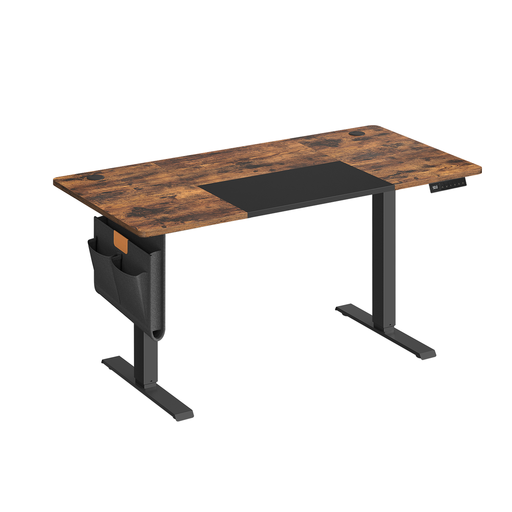
Why this model is a great fit: For professionals who spend long hours at their desk and prioritise healthy posture. The quiet motor and memory function make switching between sitting and standing effortless.
The robust steel frame ensures stability even at maximum height, preventing any wobbling. Integrated cable management and a USB-C port help keep the work surface clutter-free.
Smooth electric height adjustment (71-120 cm) with four memory presets for personalised ergonomics.
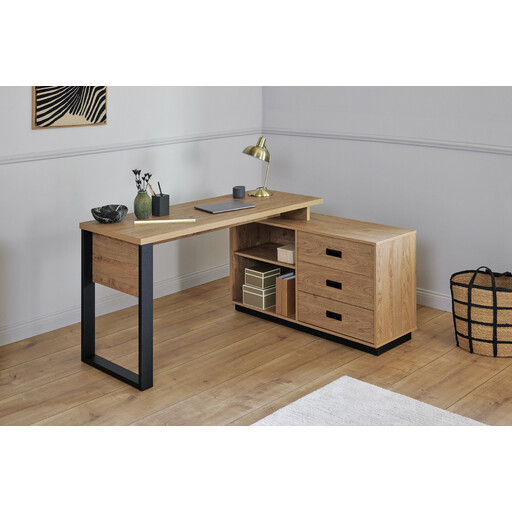
Why this model is a great fit: The L-shape provides an expansive work surface, ideal for multiple monitors, a laptop, and documents. It's perfect for users who need a dedicated area for digital tasks and another for analogue work.
This model solves the problem of inadequate storage with a side unit featuring drawers and compartments. The sturdy frame and solid construction provide the necessary stability for the large work surface.
Maximises space with its corner design, combined with generous storage and a reversible side unit for flexible setup.
We've curated a comprehensive, up-to-date list of products that meet these strict selection criteria and relevant standards.
The ideal height depends on your body height and your chair. As a rule of thumb, your forearms should rest horizontally on the desktop with your shoulders relaxed. For most people, this height is between 72 and 76 cm when seated. A height-adjustable desk is the most flexible solution, as it allows for individual customisation and enables you to switch to working while standing.
For daily home office use, an engineered wood (MDF or particleboard) desktop with a melamine resin coating offers an excellent balance of durability and low maintenance. The coating is resistant to scratches and moisture. While solid wood is even more robust, it is more sensitive to environmental changes and requires regular care.
Measure the two wall lengths from the corner where the desk will be placed. Compare these measurements with the dimensions of the desk's sides (e.g., 150 cm x 116 cm). Additionally, allow at least 60-70 cm of clearance for your office chair to move freely and to stand up. Also, consider the opening radius of any nearby doors or drawers.