
Lieferung heute & morgen

Qualitätsgarantie

Willkommens-Angebote freischalten: KOSTENLOSE Lieferung | Bis zu 80 % RABATT | Kostenlose 30-Tage-JoyPlus-Testphase
App herunterladen
A functional home office desk is the foundation for concentration and productivity. But the selection is vast, and not every model that looks appealing online proves its worth in daily use. Before you make a decision, it's helpful to know the most common pitfalls that often lead to disappointment and unnecessary expenses.
Many buyers only realize after assembly that their new desk wobbles, the work surface is too small, or the promised storage is impractical. This guide will help you avoid these problems and find an office desk that perfectly matches your requirements.
To avoid a bad purchase, you should focus on objective and measurable features. These three parameters are crucial for the longevity and functionality of your workspace.
The stability of a desk depends on two components: the tabletop and the frame.
The ideal dimensions depend on your height and your work style.
The shape of the desk should match the size of your room and your workflows.
Here are some models tailored to different needs and room situations.
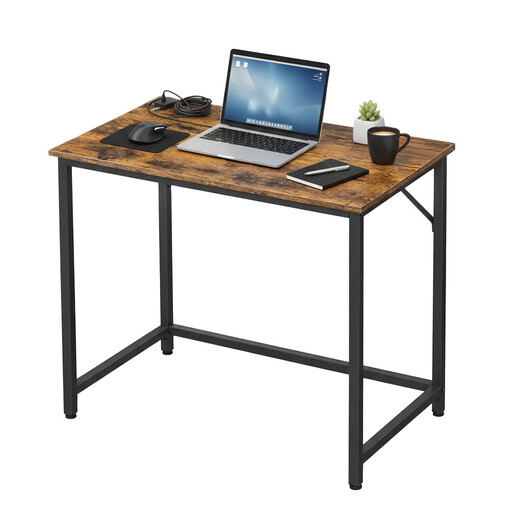
Why this model is a great fit: Ideal for students or professionals with limited space in a city apartment. Its minimalist design blends unobtrusively into living rooms or bedrooms, providing a dedicated workspace without dominating the room.
The sturdy steel frame counteracts the stability trap. The clear dimensions (80 x 50 cm) prevent the sizing dilemma for small spaces. As a simple desk without storage, it bypasses the misconception of impractical compartments.
Adjustable feet ensure a wobble-free stand even on uneven floors. Assembly is straightforward thanks to clearly labelled parts and a simple instruction manual.
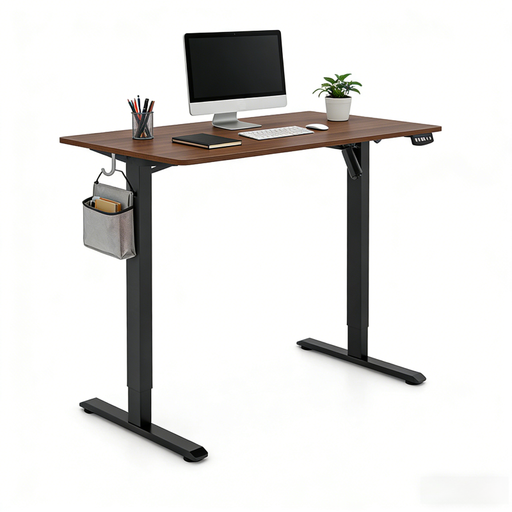
Why this model is a great fit: Perfect for anyone who spends long hours at their desk and wants to proactively prevent posture-related issues. Switching between sitting and standing promotes circulation and concentration.
The electric height adjustment solves the ergonomic problem of fixed desks. According to the manufacturer, the construction is designed for a load capacity of up to 70 kg, which counteracts the stability trap when loaded with monitors and equipment.
The lifting mechanism operates quietly, so it won't disturb your work environment. The 120 x 60 cm dimensions offer a good balance between a compact footprint and sufficient workspace.
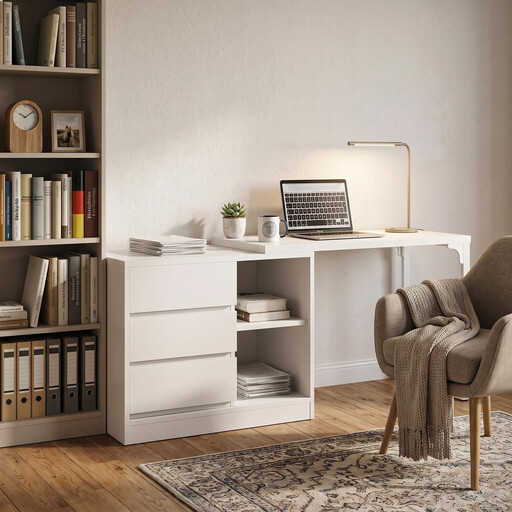
Why this model is a great fit: Ideal for freelancers or creatives who need plenty of space for multiple monitors, documents, and equipment. The L-shape makes efficient use of corners and creates an organised work environment with clearly separated zones.
This model solves the sizing dilemma with its generous L-shape and addresses the storage misconception with an integrated cabinet featuring drawers and open shelves. The engineered wood and metal frame construction provides the necessary stability.
The design is reversible, meaning the side cabinet can be assembled on the left or right depending on your room layout. This offers maximum flexibility when setting up your workspace.
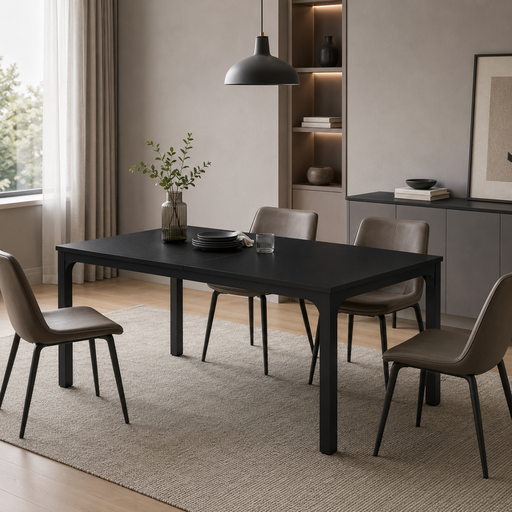
Why this model is a great fit: Designed for couples working from home or users who need an extremely large surface for blueprints, models, or multiple computers. The generous area allows for two full-sized workstations side by side.
Its massive 200 x 70 cm size solves any space problem. The construction, featuring thickened 5x5 cm metal tubes and a welded triangular structure, ensures high stability and prevents wobbling even at full capacity.
The ample legroom underneath the desk allows for two office chairs and mobile cabinets without users getting in each other's way. According to the manufacturer, the surface is scratch-resistant and easy to clean.
A well-equipped workspace includes more than just a desk. Discover our selection of ergonomic office chairs and other accessories.
For an ergonomic setup, a minimum depth of 60 cm is recommended. This allows for a healthy viewing distance from the monitor (about an arm's length) while providing enough space for a keyboard, mouse, and wrist rest. If you work with large monitors (over 27 inches) or multiple screens, a depth of 70 to 80 cm is even more suitable.
For individuals who spend many hours at their desk each day, investing in a height-adjustable model can be highly beneficial. Regularly switching between sitting and standing can relieve back muscles, improve posture, and boost concentration. It's a preventative measure against the typical ailments associated with prolonged sitting.
An ergonomic office chair is just as important as the desk itself. Look for adjustable components like seat height, armrests, and lumbar support (support for the lower back). The seat height should be adjusted so that your feet are flat on the floor and your knees are at a 90-degree angle. With relaxed shoulders, your forearms should also rest at a 90-degree angle on the tabletop or armrests.