
Lieferung heute & morgen

Qualitätsgarantie

Willkommens-Angebote freischalten: KOSTENLOSE Lieferung | Bis zu 80 % RABATT | Kostenlose 30-Tage-JoyPlus-Testphase
App herunterladen
Setting up a functional workspace in your own home is essential for focused and productive work. The right home office desk is the centrepiece of this setup. However, the selection is vast and requirements are individual: from space-saving solutions for small apartments to ergonomic models for long workdays.
This guide is designed to give you clear direction. We will introduce different types of desks and explain which criteria are crucial for making an informed decision for your personal workspace.
Before you decide on a model, several fundamental aspects should be considered. These will help narrow down the selection to products that truly fit your needs and your space.
The first step is to measure the available space precisely. Consider not only the width and depth of the desk itself but also the room needed for your chair and for freedom of movement.
Long hours at a desk can strain the body. An ergonomic desk can help promote a healthy posture.
A tidy workspace promotes concentration. Consider how much storage you need. A desk with a drawer is ideal for stowing away stationery, notepads, and small devices out of sight. Models with additional shelves or an integrated cabinet offer even more space for files and larger items.
Based on the criteria mentioned, we have compiled a selection of models that meet different requirements for size, function, and design.
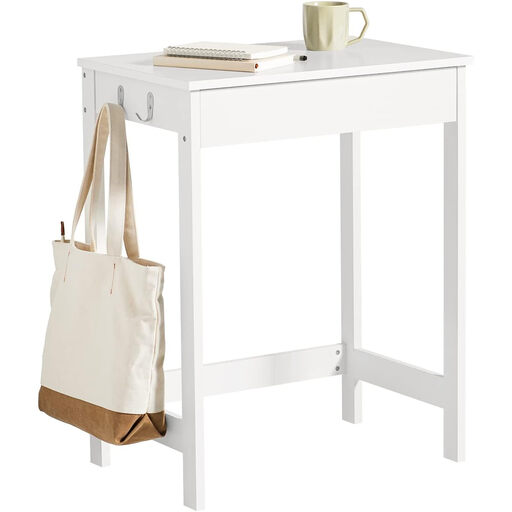
Why it stands out: This model is a clever solution for very limited spaces. With a surface area of just 60 x 40 cm, this white desk fits into the smallest corner, creating a dedicated workspace.
Advantages:
Who it's for: This model is the perfect choice for students, individuals with very limited living space, or anyone looking to set up a minimalist and functional secondary workspace.

Why it stands out: The JOHNSON desk combines Scandinavian design with a thoughtful storage concept. The mix of a white surface and light wood-effect legs blends seamlessly into modern living spaces.
Advantages:
Who it's for: Ideal for users who need a fully-fledged workspace with plenty of storage and also value an attractive, modern design.

Why it stands out: This model is an electric height-adjustable desk that allows you to switch between sitting and standing at the touch of a button. It is an investment in a flexible and ergonomic work environment.
Advantages:
Who it's for: This standing desk is the right choice for professionals who spend many hours a day at their desk and want to actively improve their back health and well-being.
The models presented here cover common requirements. However, if you are looking for specific materials or designs, a look at our broader selection might be helpful. In particular, desks made of solid wood or with a wood finish offer a warm and natural atmosphere.
Discover more models in our Wooden Desks category.
The ergonomically correct height depends on your body height. When sitting, your forearms should rest horizontally on the tabletop while your upper arms hang loosely (approx. 90-degree angle at the elbow). For most people, this height is between 72 and 78 cm. A height-adjustable desk offers the advantage of being precisely adaptable to your height and that of your office chair.
The terms are often used interchangeably. Traditionally, a computer desk is specifically designed for use with a desktop PC and often includes extras like a pull-out keyboard tray or integrated cable management. A classic writing desk is often simpler in design and primarily intended as a writing and work surface. However, modern desks today often combine the features of both types.
In addition to the desk's surface area, plan for at least an extra 60-80 cm in depth for your office chair and legroom. To be able to push the chair back comfortably and stand up, a clear area of about 100 cm behind the desk is recommended. Measure the available space carefully before making a purchase decision.