
Lieferung heute & morgen

Qualitätsgarantie

Willkommens-Angebote freischalten: KOSTENLOSE Lieferung | Bis zu 80 % RABATT | Kostenlose 30-Tage-JoyPlus-Testphase
App herunterladen
A functional workspace is the foundation of productivity in any home office. However, the search for the right desk can quickly become overwhelming. Many models overpromise and underdeliver, leading to disappointment. This guide will show you what to look for to avoid common purchasing pitfalls and find a desk that truly meets your needs.
Before we dive into the important features, let's look at the problems that often only surface after the purchase:
To avoid these problems, you should base your choice on objective criteria. The following three points are crucial for long-term satisfaction.
The stability of a desk is directly linked to the material and construction of its frame. A steel frame generally offers greater strength and resilience than lighter alternatives. Pay attention to the specified maximum load capacity (in kg). A good benchmark for a fully equipped workstation with multiple monitors and accessories is at least 50 kg, and for electric height-adjustable models, often 70 kg or more.
The tabletop is usually made of particleboard or MDF (medium-density fibreboard) with a coating. A melamine resin-coated surface is resistant to scratches and easy to clean. For models with special surfaces, such as the carbon fibre texture on a gaming desk, the quality of the coating is critical for durability.
An ergonomic workspace can be adapted to the user. A height-adjustable desk is a smart solution for this. It allows you to switch between sitting and standing, which promotes circulation and reduces strain on your back.
A distinction is made between manual (crank) and electric adjustment. An electric desk offers more convenience, especially if the height is changed several times a day. Models with a memory function can save multiple height settings and recall them at the touch of a button. A standing desk like this is an investment in your health.
An uncluttered workspace promotes concentration. Therefore, consider which features you need. A desk with drawers or integrated shelves helps to store documents and office supplies. For users with a lot of tech, models with built-in power outlets and USB ports are practical as they simplify cable management.
For larger rooms or special requirements, a corner desk or an L-shaped desk is suitable. Many of these models are reversible, meaning the corner can be assembled on either the left or right side, offering maximum flexibility in room layout.
Here are some models tailored to specific user profiles and their requirements.
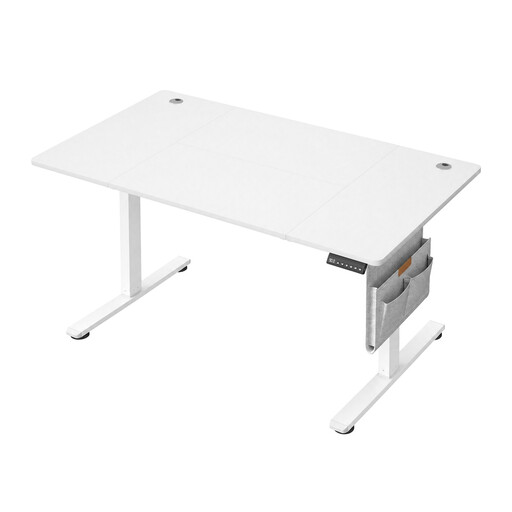
Why this model is a great fit: Ideal for professionals who spend long hours at their desk. The electric height adjustment with four memory presets allows for a quick and easy switch between sitting and standing positions to meet the ergonomic demands of a long workday.
The solid steel frame ensures high stability (load capacity up to 70 kg) and prevents wobbling. The electric adjustment solves the problem of an ill-fitting, fixed desk height.
The quiet motor and the memory function for four heights offer superior convenience in your daily workflow. Includes hooks and cable grommets for better organisation.
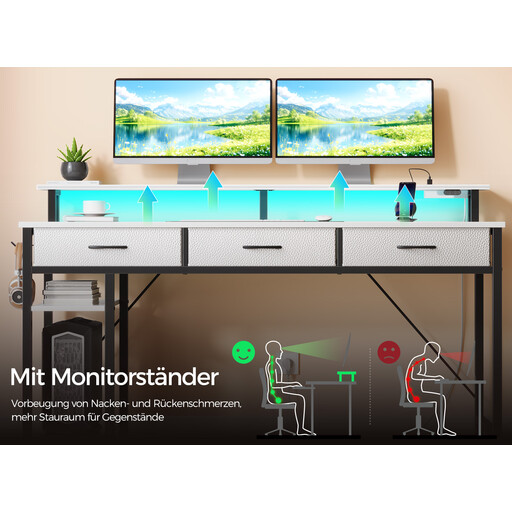
Why this model is a great fit: Designed for gamers and tech-savvy users who need more than just a tabletop. Integrated power outlets, USB ports, and customisable RGB lighting create an immersive atmosphere and keep all devices charged and within reach.
The powder-coated steel frame provides the necessary stability for intense gaming sessions. The carbon fibre texture is scratch-resistant, and the integrated features offer genuine added value.
The all-in-one solution with a charging station, LED lighting, monitor stand, and storage (drawers and shelves) creates a tidy and functional gaming setup.
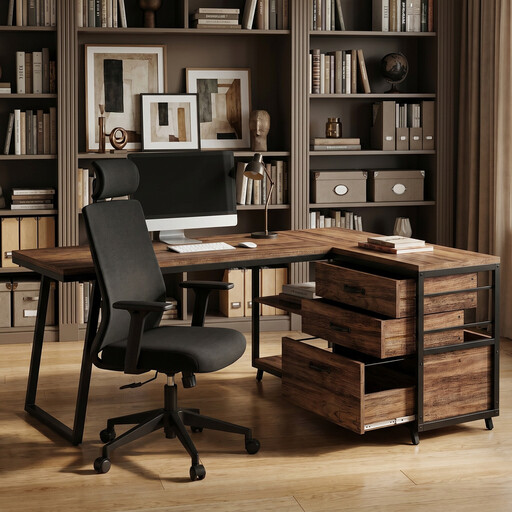
Why this model is a great fit: Perfect for making the most of corners in smaller apartments or offices. The reversible design allows for flexible orientation, while the combination of drawers and open shelves provides ample storage to keep things organised.
The construction of engineered wood and a metal frame provides reliable stability. The integrated storage prevents clutter on the work surface from the outset.
The combination of a generous work surface, reversible corner design, and versatile storage (three drawers, two shelves) makes it a highly space-saving and organised solution.
If you need a desk with even more storage, we've curated a selection of models that feature integrated filing cabinets and meet our strict selection criteria.
1. How high should a home office desk be? The ideal height depends on your body height and your chair. When seated, your forearms should rest on the tabletop at a 90-degree angle while your shoulders are relaxed. For most adults, the optimal sitting height is between 72 and 76 cm. A height-adjustable desk is the most flexible solution, as it allows for precise customisation and the ability to switch to a standing position (approx. 100-120 cm high).
2. What is the minimum size for a home office desk? For a functional workspace with a laptop and an external monitor, the tabletop should be at least 120 cm wide and 60 cm deep. This provides enough space for a keyboard, mouse, and some documents without feeling cramped. If you use two monitors or need more space for paperwork, a width of 140 cm or 160 cm is recommended.
3. How much weight should an electric desk be able to support? Load capacity is a key indicator of quality. A solid electric desk should have a static load capacity of at least 70 kg. This ensures it can safely support the weight of two to three monitors, a PC tower, books, and other accessories without losing stability or overloading the lift motor. Always check the manufacturer's specifications for maximum load capacity.