
Lieferung heute & morgen

Qualitätsgarantie

Willkommens-Angebote freischalten: KOSTENLOSE Lieferung | Bis zu 80 % RABATT | Kostenlose 30-Tage-JoyPlus-Testphase
App herunterladen
Setting up a functional workspace at home starts with choosing the right desk. However, the market is flooded with models whose descriptions often promise more than their construction can deliver. Many buyers only realise after a few months that their new desk wobbles, the surface scratches easily, or the storage is impractical. These problems can be avoided by paying attention to crucial features before you buy.
This guide focuses on the objective criteria that define a good desk and helps you sidestep common pitfalls. We'll highlight which specifications truly matter to find a durable and suitable desk for your home office.
Instead of being swayed by marketing buzzwords, you should base your decision on three fundamental parameters. These determine stability, functionality, and suitability for your individual needs.
A common flaw in budget-friendly desks is an unstable construction. A desk that sways with every keystroke is unsuitable for focused work.
The dimensions of the desk must fit both the available space and your work requirements.
A cluttered work surface is a common problem. The right storage solution helps you stay organised.
Based on the criteria mentioned, we have compiled a few models for different user profiles.
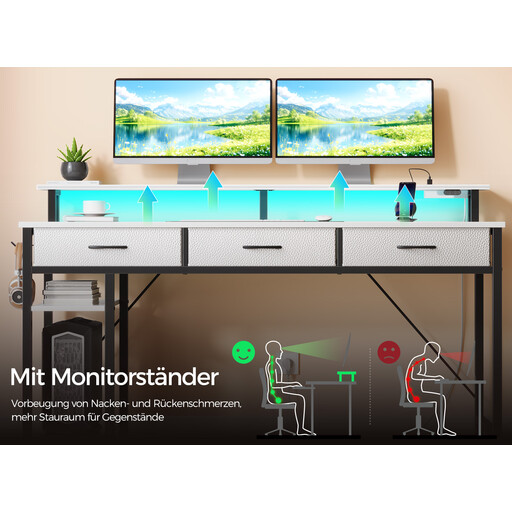
Why This Fits Their Persona: Ideal for gamers and users with multiple devices. The integrated charging station with power outlets and USB ports reduces cable clutter. The monitor stand promotes an ergonomic posture, while the LED lighting creates the right atmosphere for a gaming desk.
The powder-coated steel frame provides the necessary stability to support even heavy gaming setups without wobbling. The integrated features solve the common problem of disorganised cable management right at the desk.
Integrated charging station (2 outlets, 2 USB ports). Fabric drawers and side shelves for organised storage. Reversible design for flexible setup.
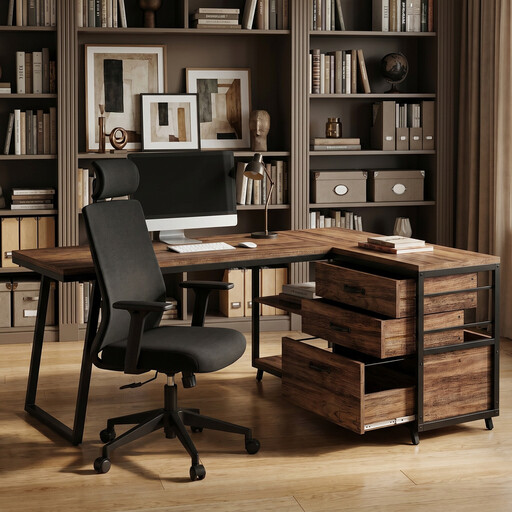
Why This Fits Their Persona: This L-shaped desk is ideal for those who want to make the most of a corner while needing ample storage. The combination of three drawers and two open shelves creates a complete organisational system for a tidy home office setup.
It provides a structured storage solution that prevents the chaos of documents piled on the desktop. The reversible design ensures flexibility, avoiding the pitfall of a desk that doesn't fit the room's layout.
Efficient use of space with an L-shape. Combined storage with 3 drawers and 2 shelves. Sturdy metal frame for durability.
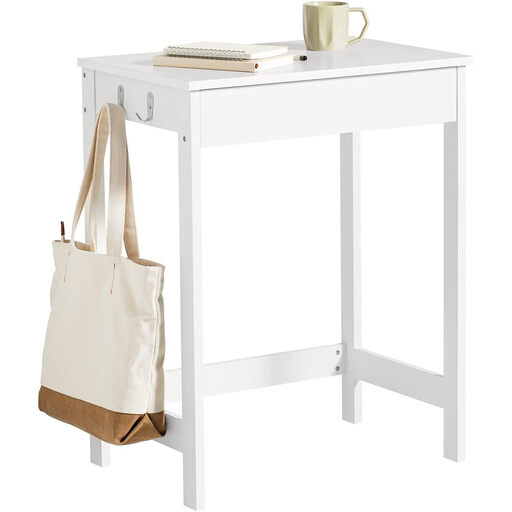
Why This Fits Their Persona: With a footprint of just 60 x 40 cm, this small desk is perfect for students, a teen's room, or a work corner in the living room. Despite its compact size, it offers basic organisational features with a drawer and side hooks.
It solves the problem of limited space without sacrificing basic functionality. The iron frame ensures stability, avoiding the typical wobble found in many small, lightweight desks.
Very space-saving dimensions (60 x 40 cm). Sturdy construction with a load capacity of up to 60 kg. Integrated drawer and hooks for organisation.
For additional and flexible storage, we've compiled a complete, up-to-date list of products that meet these strict selection criteria.
The required load capacity depends on your equipment. For a simple workstation with a laptop and a single monitor, a capacity of 30-40 kg is often sufficient. However, if you plan to place multiple heavy monitors, a PC tower, and books on the desk, you should choose a model with a load capacity of 50 kg or more. Pay attention to the manufacturer's specifications for maximum load, which is often listed separately for the steel frame and the desktop.
A gaming desk is often tailored to the specific needs of gamers. This includes features like greater depth for more distance to the monitor, a robust construction for stability during fast movements, integrated cable management systems, holders for headphones and drinks, and often RGB LED lighting. A regular office desk tends to focus more on a clean aesthetic, a large work surface, and classic storage solutions like drawers.
Effective organisation starts with adapting the storage to your workflow. Frequently used items should be within easy reach, for example, in open shelves or the top drawer. Less frequently needed documents can be stored in lower drawers or a separate rolling file cabinet. A lockable rolling cabinet is particularly useful for confidential documents. Use drawer inserts to sort small items like pens and paper clips and make the most of the space.