
Lieferung heute & morgen

Qualitätsgarantie

Willkommens-Angebote freischalten: KOSTENLOSE Lieferung | Bis zu 80 % RABATT | Kostenlose 30-Tage-JoyPlus-Testphase
App herunterladen
Setting up a functional workspace at home starts with choosing the right desk. But the market is flooded with models whose descriptions often promise more than they deliver. As a Joybuy Product Recommendation Officer, I see every day which features truly matter and which are just marketing ploys. This guide will help you navigate common buying traps and make an informed decision for your new home office desk.
An attractive product photo alone is no guarantee of a good purchase. Many users regret their decision because they've fallen into one of these three common traps.
To avoid these mistakes, you should check three core aspects before buying. These define the durability and functionality of your workspace.
The load capacity and lifespan of a desk depend directly on its materials. Pay close attention to the exact material specifications:
Precisely measure your available space before deciding on a shape.
Consider what tasks the desk needs to perform. A simple laptop table has different requirements than a fully equipped gaming desk.
Based on these objective criteria, we have identified a few models that are well-suited for specific needs and lifestyles.
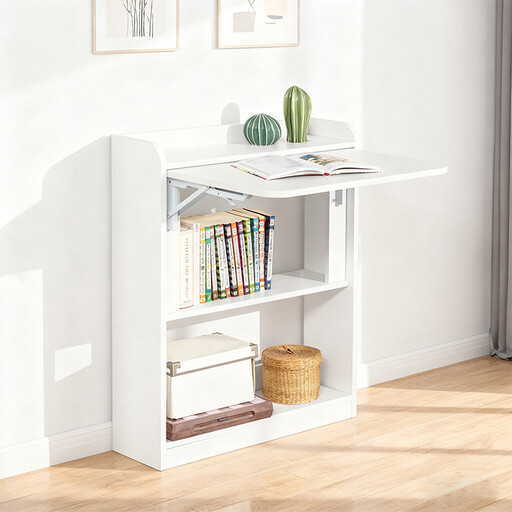
Why This Fits Their Persona: Ideal for people in small apartments or shared flats who need a full-featured workspace that doesn't take up room when not in use. The wall-mounted design frees up floor space and maintains a tidy look.
Avoids the space miscalculation trap by folding flat against the wall to a depth of just 20 cm. The room remains flexible for other uses.
Maximum space efficiency thanks to its folding mechanism. Integrated shelves provide practical storage for essentials.
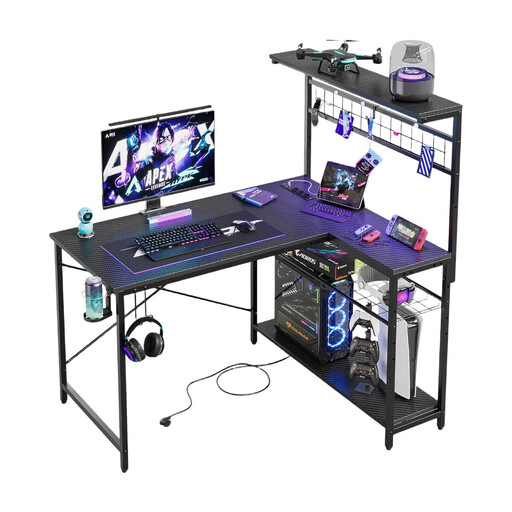
Why This Fits Their Persona: Designed for an immersive setup. The L-shape provides ample space for multiple monitors, while the integrated ports and RGB lighting meet the specific needs of gamers and tech-savvy users.
Solves the cable clutter problem with 3 built-in power outlets and 2 USB ports. All devices can be charged directly at the desk, keeping everything organised.
Integrated power supply and customisable RGB lighting. The 4-tier shelf utilises vertical space for accessories and games.
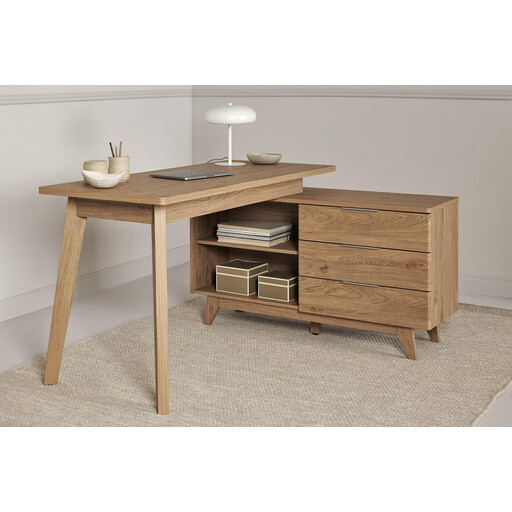
Why This Fits Their Persona: Perfect for professionals who need a permanent, well-organised workspace. The generous work surface and integrated storage unit offer plenty of room for documents, files, and tech.
Bypasses the storage illusion trap with a well-designed combination of 3 drawers and an open compartment, sized for typical office requirements.
The storage unit can be flexibly assembled on either side. The thick, rounded-edge desktop provides a high-quality look and feel.
We have compiled a complete, up-to-date list of products that fully meet these strict selection criteria and relevant safety standards.
The ideal desk height depends on your body height and your chair. Most desks have a standard height between 72 cm and 76 cm (approx. 28-30 inches). The key is that your forearms can rest horizontally on the desktop with your shoulders relaxed, and your legs have enough space underneath.
A computer desk is specifically designed for use with a PC. It often has specific features like an elevated monitor shelf, cable management solutions, or a ventilated compartment for the PC tower. A classic desk, on the other hand, usually offers a larger, continuous work surface that is better suited for writing or creative work.
The required weight capacity depends on your equipment. For a typical setup with a laptop, one monitor, and a few books, a load capacity of 35-50 kg (approx. 77-110 lbs) is usually sufficient. If you plan to place multiple heavy monitors, a PC tower on the desk, or other heavy equipment, you should consider a model with a specified capacity of over 80 kg (approx. 176 lbs). The manufacturer's specifications for maximum load capacity are the most reliable guide.