Raise humidity in a controlled way
If you work every day in a heated home office, use measured humidity levels to decide whether you need a humidifier, rather than leaving it running on a high setting all the time.


First, measure the relative humidity in your home office. If it’s already at a suitable level, adding more moisture isn’t the answer. If the air really is dry, consider the room size, the level of control you want, noise and cleaning requirements. Ultrasonic models need particular attention to water quality and tank care, while evaporative models may need replacement parts, depending on the model. Warm-mist humidifiers also involve their own operating and safety considerations.
If you work every day in a heated home office, use measured humidity levels to decide whether you need a humidifier, rather than leaving it running on a high setting all the time.
If you use a humidifier regularly, you should be able to clean the tank and water-contact parts thoroughly. With misting models, choosing the right water quality is also important.
If you work near the humidifier or have conversations nearby, check its settings and controls in the context of how you’ll actually use it – not just the advertised noise level.
A good choice if: you want adjustable humidification for long working days and can factor in replacing the right element.
The trade-off: the filter still needs replacing, and test results for one model don’t automatically apply to other evaporative humidifiers.
A good choice if: you’d rather avoid humidifying mats and can clean the water tray and disc stack regularly.
The trade-off: a filter-free system isn’t maintenance-free, and actual humidification also depends on the room.
A good choice if: you’re considering this type of humidifier for a smaller home office and can take water quality and cleaning into account.
The trade-off: according to the US Environmental Protection Agency (EPA), ultrasonic humidifiers can disperse minerals and microorganisms from the tank into the air.
A good choice if: you specifically want this technology and can take placement, hot operation and descaling into account.
The trade-off: tank care and ongoing energy use are part of the decision; you can’t work out electricity costs based on general assumptions alone.
The consumer advice centre Verbraucherzentrale suggests 40–60 % relative humidity as a guide and points out that, in winter, regularly exceeding 50 % can increase the risk of mould. So measure the humidity in your own room, and don’t treat a humidifier’s target setting as a one-size-fits-all guarantee for every home.
| What matters | What to check before buying | Who is this important to? |
|---|---|---|
| The right humidity level | Thermo-hygrometer, room size and, where applicable, an adjustable humidity target. | If I only want to humidify the air when it’s genuinely dry, I want to rely on readings rather than guesswork. Around 36 % of consumers put humidity control first. |
| Water hygiene | Tank opening, accessible surfaces and model-specific cleaning instructions; for ultrasonic models, check the water recommendations too. | If I use the humidifier regularly, I want to be able to clean the tank and water-contact parts thoroughly. Around 29 % of consumers prioritise easy-to-manage water hygiene. |
| Quiet operation | Operating settings, humidity control and where you can position it in your workspace. | If the humidifier runs while I’m concentrating or talking, its operating setting needs to suit my workspace. Quiet operation is a priority for around 21 % of consumers. |
| Running costs | Compatible replacement parts, cleaning requirements and the power consumption of the specific model. | If I use the humidifier for a long time, I want to factor in filter changes, water care and electricity use. Around 14 % of consumers prioritise predictable running costs. |
That feeling alone isn’t a reliable guide to the humidity in a room. Extra moisture can cause problems on cool surfaces.
Measure the room’s humidity before buying and while the humidifier is running. Also look out for cool areas in your home office.
The US Environmental Protection Agency (EPA) points out that ultrasonic humidifiers can disperse minerals and microorganisms from the water tank into the air.
Before choosing a model, check its water recommendations and cleaning instructions.
According to the manufacturer, the Venta LW15 Classic Original doesn’t need a humidifying mat. However, the water tray and disc stack still need regular cleaning.
When comparing evaporative humidifiers, consider both the replacement parts they need and the cleaning involved.
The HU5710/03 is an example of an evaporative humidifier with a replaceable humidifying element and humidity control.
The LB 37, LB 200 and LB 55 represent different types of humidifier: ultrasonic, evaporative and warm-mist.
The LW15 Classic Original is an example of cold evaporation using a disc stack instead of a replaceable humidifying mat.
The Oskar is an evaporative humidifier with a hygrostat and several output settings.
The product options below are designed to humidify work and living spaces. For mains-powered devices, check the conformity marking on the specific model: the European Union explains that the CE marking is a manufacturer’s declaration that a product complies with relevant regulations, not an independent quality mark.
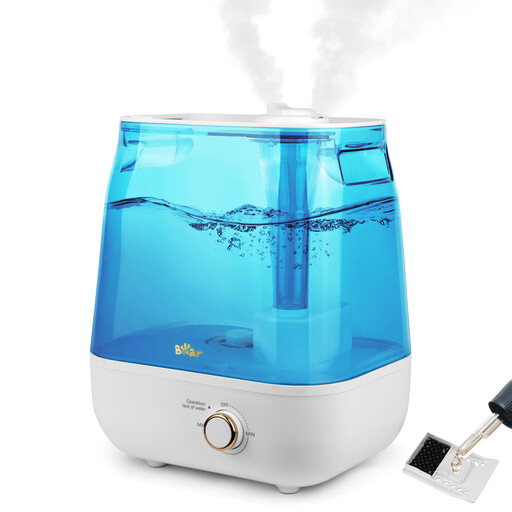 Image unavailable
An option if a larger tank and easy refilling are important to you.
According to the product specifications, it has a 6-l tank, runs for up to 35 hours, offers stepless mist control and switches off automatically when the water level is low. The stated noise level is 28 dB; the product description also mentions a removable container with a wide opening.
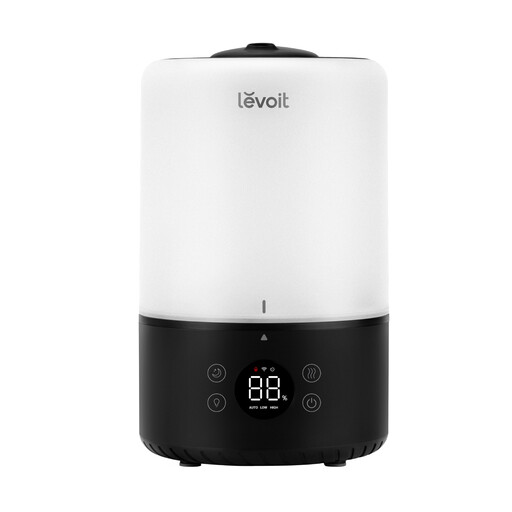 Image unavailable
An option if you want to use automatic humidity control and schedules as part of your working day.
According to the product description, it has a 3-l top-fill tank, cool mist, automatic humidity control and scheduling via the VeSync app; the stated noise level is no more than 28 dB. The instructions call for purified or distilled water and regular tank care; essential oils must not be added to the water tank.
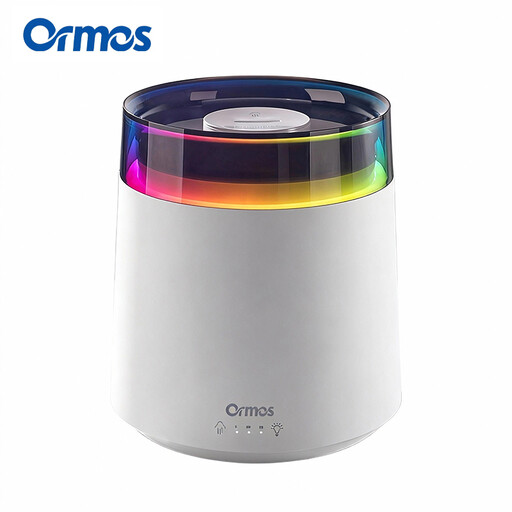 Image unavailable
An option if you want to adjust the mist output at your workstation using several settings.
The product description lists a 3-l water tank, three mist settings, touch controls and a Type-C connection. No specific noise measurement is given.
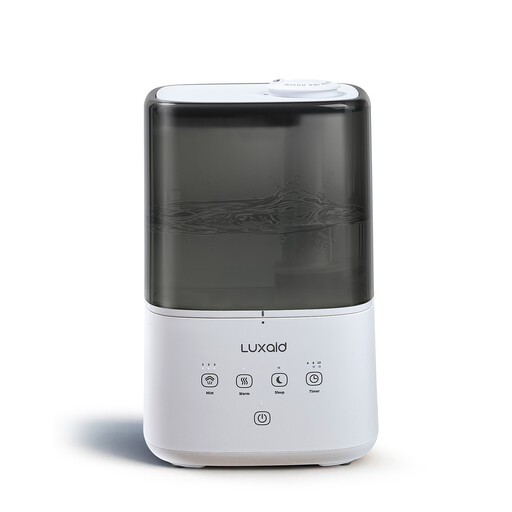 Image unavailable
An option if you want to choose between cool and warm mist, with several operating settings.
According to the product description, it has a 4.5-l top-fill tank, three settings for each mist type and a timer for 4, 8 or 12 hours. The model has a filter system and replaceable aroma pads; the title states 20 dB for sleep mode.
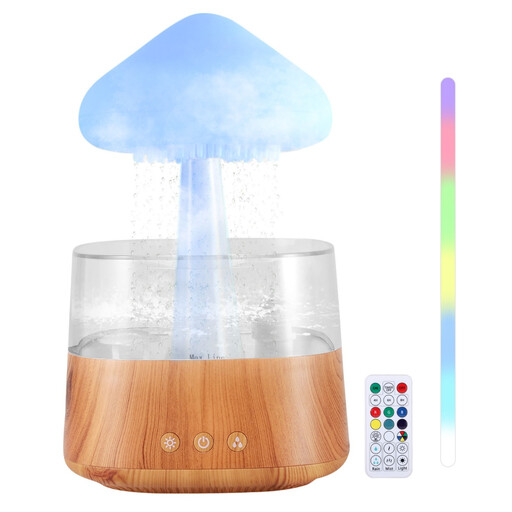 Image unavailable
An option for short periods of humidification; the dripping sound described may be distracting when you’re concentrating or talking.
The product description lists a 300-ml tank, a mist output of 15–20 ml/h, a Type-C connection and a 5-hour timer.
No. First, measure the humidity in your home office with a thermo-hygrometer. The consumer advice centre Verbraucherzentrale suggests 40–60 % relative humidity as a guide and points out that, in winter, regularly exceeding 50 % can increase the risk of mould. A humidifier’s target setting isn’t therefore a risk-free recommendation for every room.
The US Environmental Protection Agency (EPA) recommends emptying the tank daily, wiping it dry and refilling it with fresh water, as well as cleaning portable humidifiers every third day. Also follow the instructions for your specific model and rinse off cleaning products thoroughly.
The US Environmental Protection Agency (EPA) recommends low-mineral water, such as distilled water, to reduce the amount of minerals dispersed into the air. Also check the manufacturer’s water recommendations; using suitable water doesn’t remove the need for regular cleaning.
No. Replacement filters can be an ongoing expense, while a guarantee is an additional voluntary service with its own terms. In Germany, newly purchased goods are generally covered by statutory consumer rights for two years against the seller if a defect is present. The consumer advice centre Verbraucherzentrale explains that this period begins when the goods are handed over or received.
No. For devices covered by relevant EU product regulations, the CE marking is the manufacturer’s declaration of conformity; it isn’t an independent quality mark. The marking doesn’t replace checking the specific model or using it safely in accordance with the instructions.