Listeners with existing speakers
If you want to listen to live albums through your hi-fi system, check whether it has a phono or line input and which signal path will work with your turntable.


First, check which inputs your speakers or hi-fi system have. A standard line input needs a signal with the right phono stage, while a suitable phono input can handle a phono signal. If you want to keep interruptions to a minimum while you work, consider a fully automatic model. If you’d rather choose your own cartridge and settings, bear in mind that manual models need more hands-on operation and setup.
If you want to listen to live albums through your hi-fi system, check whether it has a phono or line input and which signal path will work with your turntable.
If you want to put a record on while you work without having to place the tonearm yourself, look for full automation and check what happens at the end of the record.
If you want to choose your own cartridge and settings, check which parts can be changed on the specific model and what you’ll need to do to operate it.
First, check how the turntable connects to your system. Then choose the level of automation you want and make sure the space available and adjustment options suit your home office.
| What matters when buying | What to check | Who should consider this? |
|---|---|---|
| Connecting to your system | Check your system’s inputs against the turntable’s phono/line output and switch setting. Sony lists a switchable phono/line output for the PS-LX310BT. | If I want to keep using my existing system, the signal path needs to be compatible. Around 33% of consumers put compatibility with their existing system first. |
| Ease of use while working | Check starting, arm return and stopping separately: Sony describes automatic start and return on the PS-LX310BT, while the Technics SL-1500C has an automatic lift that raises the tonearm at the end of a record. | If I want to keep handling to a minimum while I work, the difference between full automation and a lift at the end of a record matters. Around 27% of consumers prioritise ease of use while working. |
| Space and vibration | Check the dimensions, how the dust cover opens and whether the turntable can sit level in the space you have in mind. Audio-Technica recommends placing the AT-LP70XBT on a level surface away from speakers that could cause vibrations. | If there’s limited space beside my desk, I want to know in advance that the turntable will fit and the dust cover can open. Around 20% of consumers prioritise finding a suitable spot. |
| Cartridge and settings | Check whether you can replace just the stylus or the whole cartridge. Audio-Technica lists compatible VM95 Series styli for the AT-LP70XBT; the Dual CS 518 has a replaceable headshell. | If I want to upgrade components later, I’ll need compatible replacement options and may have to do a little more hands-on work. Around 20% of consumers prioritise adjustability and replacement options. |
A turntable without a suitable built-in phono stage needs an appropriate phono signal path. The Rega Planar 1 manual specifies that a suitable phono stage is required.
Before buying, check the signal path from the turntable to the speakers and make sure the inputs match the outputs.
A lift that raises the tonearm at the end of a record doesn’t mean the arm will automatically lower at the start. The Technics SL-1500C is described as having an end-of-record lift; Denon lists automatic tonearm placement and return for the DP-300F.
Check each model individually to see whether starting, returning and stopping are automatic, or whether it only has an end-of-record lift.
Audio-Technica lists compatible VM95 Series styli for the AT-LP70XBT, but its cartridge is integrated into the tonearm. The Dual CS 518 has a replaceable headshell.
Check which part you want to replace and whether it’s compatible with the exact model.
The AT-LP70XBT combines full automation and Bluetooth with a switchable phono stage.
The PS-LX310BT combines automatic operation and Bluetooth with a switchable phono/line output.
The DP-300F is a wired, fully automatic option with a switchable phono preamplifier.
The manual CS 518 offers a replaceable headshell and adjustable settings.
The SL-1500C combines direct drive, a built-in phono equaliser and an automatic tonearm lift at the end of a record.
The Debut EVO 2 is designed for manual setup and adjustment.
The products below include fully automatic Bluetooth turntables and models with built-in speakers. Compare the listed connections and features with your existing system.
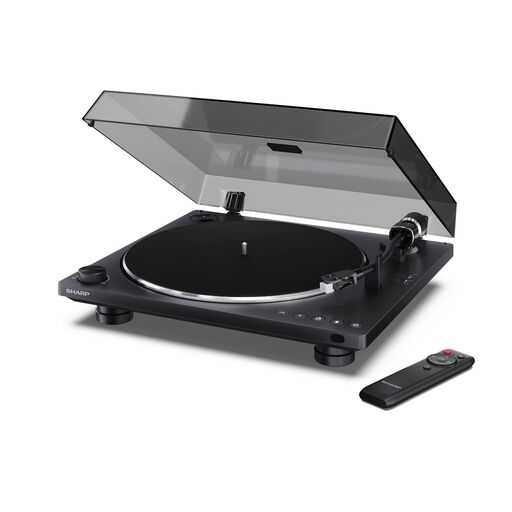 No image available
For listeners looking for fully automatic operation and Bluetooth.
Features listed in the product title: Bluetooth 5.4, USB-C recording, Audio-Technica cartridge and dust cover.
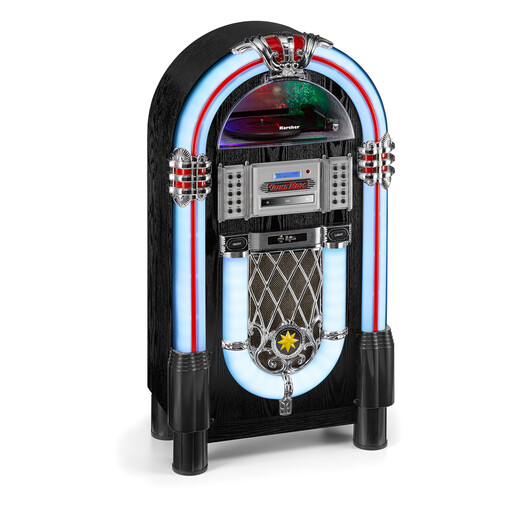 No image available
A jukebox option for anyone considering other playback options alongside vinyl records.
The product title lists a CD player and Bluetooth audio streaming.
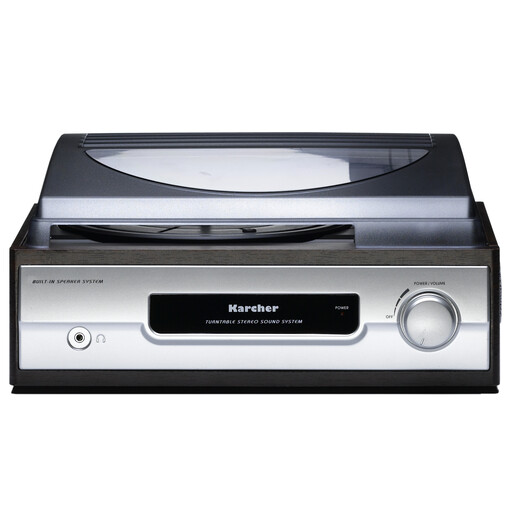 No image available
For listeners looking for a turntable with built-in stereo speakers.
The product title lists 33/45 rpm, auto-stop, a headphone socket and line-out.
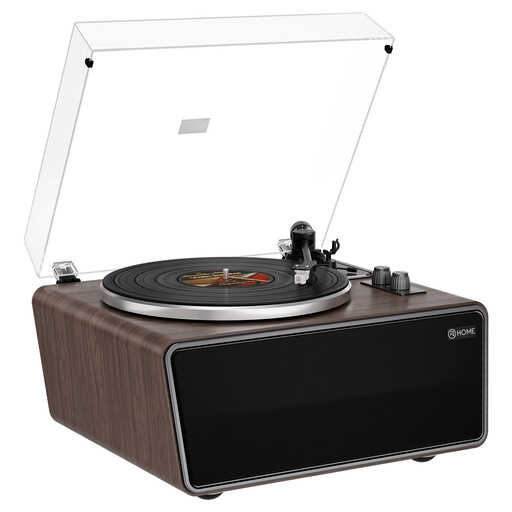 No image available
For listeners considering built-in speakers and a phono preamplifier.
Features listed in the product title: four speakers, phono preamplifier and AT-3600L (MM) cartridge.
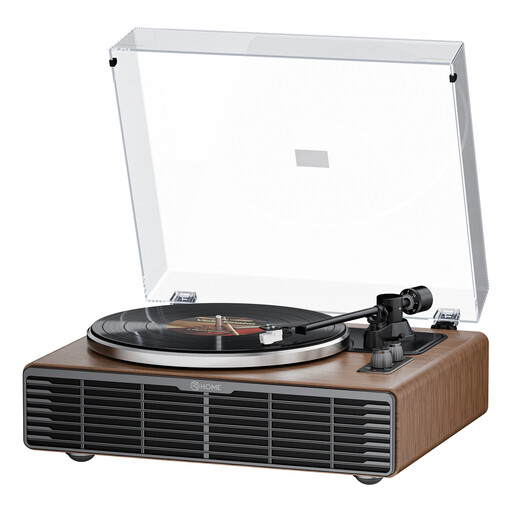 No image available
For listeners looking for a turntable with built-in speakers and Bluetooth.
The product title lists four speakers, belt drive, AT3600L cartridge, RCA phono/line output and a transparent dust cover.
It depends on the speakers’ input and the turntable’s output. For a standard line input, you’ll need a suitable line output with a phono stage or a separate phono stage; according to its manual, the Rega Planar 1 needs a suitable phono stage.
Audio-Technica recommends placing the AT-LP70XBT on a level surface away from speakers that could cause vibrations. Also check that the dust cover can open in the space you have in mind.
Yes. Audio-Technica lists VM95 Series styli as compatible with the AT-LP70XBT; the manufacturer says the cartridge itself is integrated into the tonearm.
No. The statutory warranty covers claims against the seller for faulty goods; an additional guarantee is a separate promise with its own terms. Consumer purchases of goods in the EU are generally covered by a minimum statutory protection of two years, as explained by Your Europe.
No. The German Environment Agency recommends disposing of old electrical appliances separately, for example at a recycling centre or an appropriate retailer take-back point.