
Lieferung heute & morgen

Qualitätsgarantie

Willkommens-Angebote freischalten: KOSTENLOSE Lieferung | Bis zu 80 % RABATT | Kostenlose 30-Tage-JoyPlus-Testphase
App herunterladen
An authentic home pizza oven promises to transform your kitchen into a small pizzeria. The market offers a plethora of models, but not every appliance delivers on its promises. Many buyers invest in an oven only to find that the pizza turns out soggy and lacks that coveted crispy base. This guide will help you avoid common purchasing pitfalls and identify the key features for a perfect pizza.
Before you make a decision, it's important to be aware of the most common issues that can lead to disappointment.
To make an informed purchasing decision, you should focus on three key technical factors. These are the primary determinants of the quality of your future pizzas.
For an authentic Neapolitan pizza, a baking temperature of at least 400 degrees Celsius is required. At this high heat, the pizza cooks in just a few minutes, the crust puffs up into an airy "cornicione," and the base becomes crisp while the toppings remain juicy. When reviewing product specifications, pay attention not only to the maximum temperature but also to information on heating time and heat distribution. A good electric pizza oven should reach the target temperature quickly and maintain it stably throughout the entire baking process.
Choosing the right material for the baking surface is crucial. Cordierite stone is a frequently recommended choice here. This material is characterized by its high heat retention capacity and excellent resistance to thermal shock. It quickly absorbs moisture from the dough and transfers the stored heat directly to the pizza base, which creates the characteristic crispiness. Check the manufacturer's material specifications carefully.
For use in an apartment, an electric pizza oven is the most practical and safest solution. Unlike wood or gas-fired ovens, they do not require a chimney or a gas cylinder and are ready to use out of the box. Also, consider how many pizzas you typically want to prepare. For families or if you regularly entertain guests, a pizza oven for 2 pizzas can be a significant time-saver. Such models often feature separately controllable heating elements, which allows for additional flexibility when baking.
Instead of presenting an overwhelming list, we have selected one model that meets the specific needs of home chefs and avoids the pitfalls mentioned above.
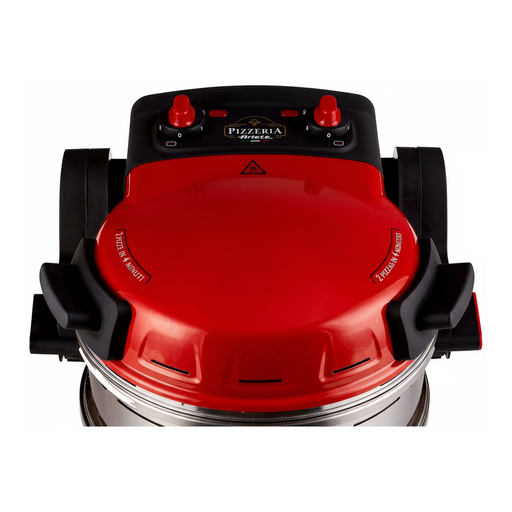
Why This Fits Their Persona: Ideal for families or social gatherings, as preparing two pizzas at once significantly speeds up the process. The separate thermostats also allow for cooking different dishes or keeping one pizza warm while the second one bakes.
This model directly addresses the core problems: according to the manufacturer, it reaches a temperature of up to 400°C and uses two fire-resistant stone plates that provide constant heat from below and are highly durable. This prevents a soggy base and material fatigue.
The ability to function as a pizza oven for 2 pizzas is its key advantage. Five cooking levels and two adjustable thermostats offer a high degree of versatility that goes beyond just baking pizza.
We have compiled a complete, real-time list of products that fully satisfy these strict selection criteria and UK safety regulations.
1. How do you properly clean a pizza oven's stone plate? After use, let the stone cool down completely inside the oven. Remove coarse food residue with a dry cloth or a soft brush. Never use soap or water, as the porous stone would absorb the liquid, which could lead to cracks during the next heat-up. Burnt-in stains are normal and do not affect its performance.
2. Does an electric pizza oven require a special power connection? Most electric pizza ovens for home use, like the Ariete pizza oven, are designed to be plugged into a standard 230V household socket. However, always check the device's power consumption (in watts) and ensure that the circuit is not overloaded by other high-power appliances.
3. What is the lifespan of an electric pizza oven? The lifespan heavily depends on the quality of the components and how well it is maintained. A well-made model with a high-quality pizza oven with a stone plate and robust heating elements can last for many years with proper use and regular, correct cleaning. Pay attention to the manufacturer's specifications and material quality to make a long-lasting investment.