
Lieferung heute & morgen

Qualitätsgarantie

Willkommens-Angebote freischalten: KOSTENLOSE Lieferung | Bis zu 80 % RABATT | Kostenlose 30-Tage-JoyPlus-Testphase
App herunterladen
Buying a new shelf seems simple at first glance. But often, what looks like a bargain turns out to be a poor purchase after just a few months: the shelves sag, the surface swells in the bathroom, or the construction feels unstable from the start. Many buyers fall into traps set by clever marketing and vague product descriptions. Before you make a decision, you should be aware of the common pitfalls.
Two of the most frequent problems are:
solid wood shelf. This description often conceals foil-wrapped particleboard, which is easily damaged by moisture and has a low load capacity. The result is a bookshelf that buckles under the weight of coffee-table books, or a bathroom shelf whose edges swell after a short time.freestanding shelves omit essential components like anti-tip hardware or adjustable feet to compensate for uneven floors. This poses a significant safety hazard, especially for a children's shelf or a heavily loaded basement shelf.This guide will help you avoid these pitfalls and make an informed choice that perfectly matches your requirements.
To ensure a shelf's durability and functionality, you should carefully examine three core aspects. These determine whether a model is suitable for its intended purpose—be it as a kitchen shelf for supplies or a narrow wall shelf in the hallway.
The material is the most important factor for a shelf's stability and suitability for specific environments.
bathroom shelf or kitchen shelf.white shelf made from lacquered MDF is a popular choice for modern interiors. Look for a high-quality sealant to protect it from moisture.metal shelf, usually made of powder-coated steel, is low-maintenance, stable, and often features an industrial style. It is an excellent choice for a ladder shelf in the living room or a practical basement shelf.The maximum load capacity per shelf is a critical specification that should never be ignored. A typical bookshelf should be able to support at least 10–15 kg per shelf to handle the weight of hardcover books. For a heavy-duty shelf in the basement or garage, capacities of over 100 kg per shelf are required.
Also, look for the following construction features:
freestanding shelf, especially in a child's room for safe toy storage.The choice between a wall shelf and a freestanding shelf depends on the available space and the desired flexibility.
corner shelf make optimal use of otherwise dead corners, while a narrow shelf fits perfectly into small alcoves.Instead of general recommendations, here we present specific models tailored to particular user profiles and their requirements.
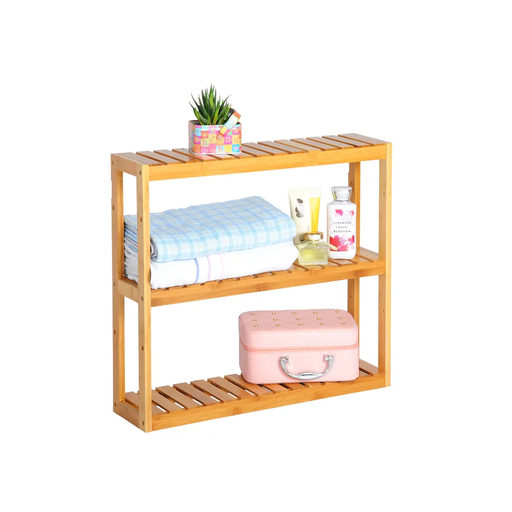
Why This Fits Their Persona: Ideal for a first apartment, small bathrooms, or kitchens where every inch counts. Its compact dimensions (60x54x15 cm) and flexible use as either a freestanding or wall-mounted unit offer a practical solution for limited space without compromising on style.
It bypasses the trap of using unsuitable materials for damp environments. By using natural, lacquered bamboo, it is moisture-resistant and won't swell like unsealed particleboard.
High flexibility with the option for either freestanding or wall-mounted installation. The middle shelf is height-adjustable, allowing it to accommodate items of various sizes.
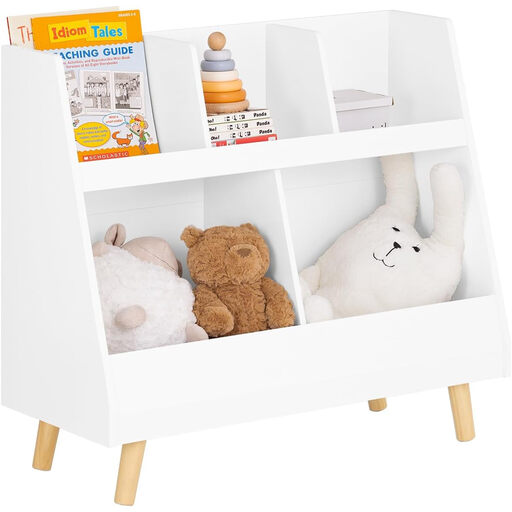
Why This Fits Their Persona: Designed for parents seeking a safe and functional solution for the child's room. The open compartments are easily accessible for children, promoting independence in tidying up books and toys.
This shelf directly addresses the safety trap. All corners and edges are carefully rounded to minimise the risk of injury. The stable, trapezoidal design prevents it from tipping over easily.
Combines a bookshelf and toy storage in one piece of furniture. The child-friendly design encourages tidiness and independence from an early age.
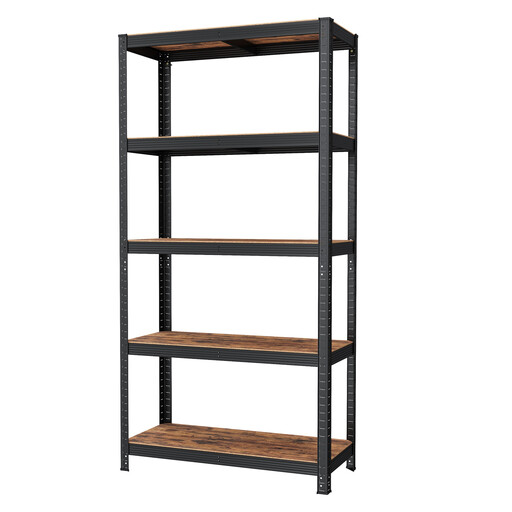
Why This Fits Their Persona: Perfect for homeowners and DIY enthusiasts who need an extremely robust solution for the basement, garage, or workshop. This is all about maximum load capacity and durability, not delicate design.
This heavy-duty shelf decisively solves the problem of unstable construction. The steel frame is designed for heavy loads, and the included anti-tip kit ensures the necessary safety when fully loaded.
Enormous load capacity of 130 kg per shelf (650 kg total). The shelf can also be flexibly split into two separate, shorter units or workbenches.
We've compiled a complete, up-to-date list of products that fully meet these strict selection criteria and safety standards.
1. How do I securely mount a wall shelf? The safety of a wall shelf depends on correct installation. Always use anchors and screws appropriate for your wall type (e.g., concrete, brick, drywall). For drywall, special hollow-wall anchors are required. Before drilling, use a pipe and cable detector to check for electrical or water lines in the intended spot. Always follow the manufacturer's installation instructions.
2. What is the difference between MDF and solid wood for a shelf? Solid wood is made from natural timber, is very durable, robust, and can be sanded down and refinished if needed. It is typically heavier and more expensive. MDF (Medium-Density Fibreboard) is an engineered wood product made from finely shredded, compressed wood fibres. It is dimensionally stable and more cost-effective, but is more susceptible to moisture if the surface seal (e.g., lacquer) is damaged.
3. What load capacity should a bookshelf have? For a typical bookshelf filled mainly with paperbacks, a load capacity of about 10 kg per shelf is sufficient. However, if you plan to store heavy coffee-table books, encyclopedias, or binders, you should choose a model that can support at least 15 kg per shelf. Be sure to always place heavy items on the lower shelves to increase stability.