
Lieferung heute & morgen

Qualitätsgarantie

Willkommens-Angebote freischalten: KOSTENLOSE Lieferung | Bis zu 80 % RABATT | Kostenlose 30-Tage-JoyPlus-Testphase
App herunterladen
Clutter is not always caused by having too many belongings. Often, the real issue is the lack of suitable storage that makes sensible use of the available space. Shelving and storage for your home can free up kitchen worktops, keep books neatly organised or create additional storage in your home office. However, it is essential that the size, load capacity and installation method are suitable for the intended use.
A floating shelf looks modern and saves space. However, without the right wall plugs for the type of wall, the structure can become unstable. Plasterboard, concrete, brick and tiles all have different requirements when it comes to screws and wall plugs. Fixings supplied with the product are therefore not automatically suitable for every wall.
A maximum load only applies under the conditions specified by the manufacturer. For a wall-mounted shelf, the number of fixing points, the condition of the wall and even weight distribution all play a role. Heavy books or storage jars should not be concentrated solely on a small decorative shelf.
A kitchen shelf may fit on paper, but still obstruct the worktop or a cupboard door. In the bathroom, pipes, mirrors or towels may restrict the available space. Before buying, you should therefore measure the width, depth, height and clearance required for installation.
For small rooms, vertical or multi-tier solutions are often more practical than wide furniture. A 2-tier shelf is suitable for spice jars, toiletries or small decorative items. A 3-tier display stand, on the other hand, creates several levels for viewing and accessing perfume, cosmetics, figurines or desserts.
An overview of typical designs:
A wooden shelf or bamboo shelf suits natural interior design schemes. Wood-based materials such as MDF or coated chipboard are easy to care for, but should not be equated with solid wood. In damp conditions, pay attention to the surface treatment.
A metal shelf made from coated steel or aluminium can be a practical choice for the kitchen or bathroom. Powder-coated or painted surfaces can usually be cleaned with a soft, slightly damp cloth. Abrasive cleaners may damage the coating. Standing water should be avoided on wooden surfaces.
The load capacity must be suitable for the intended use. It is not just the stated weight in kilograms that matters, but also:
With a freestanding shelf, heavy items should always be placed at the bottom. Screws and connections should be checked after assembly and at regular intervals.
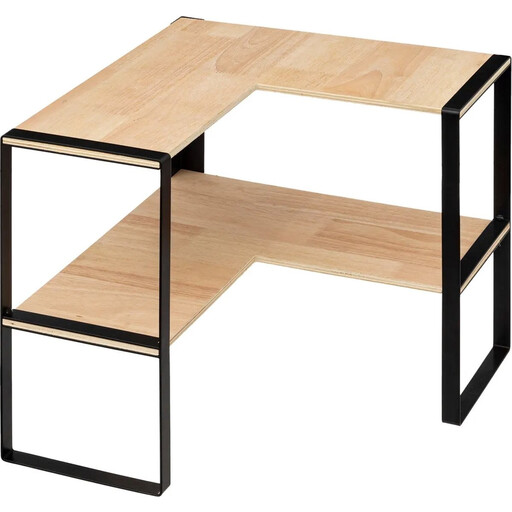
Why this product suits this profile: The compact corner shelf is designed for kitchen worktops, base units or cupboards, making use of corners with two tiers.
Measuring approximately 40 × 40 × 35 cm, it is easy to calculate how much space is needed before buying. The freestanding design requires no drilling into the wall.
Two storage tiers, a combination of steel and wood-based material, and straightforward self-assembly.
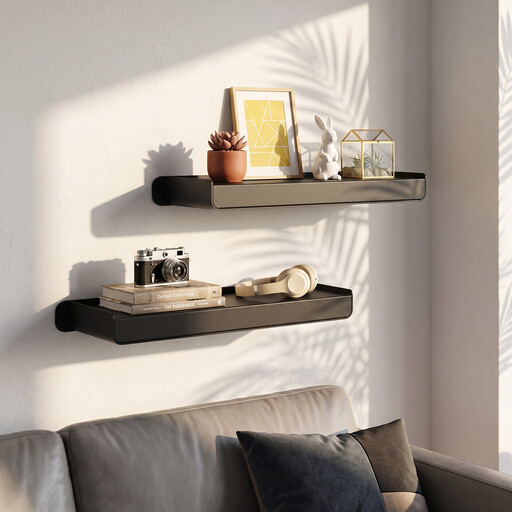
Why this product suits this profile: According to the product description, this black aluminium shelf combines a simple look with a water-resistant surface suitable for damp rooms and kitchens.
The wall-mounted installation is described as including suitable screws and expansion plugs. Buyers must still choose anchors suitable for the specific type of wall.
Aluminium construction, a grey rubber lining to protect the wall and a stated load capacity of up to 20 kg.
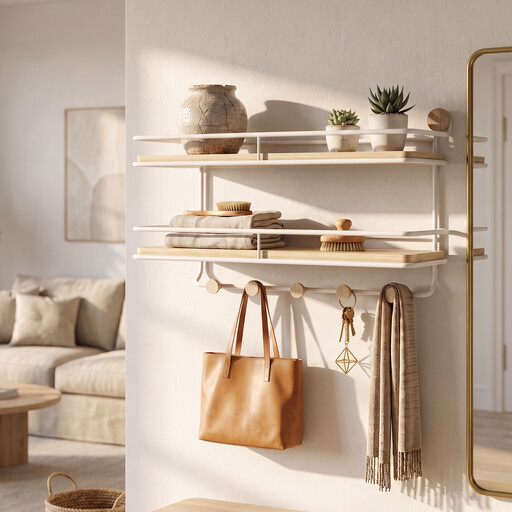
Why this product suits this profile: The combination of two shelves and five hooks is suitable for hallways, entrance areas, bedrooms or bathrooms where extra hanging space is needed.
Protective rails on both tiers are designed to reduce the risk of items falling off. Installation must take account of the condition of the wall; the stated maximum load is 44 lb.
FSC-certified rubberwood according to the product details, powder-coated steel, two tiers and five hooks.
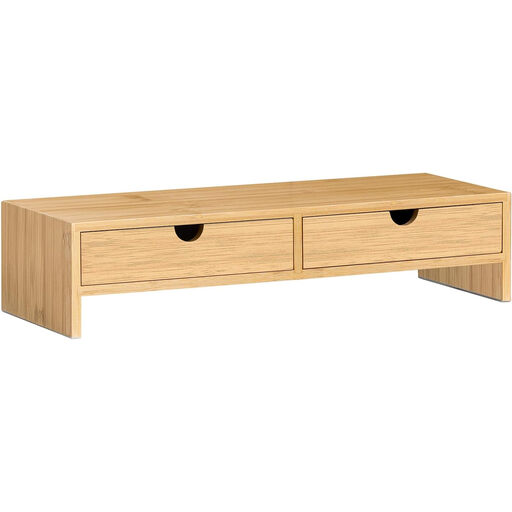
Why this product suits this profile: Made from bamboo, this monitor stand creates an additional storage level on a desk, along with space for office supplies.
Measuring approximately 47 × 18 × 11 cm and featuring non-slip feet, it makes planning easier. The product details state different load capacities, so the current product page should be checked before use.
Two drawers, open storage for a keyboard and mouse, and no assembly required according to the product description.
Before installing a wall shelf, mark the drilling points using a spirit level and take account of any cables or pipes in the wall. The wall’s load-bearing capacity is more important than completing the installation quickly. When drilling into tiles, use a suitable drill bit to help prevent cracks.
Freestanding shelves should be placed on a level surface. With a space-saving shelf that has a small footprint, anti-tip protection may be advisable or required. In homes with children, shelves should not encourage climbing, and heavy items should be stored at the bottom.
A soft, dry or slightly damp cloth is usually all that is needed for cleaning. Aggressive cleaning products and abrasive sponges can damage paint, powder coating or laminate. For bathroom shelves, check regularly whether moisture is collecting around the joints.
We have put together a complete, regularly updated list of products that fully meet these strict selection criteria and the safety regulations applicable in the EU.
For small rooms, the actual wall or floor space available is what matters most. Alongside width and depth, you should consider door openings, sockets, windows and access to the items. A narrow wall shelf or corner shelf may be more suitable than a wide piece of furniture.
Their lifespan depends on the material, load, moisture levels, installation and care. Even weight distribution, regular checks of the screws and adherence to the stated maximum load can help ensure safe use. Damp rooms place greater demands on surfaces and joints.
Shelves do not normally incur running costs. The only expenses to consider are possible purchases of additional wall plugs, replacement parts or care products. For wall-mounted shelves, it may be worth budgeting separately for fixings suitable for the type of wall.