
Lieferung heute & morgen

Qualitätsgarantie

Willkommens-Angebote freischalten: KOSTENLOSE Lieferung | Bis zu 80 % RABATT | Kostenlose 30-Tage-JoyPlus-Testphase
App herunterladen
A cluttered entryway with scattered shoes is a common problem in many households. It not only detracts from the aesthetic but can also become a tripping hazard. The right shoe storage creates order, protects your shoes, and makes the most of your available space.
This article serves as a guide. We'll introduce various types of shoe racks and cabinets and explain their specific features to help you choose the perfect solution for your hallway, dressing room, or closet.
Before you make a decision, there are a few key factors to consider. The following points will help you narrow down the options and find a model that meets both your functional and aesthetic needs.
The material affects not only the durability and stability but also the appearance of the furniture.
The choice between an open shoe stand and a closed shoe cabinet depends on your priorities.
Available space is often the deciding factor. Fortunately, there are many clever solutions for different room situations.
Here is a selection of different models that cater to various needs and spaces.
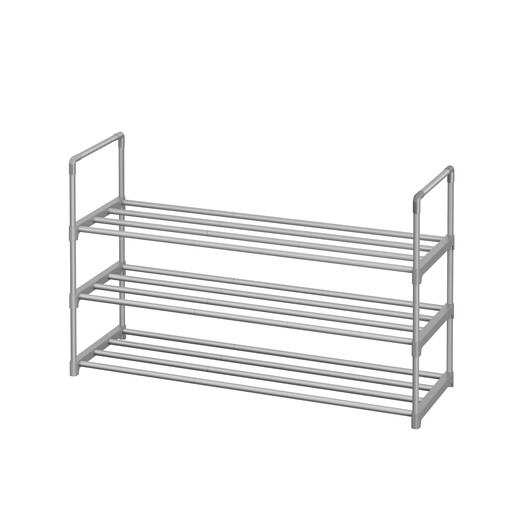
Why It Stands Out: This rack is distinguished by its high flexibility. The metal shelves can be assembled flat or angled as needed, and multiple units can be stacked to double or triple your storage without taking up additional floor space.
Pros:
Who It's For: For those looking for a functional, budget-friendly, and expandable solution. Ideal for rental apartments or anyone who needs flexible shoe storage that can adapt to changing needs.
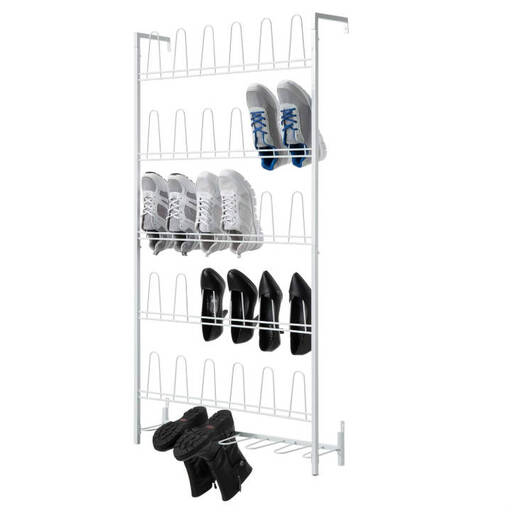
Why It Stands Out: This wall-mounted solution is a prime example of extremely space-savingshoe storage. By keeping the floor completely clear, it not only creates order but also makes cleaning the floor much easier.
Pros:
Who It's For: For users with limited floor space who want to store a large number of shoes neatly and within easy reach. A great choice for walk-in closets, mudrooms, or garages.

Why It Stands Out: This shoe cabinet is more than just a storage unit—it's a complete piece of furniture. With its farmhouse design, louvered doors, and sturdy wood-look finish, it enhances any entryway while elegantly concealing shoe clutter.
Pros:
Who It's For: For style-conscious individuals seeking a durable and aesthetically pleasing solution that blends harmoniously into a farmhouse or rustic decor. Ideal for anyone who prefers closed and tidy storage.
The products featured here already cover a wide range of needs. However, if you haven't found the right solution yet, there are many more options to explore. From simple shoe shelves to multifunctional benches with integrated storage, the selection is vast.
→ Discover our full range of space-saving organisers.
1. Open shoe rack or closed shoe cabinet—which is better? Both systems have their advantages. An open rack offers good ventilation and quick access, which is practical for everyday shoes. A closed cabinet provides a tidy appearance and protects shoes from dust, making it a great choice for long-term storage or for maintaining a neat hallway.
2. What's the most space-efficient way to store shoes? To save space, vertical solutions are ideal. These include stackable rack systems that grow upwards or hanging shoe organisers that can be attached to doors or inside a closet. Tall, slim shoe cabinets also use space efficiently.
3. How many shoes fit in a standard shoe rack? The capacity varies greatly depending on the model. A simple, three-tier rack often holds 9 to 12 pairs of shoes. Larger cabinets or wall-mounted systems can accommodate 20 pairs or more. Pay attention to the product description, where the capacity is usually specified. Keep in mind that boots will take up more space than flat shoes.