
Lieferung heute & morgen

Qualitätsgarantie

Willkommens-Angebote freischalten: KOSTENLOSE Lieferung | Bis zu 80 % RABATT | Kostenlose 30-Tage-JoyPlus-Testphase
App herunterladen
Cluttered cupboards, overflowing cellar shelves, or tools that never seem to have a proper home in the garage: home storage solutions need to suit the room, the weight of the items, and how you use them every day. A good-looking box isn’t automatically right for heavy provisions, and a large shelf unit is little use if it can’t be securely anchored.
The Joybuy Product Recommendation Officer filters product details using clear criteria and highlights what households, families, students, DIY enthusiasts and small business owners should look for when buying.
With shelving, the maximum load can refer to either the weight per shelf or the total weight the unit can hold. What’s more, the actual load capacity depends on whether the weight is evenly distributed and whether the shelf stands on a level surface. A figure like “650 kg” should therefore always be read in the context of load capacity per shelf, the type of assembly and how it is fixed.
Plastic boxes with lids need room for the lid, handles and enough clearance to take items in and out. With shelving systems, cross braces or frames can reduce the usable width. Before buying, measure alcoves, doorways and corridors. For cellars and garages, also consider ceiling height, stair width and the position of plug sockets.
Foldable storage cupboards and fabric boxes are often suitable for clothes, toys or lightweight household items. They are not designed for heavy tools, paint tins or drinks supplies. Even a mobile piece of furniture on castors shouldn’t be permanently overloaded. The manufacturer’s specifications for load capacity and intended use are what matter.
For dry living spaces, plastic boxes, fabric boxes and modular shelving are flexible options. In a cellar or garage, buyers should look for surfaces that are easy to clean and have adequate ventilation. Plastic isn’t automatically heat-resistant or UV-resistant: keep boxes away from naked flames, strong heat sources and prolonged direct sunlight.
PP plastic is used in many storage boxes. Reinforcing ribs, rounded corners and a snug-fitting lid can help maintain shape stability. For workshops and storage rooms, shelving units or heavy-duty shelving with steel frames are a better choice. With MDF shelves, check whether the load capacity only applies when the weight is evenly distributed.
Simple planning helps you avoid buying the wrong thing:
Stackable storage boxes make the most of the height inside a cupboard or on a shelf. Transparent versions make it easy to see what’s inside, while opaque boxes can protect the contents from light. A label on the front is useful for both types.
Shelving should stand on a level surface. For taller units, fit the supplied anti-tip device to the wall following the instructions. This is especially important in homes with children or in areas where people frequently walk past.
With plastic boxes, avoid sharp objects, excessive heat and stacking too much weight on top. In most cases, a damp cloth and mild detergent are enough for cleaning. Don’t overload fabric boxes, or they may lose their shape.
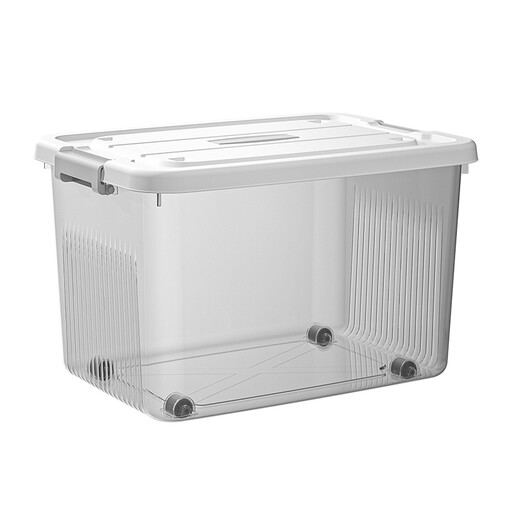
Why this product suits the profile: This four-pack is ideal for seasonal clothes, toys, baby items or household goods when you need to sort several categories without any assembly.
The transparent boxes let you see the contents. Snap-lock lids, integrated handles and a non-slip base are all listed in the product details.
PP plastic with a 2.5 mm body thickness; external dimensions of 50.4 × 37.6 × 28.8 cm per box.
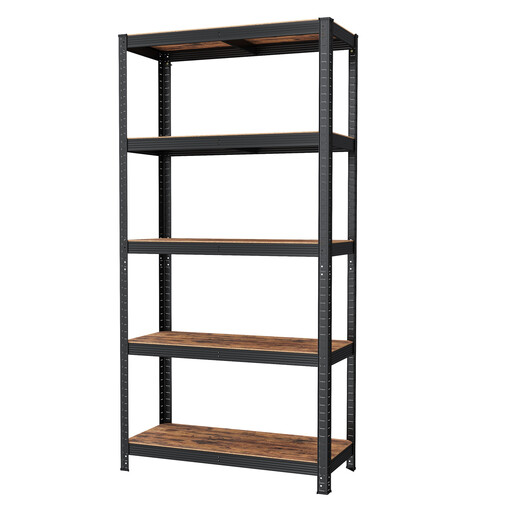
Why this product suits the profile: This shelf unit is aimed at households, DIY enthusiasts and small businesses that want to store tools or supplies in an organised way in the cellar, garage or workshop.
The shelves are height-adjustable. The stated maximum static load is 130 kg per shelf and 650 kg in total; the anti-tip device should be used.
Steel frame, five shelves and dimensions of 30 × 75 × 150 cm; the system can be split into two units according to the product description.
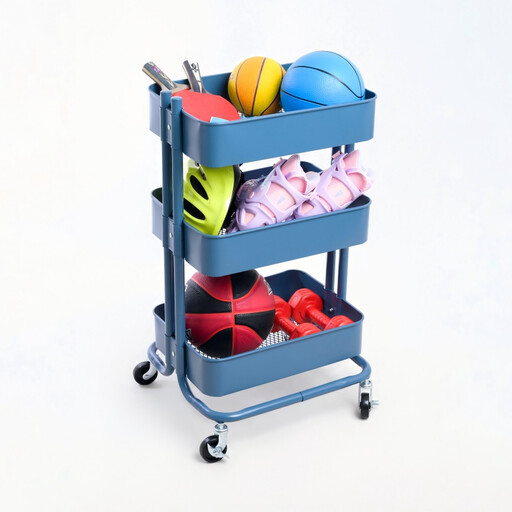
Why this product suits the profile: This trolley is ideal for frequently changing locations in the kitchen, bathroom, study or around the house when items need to stay mobile.
The three open shelves make access easy. Four castors allow movement, two of which can be locked so the trolley stays put where you need it.
Carbon steel frame, mesh shelves and a stated load capacity of up to 7 kg per tier.
For a utility room, stackable boxes and narrow shelving systems make sense, as long as the door can open fully. In the cellar, store heavy items at the bottom and delicate textiles in closed boxes. In the garage, heavy-duty shelving with adjustable levels is a good choice. For small flats or student apartments, cube boxes, wardrobe organisers and a compact trolley can make the available space more flexible.
A foldable cupboard is particularly handy when you need to change your storage setup occasionally or pack it away seasonally. For daily use and heavy contents, go for solid constructions with a clear load capacity rating.
We’ve put together a full, regularly updated list of products that meet these strict selection criteria and comply with EU safety regulations.
For the cellar, sealable plastic boxes with sturdy walls and well-fitting lids are a good choice. Store textiles in a dry place and not directly on the floor. For longer-term storage, air the room out regularly.
The lifespan depends on the material, the load, temperature and sunlight exposure. Don’t overload PP boxes and keep them away from heat or naked flames. A clean, dry storage location can reduce material stress.
The key factors are load capacity per shelf, total load capacity, even weight distribution and stable assembly. Tall shelving should be fixed to the wall using the supplied anti-tip device. Always follow the assembly instructions and the manufacturer’s specifications before use.