
Lieferung heute & morgen

Qualitätsgarantie

Willkommens-Angebote freischalten: KOSTENLOSE Lieferung | Bis zu 80 % RABATT | Kostenlose 30-Tage-JoyPlus-Testphase
App herunterladen
Finding the right home theatre TV can be a challenge given the vast array of technologies, sizes, and features. Terms like OLED, QLED, 120 Hz, and Dolby Atmos dominate product descriptions, but their practical impact on your viewing experience isn't always immediately clear. This guide aims to provide clarity. It explains the key features of modern large-screen TVs and presents a selection of models suited for different needs based on their technical specifications.
As your Joybuy Product Recommendation Officer, my job is to provide you with objective information so you can make an informed decision when you want to buy a large-screen TV.
To find the right model for your living room or dedicated media room, three technical aspects are of particular importance.
The choice of panel technology has a major impact on picture quality, especially contrast and brightness.
For owners of next-gen consoles like the PlayStation 5 or Xbox Series X, a 120Hz gaming TV or higher is a worthwhile investment. A high refresh rate ensures a smoother depiction of fast motion. Also, look for HDMI 2.1 ports. These support features like Variable Refresh Rate (VRR) and Auto Low Latency Mode (ALLM), which reduce screen tearing and minimise input lag—crucial for a responsive gaming experience on a TV for PS5.
An immersive picture deserves matching sound. A TV with Dolby Atmos can create a three-dimensional sound field where audio seems to come not just from the front, but also from the sides and above. This elevates the home theatre experience to a new level, acoustically placing the viewer right in the middle of the action.
Here is a selection of models that stand out for their technical features, making them suitable for various home theatre applications.
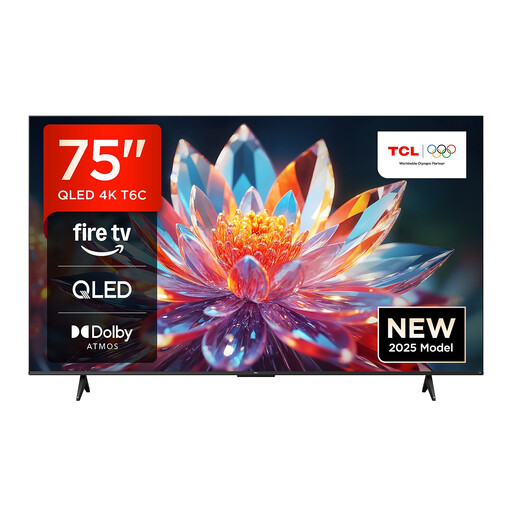
Why it stands out: The TCL 75T6C combines the advantages of QLED technology with a generous 75-inch screen size. It offers comprehensive support for HDR formats, including Dolby Vision, and integrates a versatile smart TV platform with Fire TV.
Pros:
Who is it for? This model is an excellent choice for users looking for a large, feature-rich 4K Smart TV for streaming films and series. The combination of QLED picture quality, comprehensive format support, and integrated smart features makes it a versatile all-rounder for the living room.
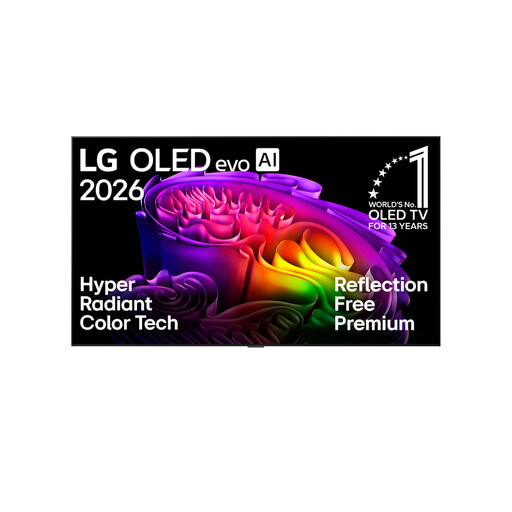
Why it stands out: The LG OLED83G67LW uses an OLED evo panel on an impressive 83-inch screen. This technology delivers perfect black levels and intense colours. With a native refresh rate of up to 165 Hz and support for NVIDIA G-Sync and AMD FreeSync Premium, it is designed for both cinephiles and demanding gamers.
Pros:
Who is it for? This TV is aimed at home theatre enthusiasts and gamers who refuse to compromise on picture quality and motion handling. Anyone looking to get the most out of films and games on a TV for PS5 or PC will find this to be a fitting choice.
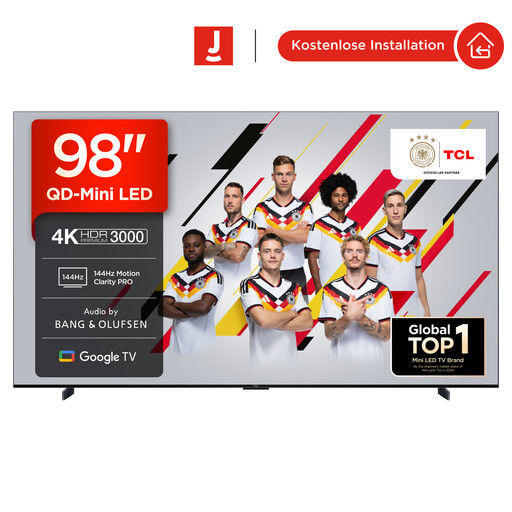
Why it stands out: With a gigantic 98-inch screen size and advanced QLED Mini LED technology, the TCL 98Q7C sets the standard for an immersive big-screen experience. Its high peak brightness, precise contrast control, and an integrated sound system by Bang & Olufsen create a true cinema atmosphere.
Pros:
Who is it for? This model is designed for users who want to create a no-compromise home theatre. The 98-inch TV is ideal for large rooms and for those who value both outstanding picture quality and above-average integrated sound.
Many users value seamless integration of their devices into the Apple ecosystem. The ability to easily mirror content from an iPhone, iPad, or Mac to the big screen is an important convenience feature.
If compatibility with Apple devices is a priority for you, you can find a wide selection of models in our TVs with AirPlay category.
The ideal size depends on your viewing distance. A common rule of thumb for 4K TVs is that the distance to the screen should be 1 to 1.5 times the screen diagonal. For a true cinematic feel, models from 75 inches and up are a popular choice, as they fill a large portion of your field of view.
A 120Hz TV is not strictly necessary to play on the PS5, but it is highly recommended for an optimal experience. It allows games to be displayed at up to 120 frames per second (fps), resulting in significantly smoother motion and lower input lag. This is especially advantageous in fast-paced action or racing games.
The main difference lies in how the light is generated. OLED TVs use self-emissive pixels that can be turned off individually, resulting in perfect blacks and very high contrast. QLED TVs use an LED backlight and a quantum dot layer to produce very bright images and a wide colour spectrum, making them particularly suitable for bright rooms. Mini LED is an advanced form of QLED backlighting with more precise control.